Last updated November 21, 2026
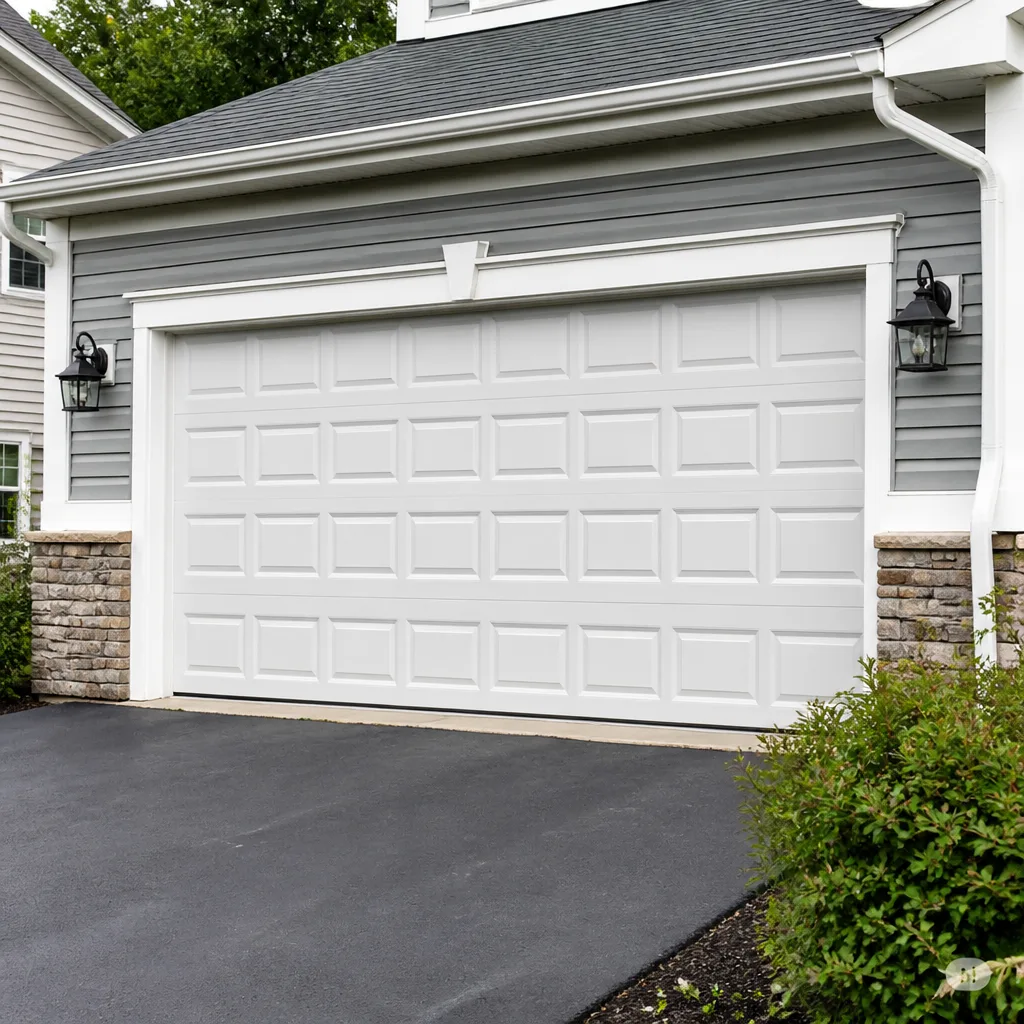 Raised-panel steel
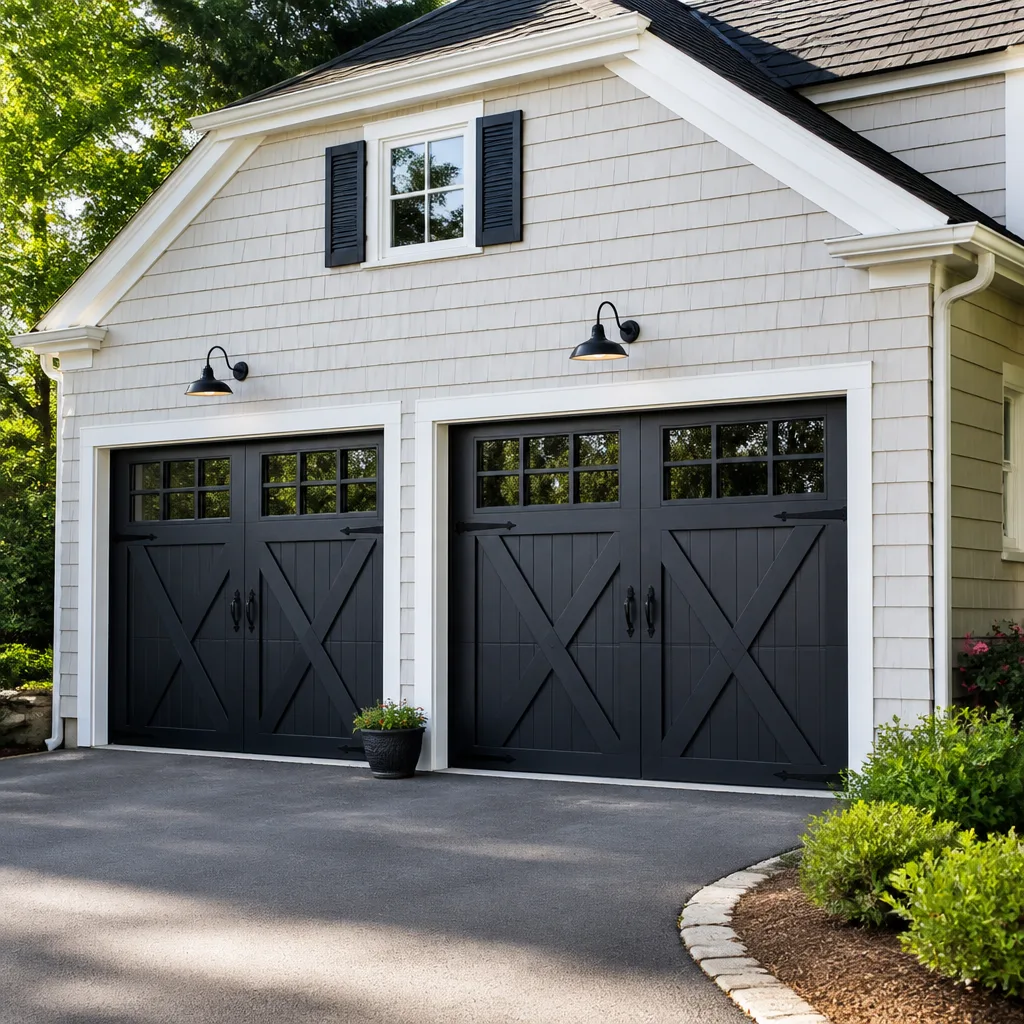 Carriage house
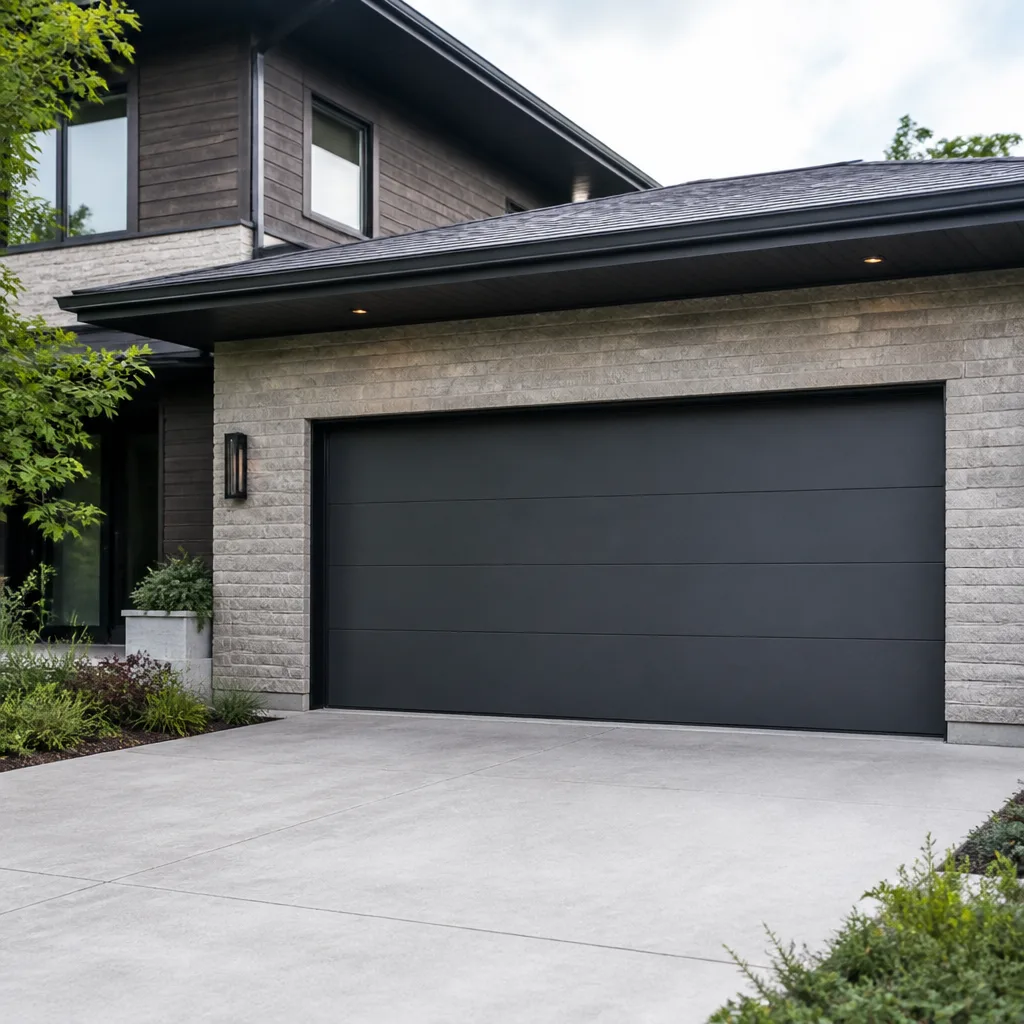 Modern flush
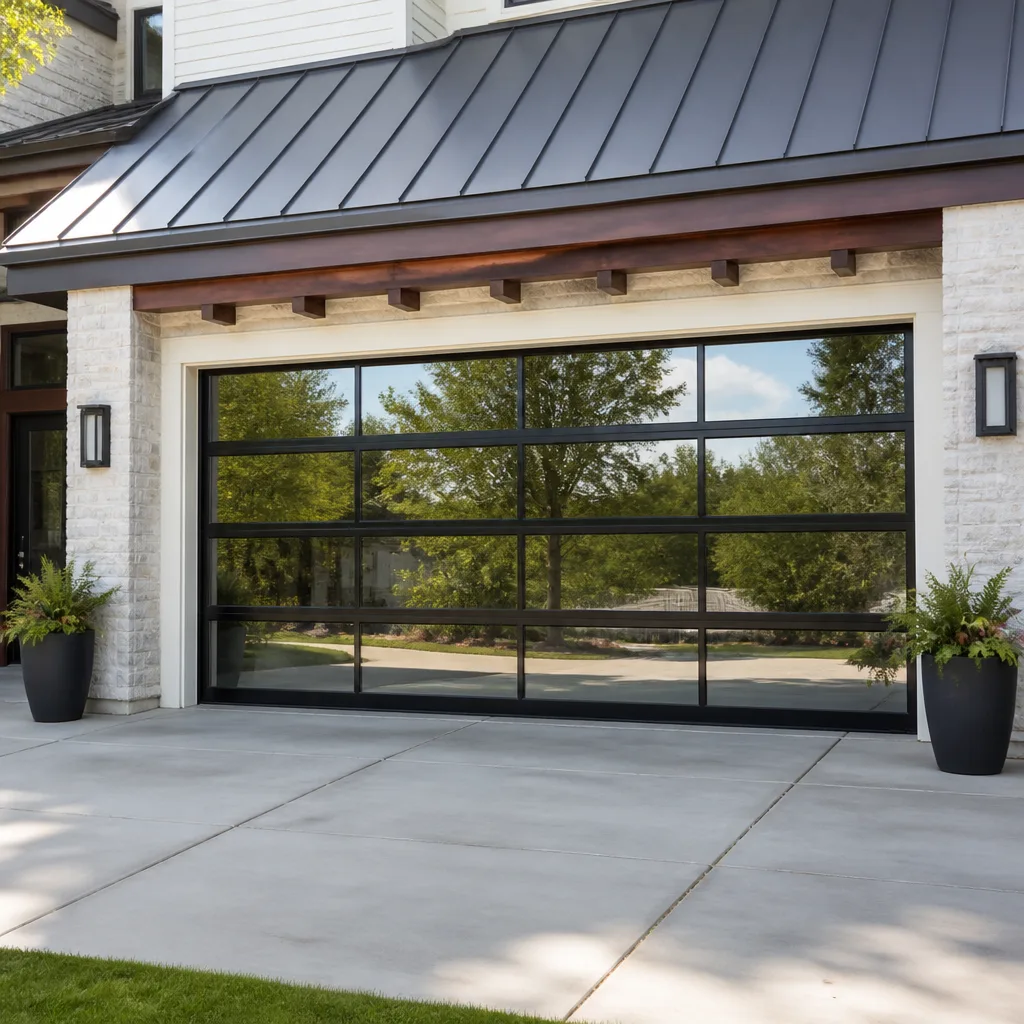 Full-view glass
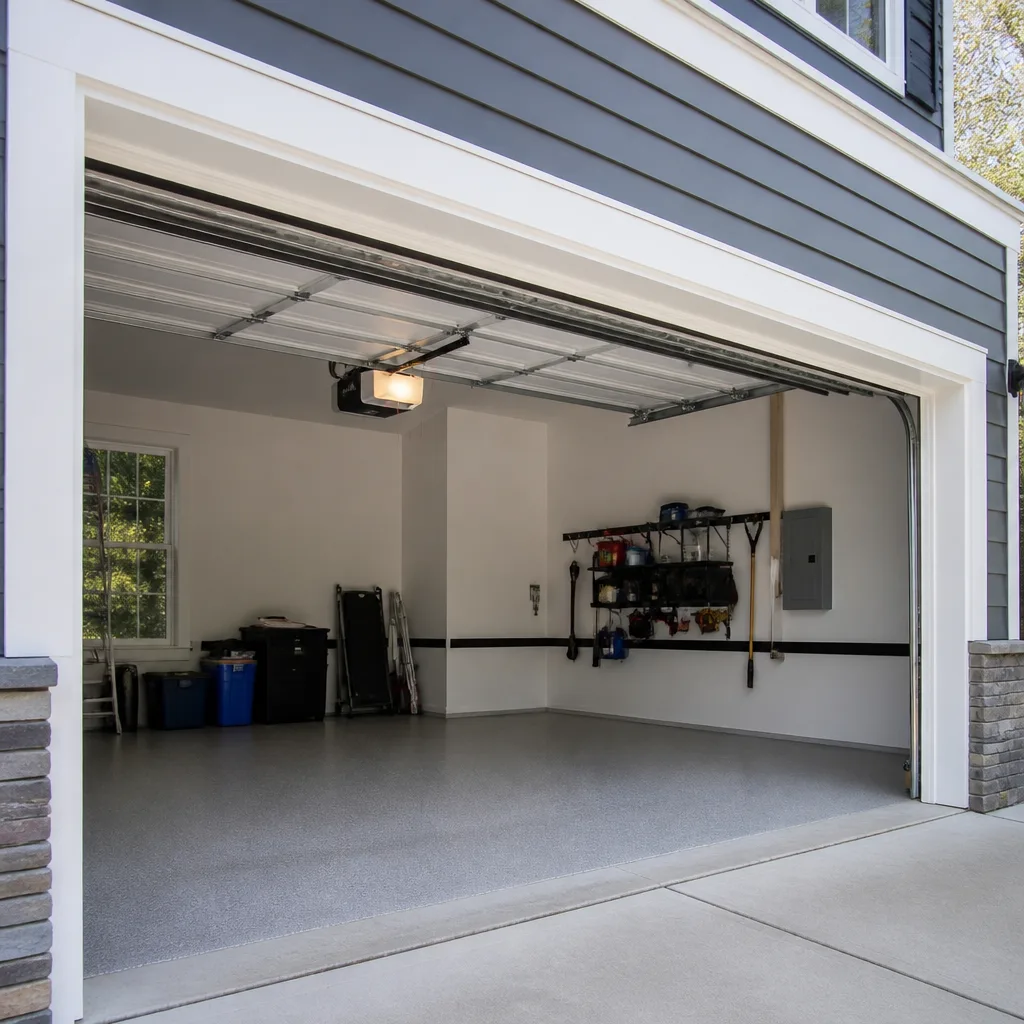 LiftMaster openers
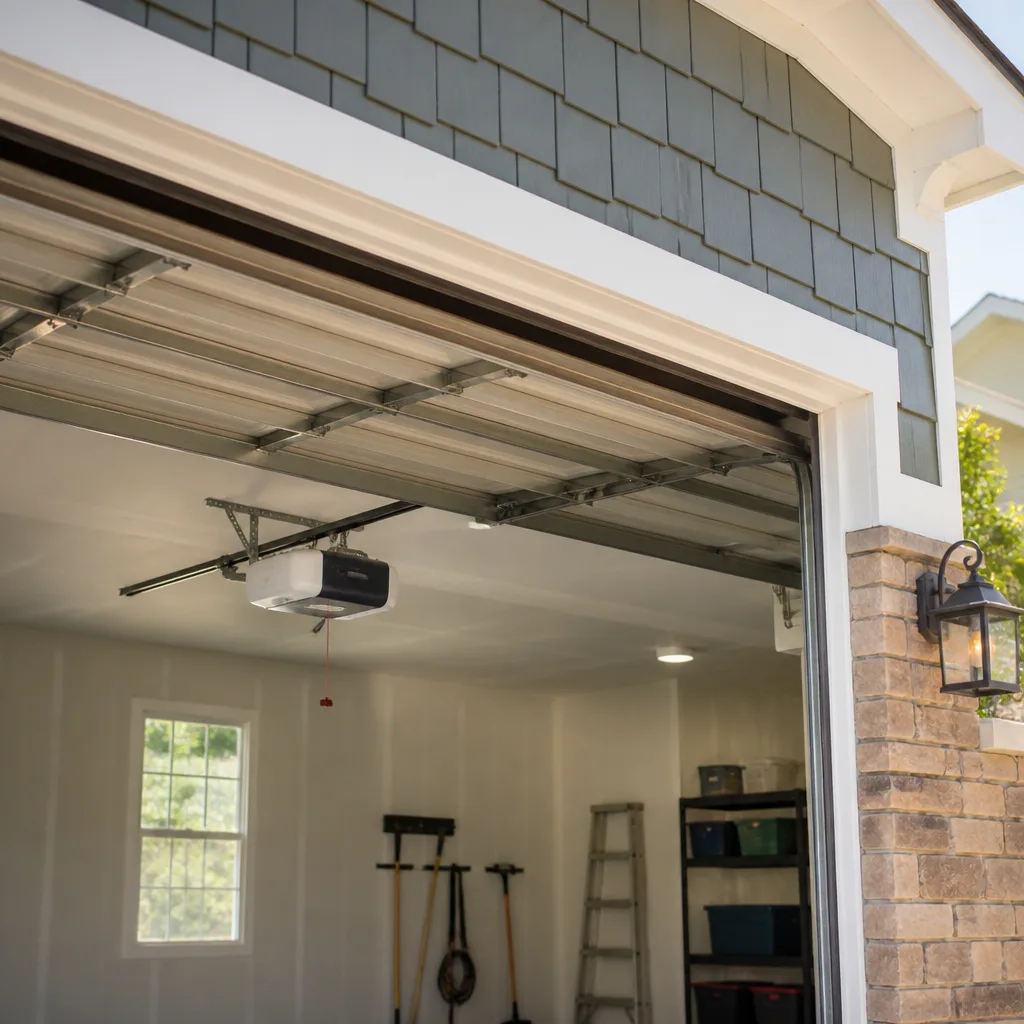 Chamberlain openers
Full 25-point door and opener safety check with every visit - springs, cables, rollers, tracks, and your LiftMaster or Chamberlain opener included
You get a price before we start. It does not change when the pro arrives.
Get your free estimateThe Complete Guide to Garage Doors in Clearwater
Most garage door guides are written for Ohio. They talk about ice dams, road salt, and driving snow. You won’t find those problems in Clearwater, but you’ll find plenty of others. Humidity that never really lets up. Salt in the air. Storm season that runs for roughly half the year. That combination attacks springs, cables, tracks, and hardware differently than a cold-weather guide will ever explain. Manufacturers build for a national average, and Clearwater isn’t average. This guide walks through every major component of a garage door system and explains what actually fails here, what holds up, and how to know the condition of the door you already own. It also covers the Florida wind-load rules that apply to doors across Clearwater. By the end you’ll be equipped to make a smart call, whether that’s a repair, a new opener, or a full replacement.
Quick Answer
A garage door in Clearwater is a mechanical system living in a humid, salt-laden, storm-exposed climate, and each part has a shorter realistic lifespan here than a national manual suggests. Steel hardware rusts faster, springs work against persistent moisture, and wind-rated doors and openers are the only ones that meet Florida’s storm requirements. Knowing which parts fail first in Pinellas County conditions is the difference between a routine repair and a full replacement. Clearwater Garage Door Repair Co services every major brand, from Amarr and Wayne Dalton to Craftsman and Raynor, so the diagnosis fits your door, not a catalog.
Styles & brands we work with
- Raised-panel steel
- Carriage house
- Modern flush
- Full-view glass
- LiftMaster openers
- Chamberlain openers
Table of Contents
- Why Clearwater Is Hard on Garage Doors
- What Fails First in Pinellas County Conditions
- Which Door Materials Hold Up in Clearwater
- Florida Building Code and Wind-Load Ratings in Clearwater
- Real Component Lifespans vs. Manufacturer Estimates
- How to Audit the Door You Already Own
- Choosing and Maintaining an Opener in Clearwater
- Should You Repair or Replace?
Why Clearwater Is Hard on Garage Doors
Clearwater sits in one of the most humid and salt-exposed climates in the continental United States. The air carries moisture year-round, with summer humidity that rarely drops meaningfully, and salt settles on any steel surface that faces the outside. That’s the difference from an inland climate. Steel, which is the most common garage door material in the country, corrodes far faster when moisture and salt sit on it continuously. Hinge pins, rollers, springs, tracks, and the fasteners that hold everything together are all steel. When those parts start to fail, the whole system moves differently. And that means it wears differently too.
On top of the humidity, Clearwater deals with hurricane season from June through November. Even in a year with no direct hit, the system still sees high wind, driving rain that pushes against seals and weatherstripping, and pressure that tests the door’s bracing. A door that was marginal in April can be a genuine concern by August. Homeowners across Clearwater notice this sequence: a door that used to close smoothly starts to ride rough, then the opener gets louder, then a roller or cable needs replacing. None of that is caused by one thing. It’s the compound effect of moisture, salt, and storm stress working on a system that was never meant to sit indefinitely in this environment.
What all that means for how we think about service in Clearwater:
- Maintenance intervals need to be shorter than the owner’s manual says, not longer.
- Lubrication matters as a routine, not a repair when the door starts squealing.
- Visual inspections matter because rust and cable wear show up before failure, not after.
- Wind-rated hardware is not optional for anything facing the weather in this county.
Every guide section below applies one question: what does Clearwater’s climate do to this component? That’s how we think about Clearwater Garage Door Repair Co and it’s how you should think about the door hanging on your own house.
What Fails First in Pinellas County Conditions
Across the Clearwater area, the same handful of components shows up in our service calls over and over. The order is consistent, and knowing it helps you get ahead of the next failure.
1. Springs. Torsion and extension springs carry the full counterweight of the door. They cycle thousands of times a year and they live in the most exposed part of the system. In Clearwater, humidity and salt accelerate surface corrosion on the coils, and once one coil starts to pit it doesn’t take long before the spring fails. A snapped spring is the most common physical breakdown on door systems here. Springs are also the single most dangerous thing on a garage door. They’re under extreme tension, and a single mistake can cause a serious injury. Never attempt spring work yourself. Call a trained technician.
2. Cables. Cables lift and level the door on both sides. They run right beside the springs and track, which puts them in the same salt-and-moisture zone. A frayed cable can snap under load. If you see strands starting to break or the cable looks rusted, that door should not be run.
3. Rollers and hinges. Corrosion here causes stiff, gritty movement and noise that keeps getting louder. Cheap steel rollers rust solid in this climate; nylon or sealed bearing rollers last far longer.
4. Tracks. Track misalignment from temperature cycling and humidity-driven expansion, plus rust at the anchor points, produces a door that rides rough and eventually jumps the track.
5. Openers. Motors themselves are durable. It’s the logic boards and wiring that take the hit, mostly from moisture and power fluctuations. That shows up as erratic behavior, remote failures, or a unit that won’t respond.
If your door is due for attention on any of those components, that’s garage door repair territory and worth handling before something bigger fails.
Which Door Materials Hold Up in Clearwater
Material choice is the biggest single decision when you’re buying a door in Clearwater. Every option has tradeoffs, and two of them are clearly better suited to this climate than the others.
Steel
Steel is the most common material in residential doors. It’s affordable, it’s strong, and it’s available in every finish and style. Its weakness in Clearwater is the same one that makes it common: bare steel corrodes. Coated steel that’s maintained properly holds up reasonably well, but coastal humidity eats through coatings faster than in other climates. If you go with steel, look for galvanized components inside the door and be deliberate about keeping paint and finish intact. Doors from manufacturers like Amarr and Wayne Dalton come in finishes and gauge options that vary considerably in weather resistance. That variation matters here more than it does inland.
Aluminum
Aluminum won’t rust the way steel does. That’s the obvious advantage for Clearwater. It’s also lighter, which means less stress on the opener and springs. The tradeoff is that aluminum dents more easily, and it doesn’t offer the same rigid feel as a well-built steel door. For some doors – a lot of full-view designs use aluminum framing – it’s the right answer. Aluminum is a strong fit for properties that are exposed to the weather from an open driveway.
Fiberglass
Fiberglass doesn’t corrode, and it’s resistant to the humidity that drives most material failures. It’s an option on some overlay and full-view door designs, and it works well with aluminum framing. It’s not as structurally rigid as steel or aluminum, so it isn’t the best choice for a high-wind-rated installation. It’s a decent option for interior-facing or shielded doors.
Wood and wood composite
Wood has the natural look that no other material really matches, and that’s most of why people choose it. In Clearwater, wood needs serious upkeep. Humidity drives expansion, contraction, warping, and mold or rot on unprotected wood, so annual sealing or refinishing is essentially non-negotiable. Wood composites are more stable and need less frequent maintenance, and they’re worth considering if you love the wood look but don’t want a yearly refinishing job. If your heart is set on a natural wood door, plan for the upkeep in your budget.
In our experience across the Clearwater market, aluminum framing for full-view doors and coated steel or composite for solid-panel doors are the combinations that hold up best in this climate.
Florida Building Code and Wind-Load Ratings in Clearwater
This is the section that separates a Clearwater garage door guide from a general one. Florida is serious about garage door wind ratings, and Clearwater is in a high-wind zone. Garage doors are the largest opening in most homes, which makes them a point of failure during a storm.
What the code requires
Under the Florida Building Code, garage doors on new construction and on replacements in designated wind-borne debris regions must be labeled and rated for the wind pressure at the specific address. The rating depends on several factors, including proximity to the coast and the building’s design. That’s why the same street can have different requirements on different houses. A door that meets the code in one location may not meet it in another. The manufacturer’s label on the door and the installation documentation are what building officials look for.
What that means for you
- A replacement door must be wind-rated for your location, not just for “Florida.”
- The reinforcement decides whether the door passes. A standard door with a low wind rating won’t meet the requirement just because it fits.
- Permits are typically required for garage door replacement in Clearwater. Check with the city’s building department before ordering.
- A door that clears code in a less exposed spot may need extra bracing or a higher rating at yours.
Keep the manufacturer’s label and installation documentation. It protects you at resale and if an inspector ever asks. If you’re planning a replacement, review the wind-load rating first and choose a door rated for it. Our garage door installation service starts with those requirements, not with which panel style looks best.
Real Component Lifespans vs. Manufacturer Estimates
Manufacturer lifespans are usually quoted for an average American climate. A cold, dry average. That’s not Clearwater, and the gap between the manual and reality matters when you’re deciding whether to repair or replace. The estimates below are typical ranges for Clearwater conditions. Actual life depends on exposure, use, and how the door has been maintained.
Springs. Manufacturer estimates often quote cycle counts that translate to 7-10 years for a typical residential cycle. In Clearwater, springs commonly fail sooner because of corrosion on the coils, and doors that run several times a day can fail in a fraction of that time. Spring replacement is our specialty and it’s the repair we do most. It’s also the one we tell homeowners never to attempt themselves.
Cables. Expect 3-5 years more commonly than 7 or more, especially if the door was ever run with a stiff or misaligned track. Frayed cable strands and rust are early warning signs.
Rollers and hinges. Standard steel rollers and hinges in this climate often need replacing in 5-8 years. Quality bearing rollers last longer, and they’re worth the small premium.
Tracks. Tracks themselves can last 10-15 years, but alignment and anchor hardware need periodic attention. A bent track is a replacement, not a straightening job, because it never quite runs true again.
Openers. Motors often run 10-15 years; electronics can fail earlier because of humidity and power quality. An opener that acts unpredictably is often a logic board or wiring issue, not a worn motor.
The door itself. A well-maintained steel door can last 15-20 years in Clearwater, a maintained wood door can last a similar span with regular refinishing, and an aluminum or composite door can last longer. Poorly maintained doors in this climate can fail well before that.
How to Audit the Door You Already Own
Before you call anyone, you can learn a lot about your own door. This is the audit we walk homeowners through. It takes about ten minutes and tells you where you stand.
Step 1: Identify the brand and model. Look at the label inside the door panel, or a stamped plate near the bottom of the track. Check the operator head for a brand logo. If the label is gone or unreadable, take a photo of the mechanism and any stickers. We work with garage door opener repair across every major brand, and a trained technician can usually identify a unit that’s lost its label.
Step 2: Look at the springs. On a torsion system (spring above the door), look for corrosion, gaps in the coil, or a visible split. On an extension system (springs on the sides), look for stretched coils. If you see a gap or a broken coil, stop. Don’t run the door.
Step 3: Check the cables. Look for frayed strands, kinks, or rust spots along the cable path. A cable that’s starting to fray is a hazard, and the door should stay closed until a technician sees it.
Step 4: Listen to the door. Run it once, from a safe distance. Consistent creaking, grinding, or popping means a roller, hinge, or track issue.
Step 5: Check the balance. Disconnect the opener and lift the door halfway by hand. It should stay put. If it drops or rises on its own, the springs need attention. If you’re not comfortable doing this, skip it and have a technician check.
Step 6: Inspect the appearance. Rust spots on the bottom rail or panel edges mean the finish is failing. Paint or refinish before the rust spreads.
Step 7: Check the weatherstripping and seals. A dry, cracked bottom seal lets rain and wind inside. The seal is replaceable.
Do those seven steps and you’ll know most of what a technician would tell you on the first visit. Part availability for older brands like Wayne Dalton and Craftsman varies by model year, which is another reason an accurate identification pays off.
Choosing and Maintaining an Opener in Clearwater
An opener is a small electric motor with a control board and a set of safety sensors. In Clearwater, the motor is rarely the problem. The electronics are. Humidity and power fluctuations take a toll on logic boards and wiring, and that shows up as remotes that stop responding, erratic travel, or a unit that works one day and doesn’t the next.
When it comes to the most common opener brands, LiftMaster and Chamberlain dominate, Genie and Craftsman are everywhere, and Raynor is common in certain developments. All four are serviceable, and parts are generally available. A technician who’s worked on your specific brand will fix it faster and more accurately than one who’s guessing, and at Clearwater Garage Door Repair Co we’re trained on all of them.
For an existing opener, the maintenance that matters:
- Test the safety reverse once a month. Put a small object in the door’s path and confirm the door reverses.
- Check the photo-eye sensors. Clean the lenses and make sure nothing is blocking the beam.
- Keep the unit dry. An opener that gets wet in a storm may fail weeks later without a clear cause.
- If a unit is over a decade old and has needed two or more electronic repairs, replacement is usually the cheaper path.
The common mistake we see in Clearwater is replacing an opener when the actual problem is a worn spring or a sticking roller. The opener had to work harder, so it looks like the culprit. A proper diagnosis avoids that waste. If your opener is struggling, have the whole system checked, not just the box on the ceiling.
Should You Repair or Replace?
Most homeowners want a straight answer here. It depends on three things: the door’s structural condition, the age of the system, and how many failed components you’re dealing with. The guidance below is what we apply when we look at a door in Clearwater.
Repair makes sense when:
- One or two parts have failed – a spring, a cable, a roller set – and the rest of the system is sound.
- The door is structurally intact and wind-rated for your location.
- The cost of the repair is well under the cost of a new door, and the door has meaningful remaining life.
Replace makes sense when:
- The door is beyond its reasonable lifespan for this climate, and multiple components are failing in a short period.
- The wind rating is inadequate for your address, which is a safety issue, not a cosmetic one.
- The door is structurally compromised: rust-through on panels, a bent track that won’t run true, or a badly warped frame.
- Repairs would cost more than half the price of a new door, and the new door would last longer in this climate.
When replacement is the answer, you don’t have to call anyone else. We diagnose, repair, and install the full arc, so a door that needs replacing gets replaced by the same company that told you it needed replacing. Call (833) 468-3520 for a free estimate and we’ll give you a straight answer on repair vs. replace, with an upfront price you agree to before any work begins.
Common Mistakes to Avoid
- Attempting spring work yourself. A torsion or extension spring is under extreme tension even when the door is closed. One wrong move can cause a serious injury. Call a trained technician. This is the single most dangerous thing on a garage door.
- Skipping lubrication because the door “seems fine.” In Clearwater, a door that runs quietly still needs lubrication on the springs, hinges, and rollers. Corrosion starts before noise does.
- Buying the cheapest steel door without checking the finish. Clearwater humidity eats through low-grade coatings faster than a manual predicts. Ask about the finish and look for galvanized components.
- Ignoring the wind rating. Replacing a door without checking its rating for your address can fail a building inspection and leave the largest opening on your house under-protected.
- Running the door after a cable frays. A frayed cable under load can snap. Stop using the door and call a technician.
- Replacing an opener when the real problem is a worn spring or roller. The opener works harder than it should and seems at fault. A whole-system check saves you the wasted purchase.
- Letting rust spread on the bottom rail. A small rust spot becomes a rust-through pinhole, then a panel replacement. Sand and refinish while the rust is cosmetic.
See the difference
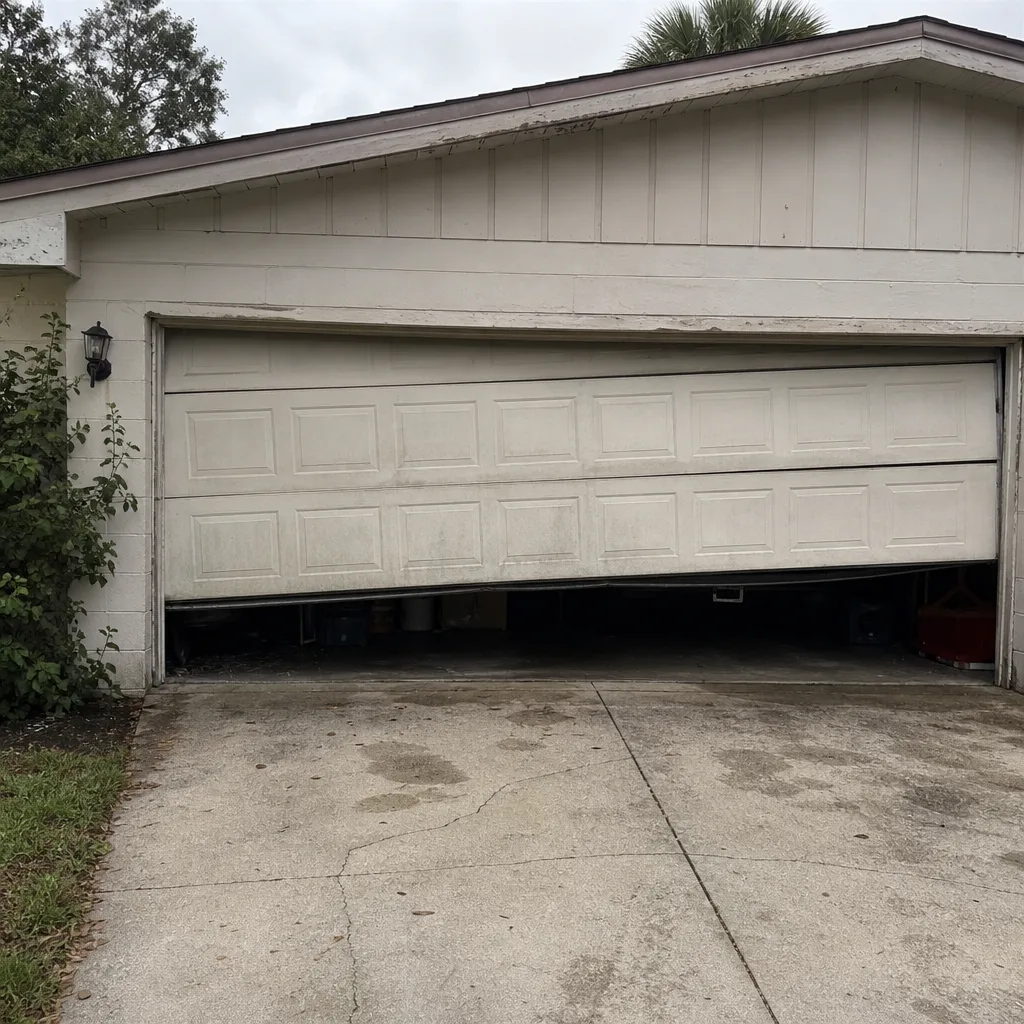 Before
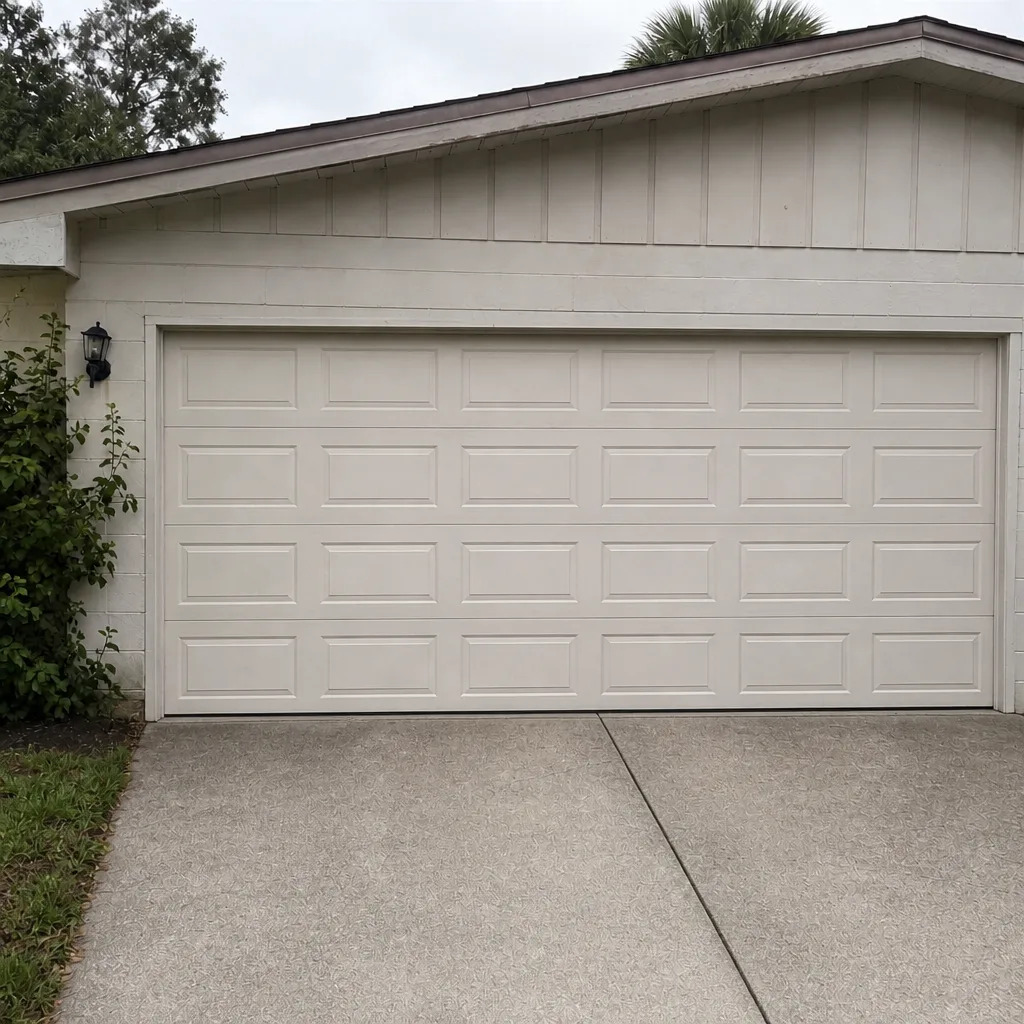 After
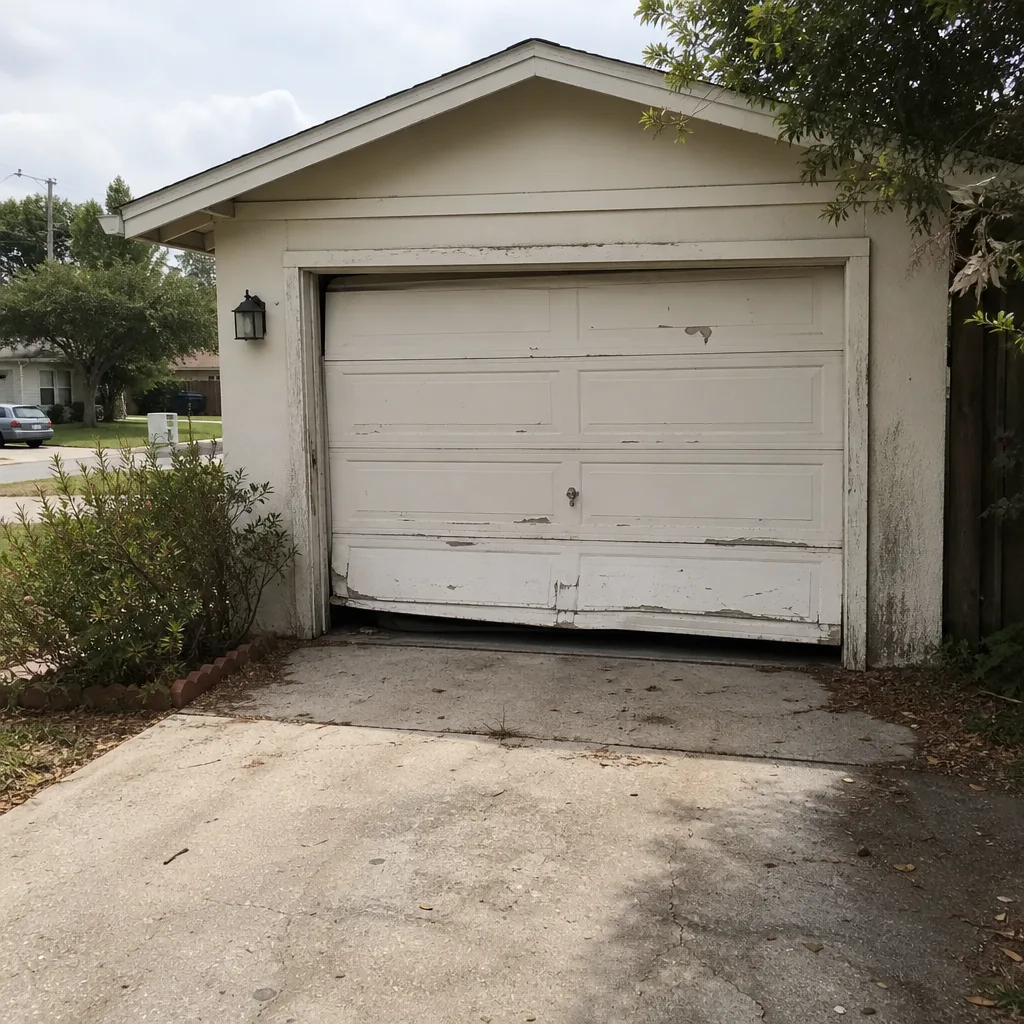 Before
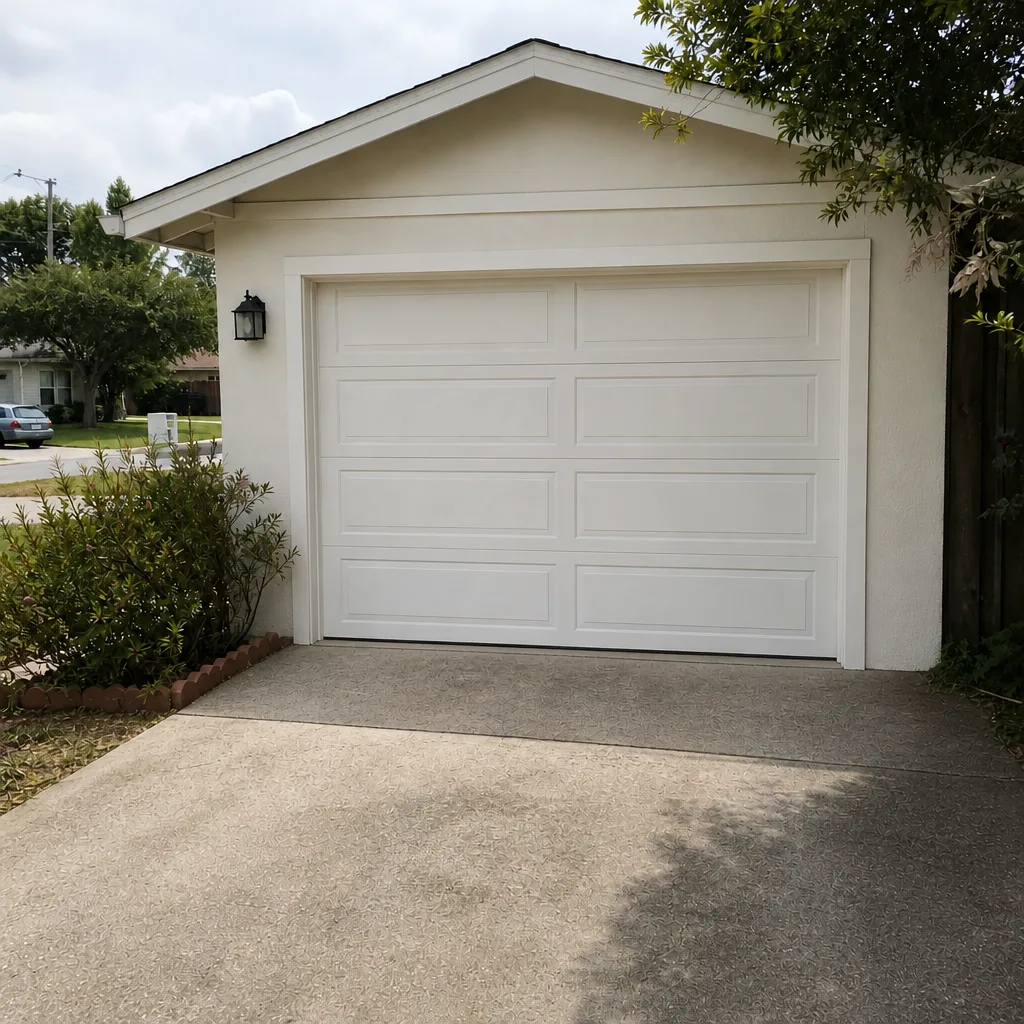 After
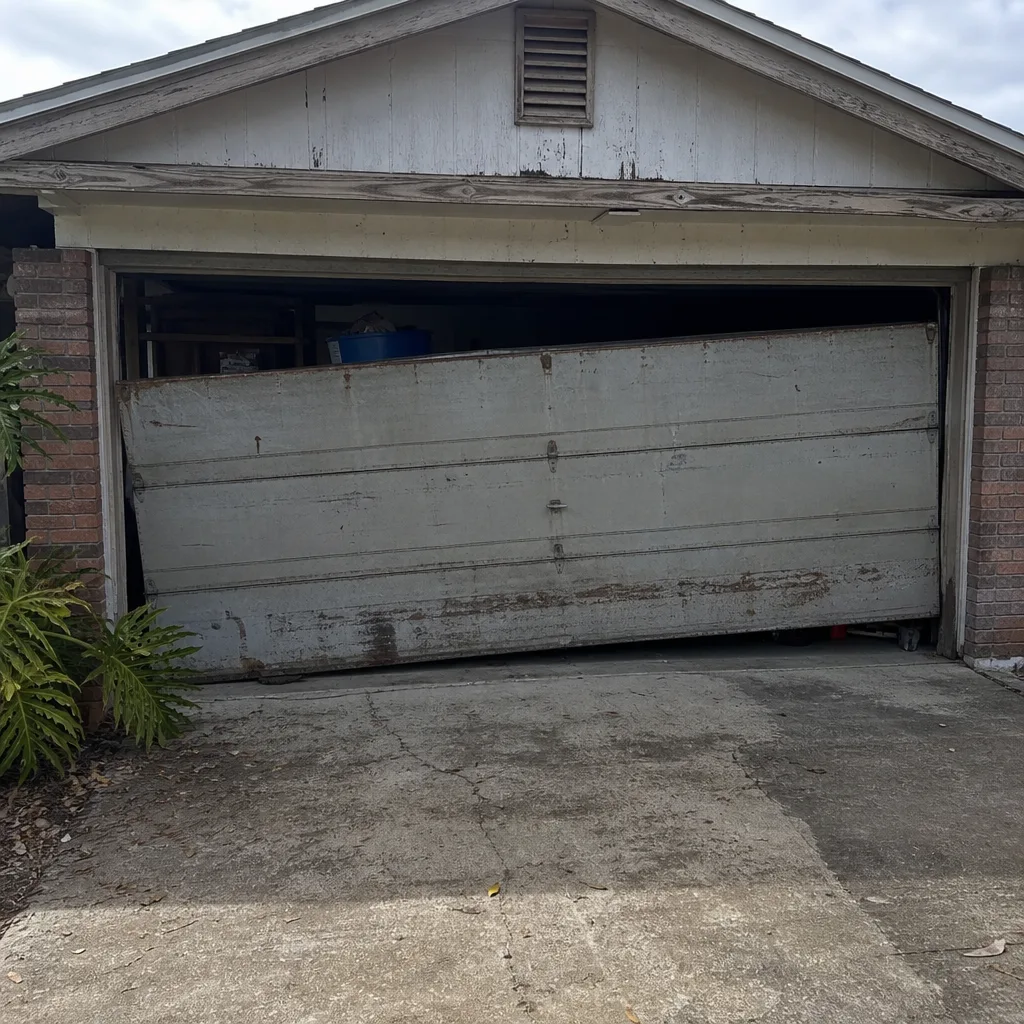 Before
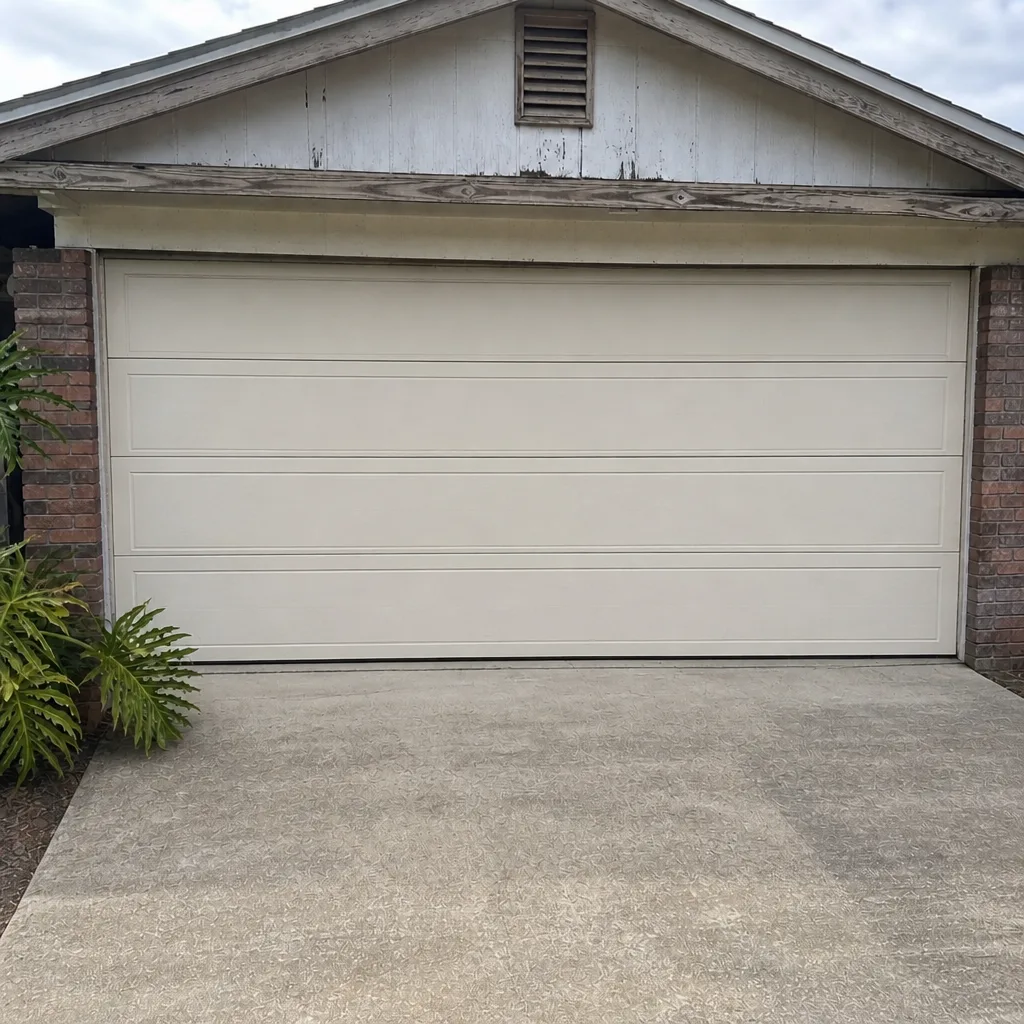 After
When to Call a Professional
Some jobs aren’t worth the risk. Spring work, cable replacement, and anything involving the door’s tension system are dangerous and belong to a trained technician. That’s not a sales pitch – it’s the plain truth about how these systems fail. Call us when a spring snaps, when a cable frays, when the door jumps the track, when an opener stops responding, or when the door won’t stay balanced when you lift it by hand. And call us when you’re not sure: a free estimate is the cheapest possible way to find out whether the problem is small or serious. Clearwater Garage Door Repair Co offers free estimates in Clearwater and handles the full arc, from an emergency call on a Friday night to a full replacement quoted after a measured appointment. Call (833) 468-3520. We work on your brand, from LiftMaster and Chamberlain to Amarr and Wayne Dalton, and our technicians have up to 12 years of experience.
Frequently Asked Questions
In Clearwater, humidity and salt exposure wear out springs, cables, and steel hardware faster than in a dry or cold climate, so maintenance intervals need to be shorter than the manufacturer’s manual suggests. Wind rating also matters here in a way it doesn’t inland, because Florida Building Code requires wind-rated doors in high-wind zones. If you’re comparing guides, make sure the schedule is calibrated to a humid climate, not a national average. Call (833) 468-3520 for a free estimate if you want your own door’s condition assessed.
Look for a label or stamped plate inside the door panel, near the bottom of the track, or on the operator head on the ceiling. Decals and model stickers usually carry the brand and sometimes the model number. If the label is gone, a technician can identify most units from construction details on a service visit. We service every major brand in Clearwater, including Wayne Dalton, Craftsman, Amarr, and Raynor, so identification rarely stops us.
We connect Clearwater homeowners with independent local professionals who are licensed and insured as required by the state. That’s the standard to ask about in any trade, and it’s the one we hold. If a technician can’t answer cleanly when you ask, that’s a reason to keep looking. Call (833) 468-3520 for a free estimate and a direct answer on who’ll be coming to your door.
In most cases, yes. Florida Building Code requires wind-rated doors in designated zones, and local building departments typically want to see the label and installation documentation. Always check with the City of Clearwater’s building department before ordering a door, because the wind rating requirement varies by address. A door that meets the code at one house may not meet it at another. A free measure and a written quote will confirm what your address needs.
Springs in Pinellas County commonly fail sooner than the national average because corrosion on the coils accelerates failure, and doors that run several times a day wear faster still. Manufacturer estimates of cycle life assume a mild climate, which is not this one. If you hear a bang from the garage or the door won’t lift, don’t run it. Call (833) 468-3520 for a free estimate and a same-day evaluation where the schedule allows.
For repairs, yes, in many cases. Same-day repair is what we aim for, and emergency garage door service is a core part of what we do, including calls outside business hours. New doors are different: they’re measured, ordered, and scheduled, so the right approach is a free measure and a written quote, not a same-day install. Either way, the price is quoted and agreed before any work begins, so there’s no surprise at the end. Call (833) 468-3520 for an exact estimate.
The Bottom Line
A garage door in Clearwater is a system living in a hostile climate. The manual’s maintenance schedule was written for somewhere else, so the springs, cables, and steel hardware on your door need more attention than it suggests. Wind rating isn’t optional here; it’s code. Springs are the dangerous part and deserve a specialist, not a DIY weekend. When you audit your own door, you’ll know whether you’re looking at a repair or a replacement, and you’ll be able to ask the right questions of whoever shows up. Clearwater Garage Door Repair Co handles every brand, from LiftMaster and Chamberlain to Amarr and Wayne Dalton, and covers the whole arc: emergency service, routine repair, spring work, opener repair, and new installation. Our technicians have up to 12 years of experience, and the price is agreed before any work starts. Call (833) 468-3520 for a free estimate.
Written by the team at Clearwater Garage Door Repair Co.