Last updated November 21, 2026
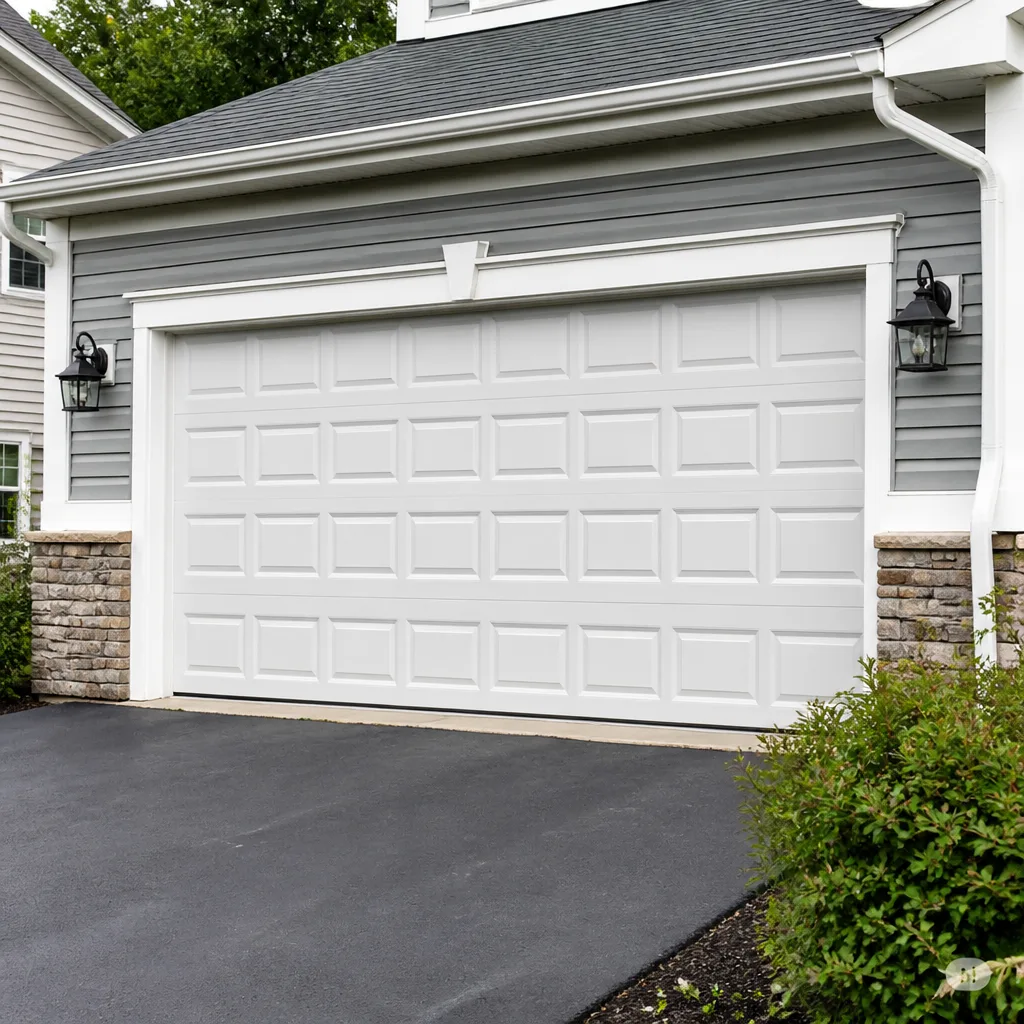 Raised-panel steel
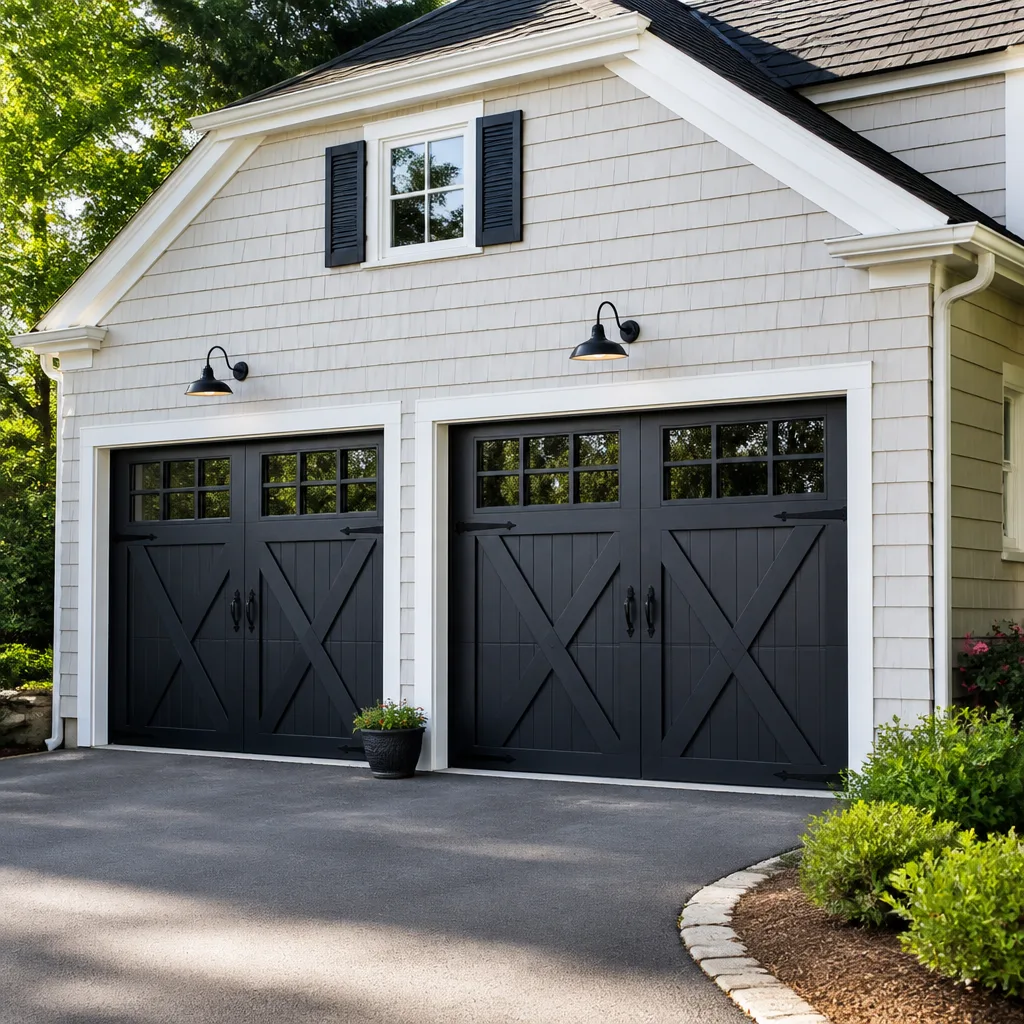 Carriage house
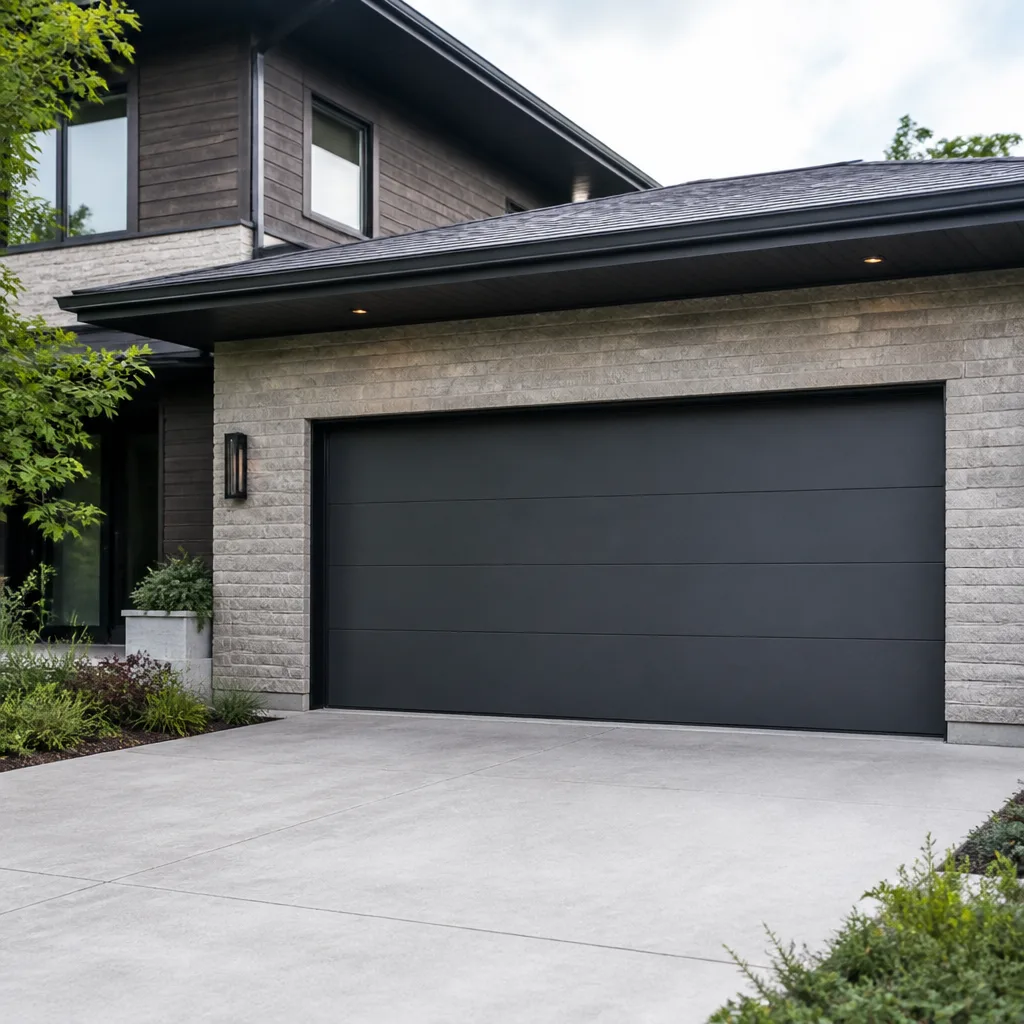 Modern flush
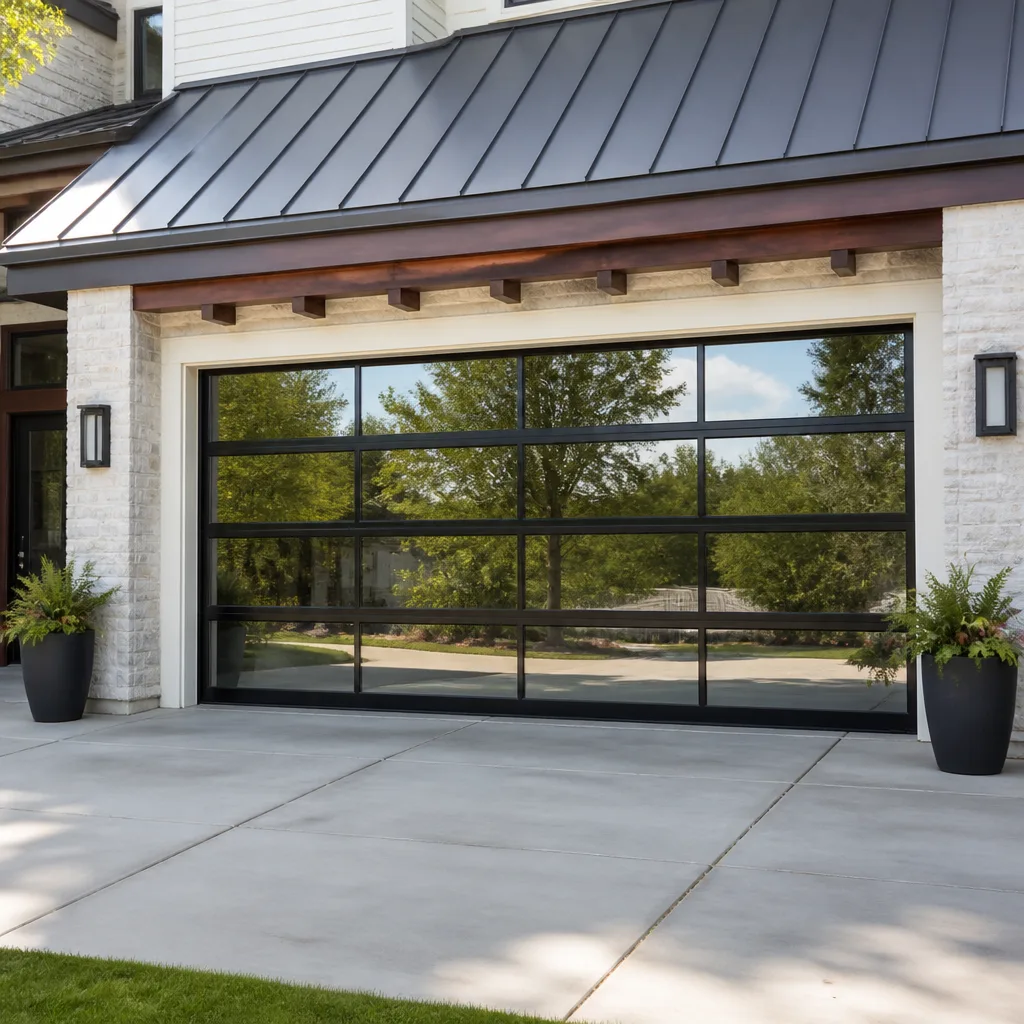 Full-view glass
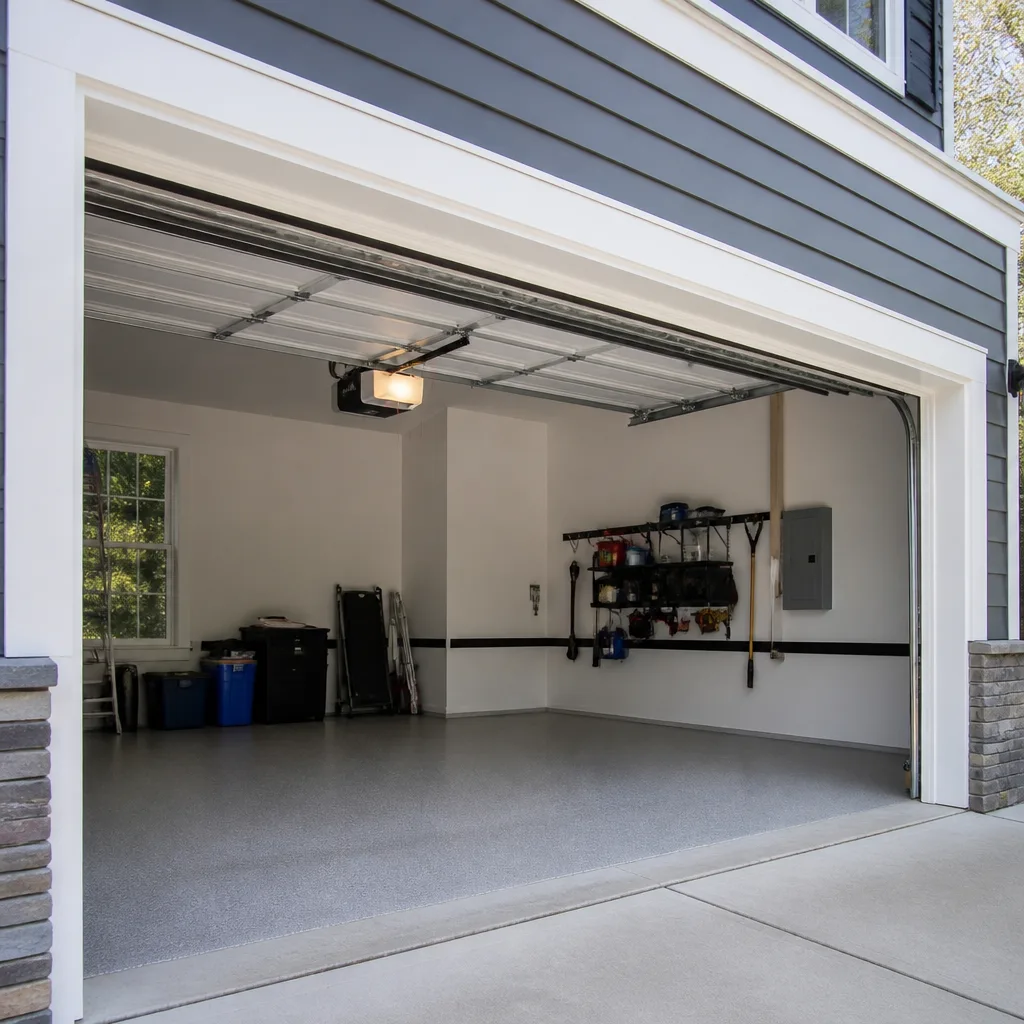 LiftMaster openers
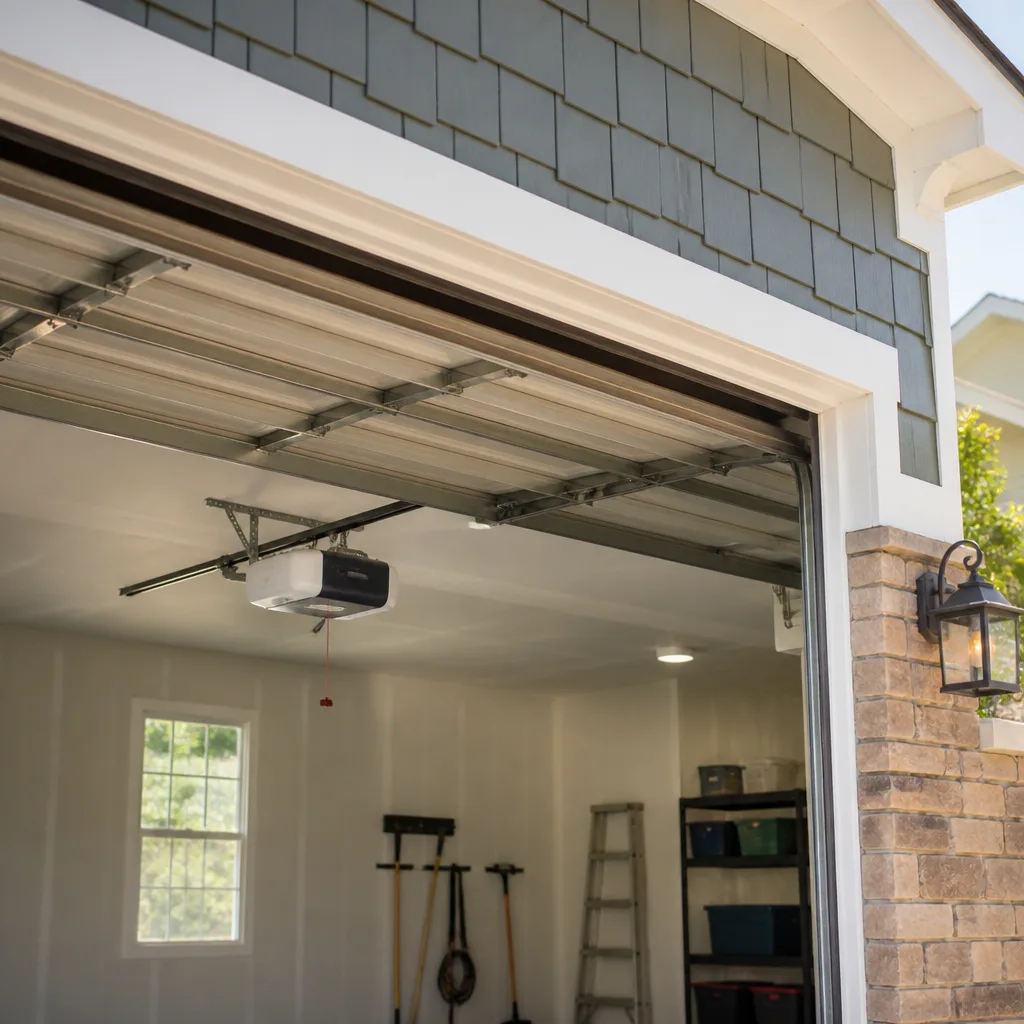 Chamberlain openers
Full 25-point door and opener safety check with every visit - springs, cables, rollers, tracks, and your LiftMaster or Chamberlain opener included
You get a price before we start. It does not change when the pro arrives.
Get your free estimateGarage Door Emergency Preparedness Guide for Clearwater Homes
Most Clearwater homeowners think about their garage door only when it stops working. That’s the wrong reflex, and it’s an expensive one. A garage door is the largest moving object in your house, the heaviest security barrier on your front elevation, and the one part of your home you have to operate by hand the moment the power goes out. In our experience, the households that fare best through a storm season aren’t the ones with the newest doors. They’re the ones who already know how to release the door manually, where the emergency hardware lives, and what to do in the first five minutes after something snaps. This guide covers exactly that: the readiness steps, the manual release walkthrough, what to do when a spring fails, and how a storm-season checklist for Clearwater homes actually looks.
Quick Answer
A garage door emergency in Clearwater usually isn’t a breakdown at all – it’s a door that won’t seal before a storm, a car trapped by a dead opener during an evacuation order, or a homeowner who doesn’t know how to disengage the door by hand. Every home with an automatic opener has a manual release cord, and knowing how to use it – plus how to re-engage and secure the door afterward – solves most of those emergencies on the spot. For an actual spring or cable failure, the safest move is to stop operating the door and call a specialist.
Styles & brands we work with
- Raised-panel steel
- Carriage house
- Modern flush
- Full-view glass
- LiftMaster openers
- Chamberlain openers
Table of Contents
- How to manually release your garage door when the power is out
- How to secure your garage door from the outside before a storm
- What to do the moment a spring breaks
- Pre-hurricane-season garage door checklist for Clearwater homes
- Evacuation day: getting your car out when the door won’t lift
- Who to call and what to tell them in a time-sensitive scenario
- Power outages, openers, and the parts that fail first
- Simple maintenance that prevents most emergencies
How do you manually release a garage door when the power is out?
Pull the emergency release cord that hangs from the trolley on your opener’s overhead rail, then lift the door by hand. That single sentence is the answer, and yet it’s the step most homeowners have never practiced. The cord is usually a red handle with a short rope, suspended below the rail roughly six feet off the floor. Pulling it disconnects the door from the opener’s carriage so the door moves freely on its tracks. Once the power returns, you push the door back toward the opener until the trolley re-engages, then run the opener once to confirm it catches. In Clearwater, where a summer thunderstorm can knock out power for an afternoon, this is a skill worth rehearsing before you need it.
The cord setup differs slightly by brand, and most Clearwater homes we work on run one of a handful of common openers. The operation is the same across them – find the cord, pull firmly, lift by the door’s bottom section if you can reach it comfortably – but the position of the trolley and the shape of the handle vary:
- LiftMaster and Chamberlain openers typically hang a red T-handle on a rope from the carriage, right below the rail.
- Genie openers often use a similar cord with a rounded red grip, sometimes mounted slightly off-center.
- Craftsman units generally have a pull cord near the trolley with a small printed tag explaining the release.
- Raynor and other brands put the release in the same place, though the carriage design can make the pull feel tighter.
When the cord is stuck, missing, or won’t pull
A release cord that won’t budge is usually a sign of tension on the carriage from the opener or a door that hasn’t fully closed. Don’t yank it hard – a sudden release under load can let the door drop. If the cord is missing entirely, you can usually reach the release lever on the trolley itself by standing on a step stool and pressing or sliding the lever in the direction it moves. If you can’t operate the release safely, that’s a call to a technician rather than a workaround.
How do you secure a garage door from the outside when the power is out?
Close the door fully first, then lock it. With the opener disengaged, the door has no motor holding it down, so a door left partly open in a storm is a real risk. From outside, the simplest secure option is a slide lock or a lock bar installed through the door’s track, which stops the door from being lifted from the exterior. Many Clearwater doors also have a keyed exterior handle that locks the door’s mechanism. If your door has neither, a door that’s been manually closed and set all the way down on its weather seal is still far safer than one left raised.
Here’s the sequence that works for a door with no power and no lock hardware:
- Disengage the opener only if the door is already closed – leave it engaged if it’s fully down and the opener isn’t holding it up.
- Lower the door by hand until the bottom seal compresses against the floor.
- If you have an exterior lock or slide bolt, engage it now.
- If you don’t, brace the door from the inside with a bar wedged against the tracks if you’re securing from within, or accept that a closed, seated door is your best available option.
Before storm season, it’s worth checking whether your door has a wind-lock or a rated locking system. Some doors sold in Clearwater are fitted with hardware designed to hold the door against wind pressure, and if that hardware is missing or loose, the door’s ability to stay put drops. Ask a technician to check it if you’re unsure.
What should you do the moment a garage door spring breaks?
Stop operating the door immediately and keep everyone, including pets, away from it. A torsion or extension spring under load carries enormous force, and a door with a broken spring is no longer balanced – it can fall hard and fast. If the door is stuck open, don’t try to force it down by hand. If it’s stuck closed, leave it. If it’s mid-travel, don’t touch it. Call for emergency service and describe exactly what you see. The springs are the most dangerous part of the entire system, which is why we treat spring repair as a specialty rather than a routine swap.
What you do next depends on where the door stopped:
- Door stuck closed: Leave it. Cars behind it can wait. Trying to lift a door with a broken spring by hand risks the door coming down on you.
- Door stuck open: Keep people and vehicles clear of the opening. Don’t try to walk the door down. A trained technician can secure it with the right tools.
- Door caught mid-travel: This is the most dangerous position – the door is hanging unbalanced in the tracks. Don’t push, pull, or prop it. Call and wait.
One thing worth explaining up front: springs are replaced one at a time, and when a matched pair has one failure, the pair is usually replaced together, so a pair costs roughly double a single spring. Our technicians have up to 12 years of experience, and they’ll tell you honestly which approach your door needs after they’ve looked at it.
What does a pre-hurricane-season garage door checklist look like in Clearwater?
Run through this once before storm season starts, and again if a named storm is heading toward Clearwater. It takes less than fifteen minutes and catches most of the failures that turn into emergencies later.
- Test the balance. Disengage the opener and lift the door halfway by hand. It should stay put. If it drifts down or up on its own, the springs are losing tension.
- Check the weather seal. Look along the bottom of the door for gaps, tears, or a seal that’s flattened against the floor. A door that doesn’t seal will let wind-driven rain in.
- Inspect the tracks. Look for bends, dents, or debris in the tracks. A door that shudders as it moves is telling you it’s out of alignment.
- Test the manual release. Pull the cord, lift the door by hand, then re-engage the trolley. Confirm the opener catches it again.
- Verify wind-lock hardware. If your door has a wind-lock or rated locking system, confirm it’s present, tight, and moves freely.
- Check the emergency release and exterior lock. Make sure the cord is intact and reachable, and that your exterior lock or slide bolt works.
- Test the safety reverse. Place a roll of paper towels under the door and close it. The door should reverse on contact. If it doesn’t, the opener needs attention.
- Confirm your opener’s battery backup, if it has one. Some models keep the door operating through a short outage. Test it before you need it.
A door that fails any of these isn’t a reason to panic, but it is a reason to schedule service before a storm rather than after one. Clearwater storm-season demand is real, and getting on the schedule early beats calling during a backlog.
Evacuation day: how do you get the car out when the door won’t lift?
Pull the manual release cord, lift the door by hand, drive out, and lower it back down before you leave. That’s the whole procedure, and it’s the one people most often can’t perform under pressure because they’ve never practiced it. During an evacuation order, a stuck door becomes a far bigger problem than a broken spring – you need the car out now, and you need the house secure behind you. Practice the release once in calm weather so your hands know the motion when they’re not calm. If the door won’t lift by hand after the release, that often means a broken spring or a door off its tracks, and lifting it manually isn’t the right move; call for emergency help.
Once the car is out, don’t leave the door open. Lower it fully by hand and secure it from the outside if you have the hardware. If you’re leaving for an extended period, a door that’s fully closed and locked is the only version of “secure” that means anything. And if you can’t get the door down or can’t secure it, say so when you call – that’s a job that needs a technician, not a workaround.
Who should you call in a time-sensitive garage door scenario, and what should you tell them?
Call a garage door specialist, and tell them three things: what the door is doing, where it’s stuck, and what brand of door and opener you have. Those three facts let a technician arrive with the right parts the first time, which matters when the door is hanging open and a storm is coming. Clearwater Garage Door Repair Co handles emergency garage door service as a core offering, not an afterthought, so a door that fails at an inconvenient hour is exactly the kind of call we take. When you ring (833) 468-3520, describe the problem in plain words – “the door is stuck halfway open and I can hear the spring rattling” tells us more than the model number.
Here’s what’s useful to have ready when you call:
- What the door is doing – closed, open, or mid-travel.
- Whether you’ve tried the manual release, and what happened.
- The brand of the door if it’s visible (Clopay, Amarr, Wayne Dalton, and others are common in Clearwater) and the opener brand if you know it.
- Whether anyone or anything is under or near the door – that changes how urgently we respond.
- Whether the door needs to be secured outside before you leave.
We work on LiftMaster, Chamberlain, Genie, Clopay, Amarr, Wayne Dalton, Craftsman, and Raynor equipment, which means the technician arriving at your door has likely worked on your exact hardware before. That cuts down on the “let me look at this and get back to you” phase, which is the part nobody wants during a storm.
How do power outages affect your garage door, and which parts fail first?
A power outage leaves the door exactly where it was when the power cut – and if the opener was mid-cycle, the door can be caught partly open with no motor to move it. The parts most likely to leave you stranded are the opener’s logic board, the safety sensors, and the springs. Sensors are the most common culprit for a door that won’t close at all, and they’re often knocked out of alignment by nothing more than a bump. Springs fail from age and cycle count, not from the outage itself, but an outage is when people discover a spring was already weak. Regular garage door repair service catches all three before they strand you.
Most modern openers have a battery backup that keeps the door moving for a limited number of cycles, but not every home has one, and the battery doesn’t last forever. If your opener has never been serviced and you’re not sure whether it has a backup, that’s a quick check a technician can do during any routine visit. Opener repair is often simpler than people expect – a sensor realignment or a battery replacement solves a surprising share of “dead door” calls.
What maintenance actually prevents garage door emergencies?
Lubricate the moving parts, tighten the hardware, and test the balance and safety reverse once a season. That’s the whole list, and it prevents more emergencies than any single repair. A door that’s been lubricated and balanced rarely fails without warning; the cracks and groans people describe before a breakdown are usually the sound of neglect. In our experience, the most common preventable failure is a door that hasn’t been serviced in years and finally gives out at the worst possible moment. Our technicians have up to 12 years of experience and can spot which parts are close to failing before they do.
Two maintenance tasks are worth doing yourself and two are not. Lubricating the rollers, hinges, and tracks with a garage-door-specific lubricant, and testing the safety reverse, are safe for a homeowner. Adjusting spring tension and working on the torsion bar are not – those stay with a trained technician. If your door is making a sound it didn’t make last month, that’s the moment to schedule a check, not after the door stops lifting.
If you’re planning a bigger change, our garage door installation service covers the full replacement arc, from measuring and ordering to final adjustment. If you’ve inherited an old door that’s been tinkered with, a full replacement is sometimes the safer and cheaper path than repeated repairs, and we’ll say so plainly when that’s the case.
Common Mistakes to Avoid
- Never trying the manual release until the power is already out. Practice it once while the weather’s calm so it’s muscle memory when it isn’t. This is the single most valuable preparedness step in this guide.
- Yanking a stuck release cord. A cord that won’t pull usually means there’s tension on the carriage. Pulling harder can let the door drop. Stop and call if it won’t release smoothly.
- Force-lifting a door with a broken spring. The door is no longer balanced, and the weight can come down without warning. Leave it and call a specialist.
- Leaving the door open during an evacuation. A closed, seated door is not the same as a locked one, but an open one is worse. Lower it by hand and secure it if you can.
- Ignoring a door that doesn’t seal before storm season. A gap along the bottom lets wind-driven rain in and contributes to interior damage a garage should be protecting you from.
- Assuming a battery backup will carry you indefinitely. Backup batteries have a limited number of cycles and age out. Test yours rather than trusting it.
- Calling after the storm instead of before. Clearwater storm-season demand is real. Getting on the schedule early beats waiting in a backlog when something fails.
See the difference
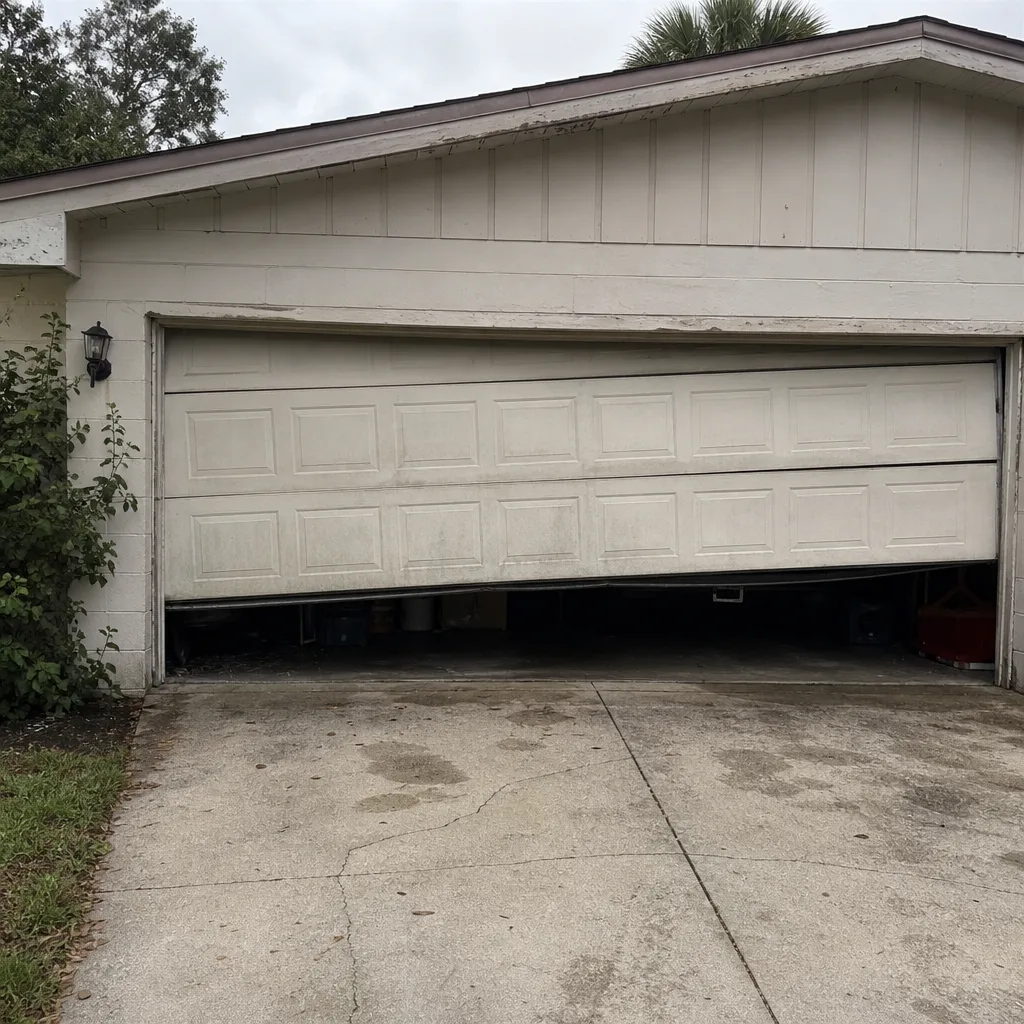 Before
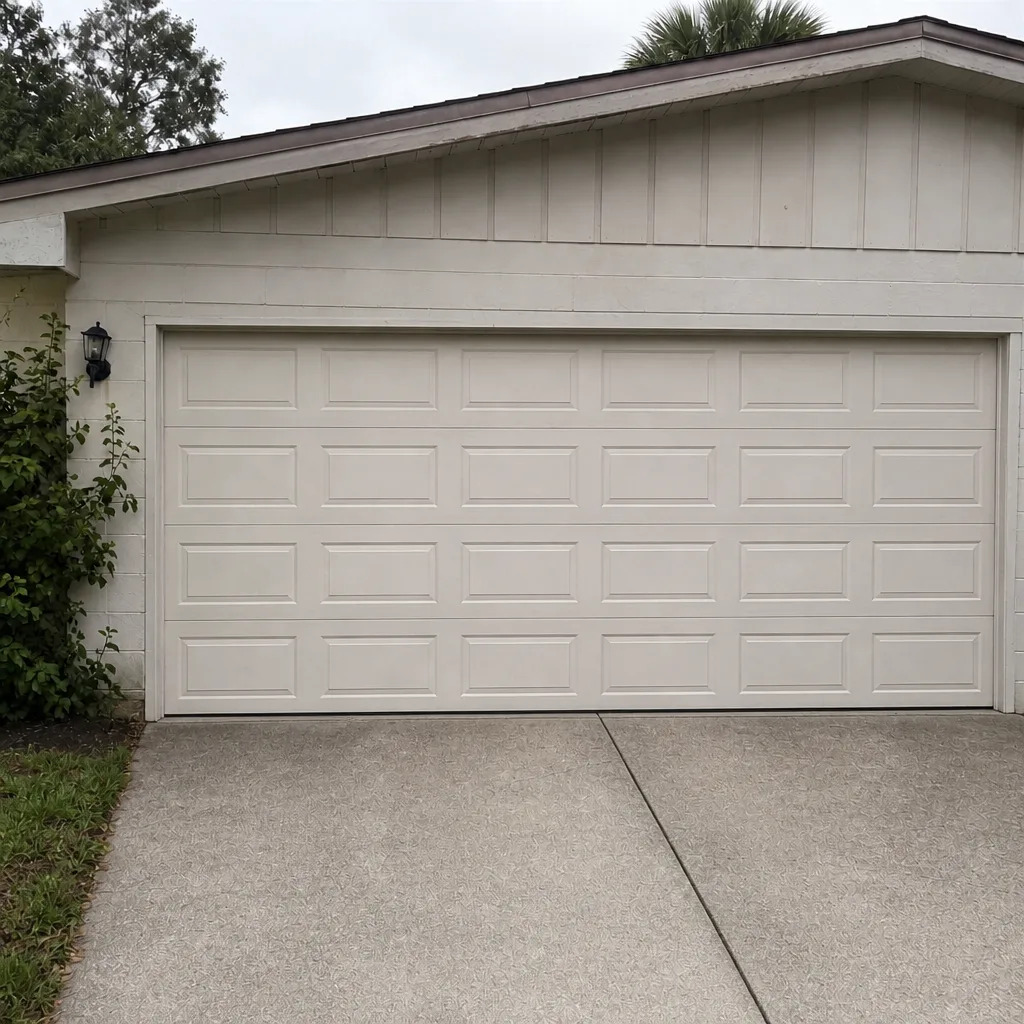 After
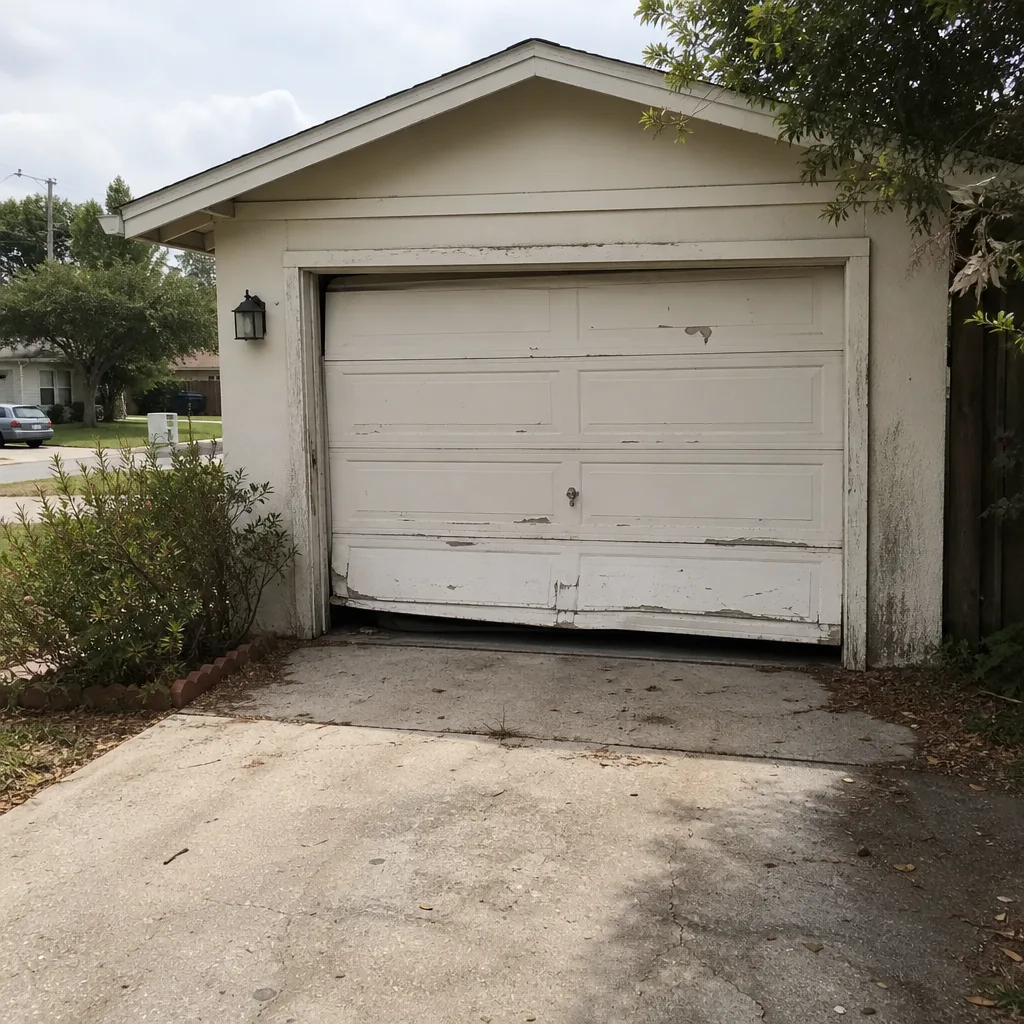 Before
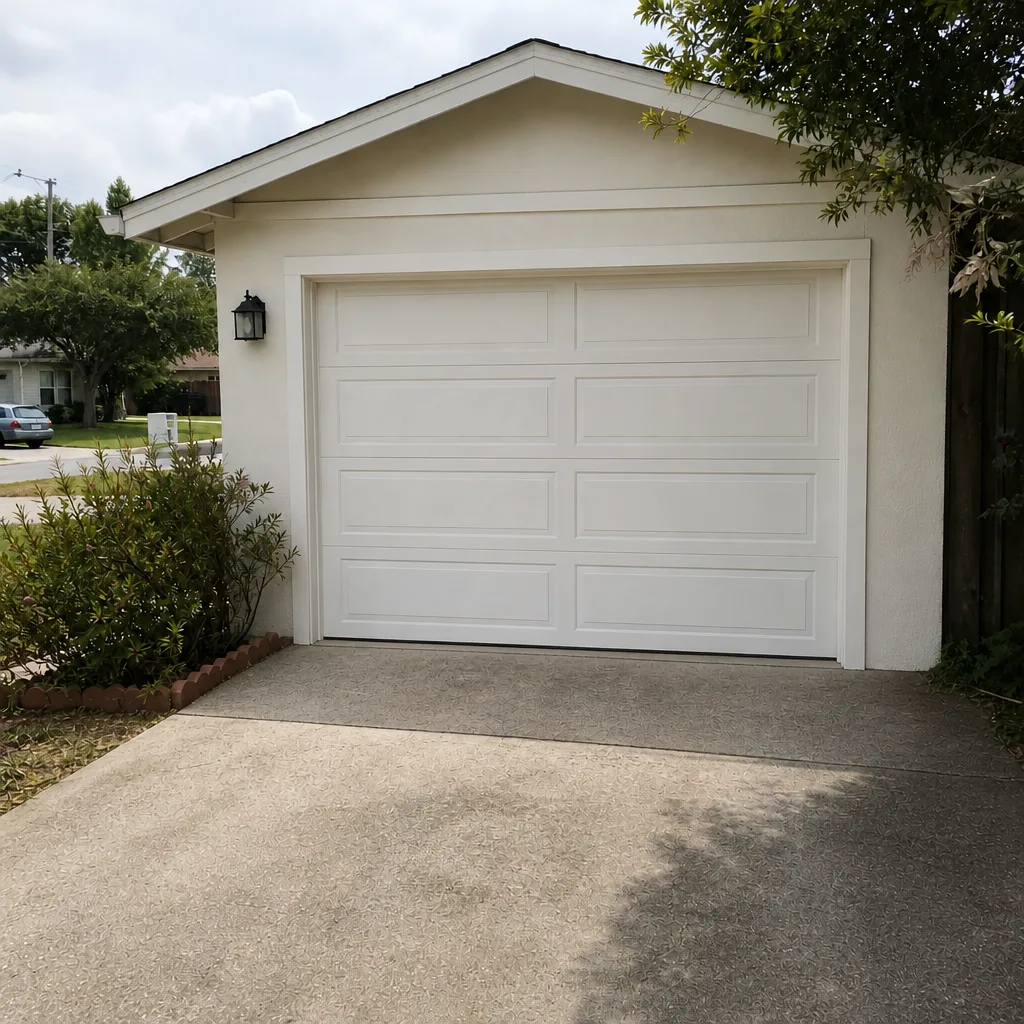 After
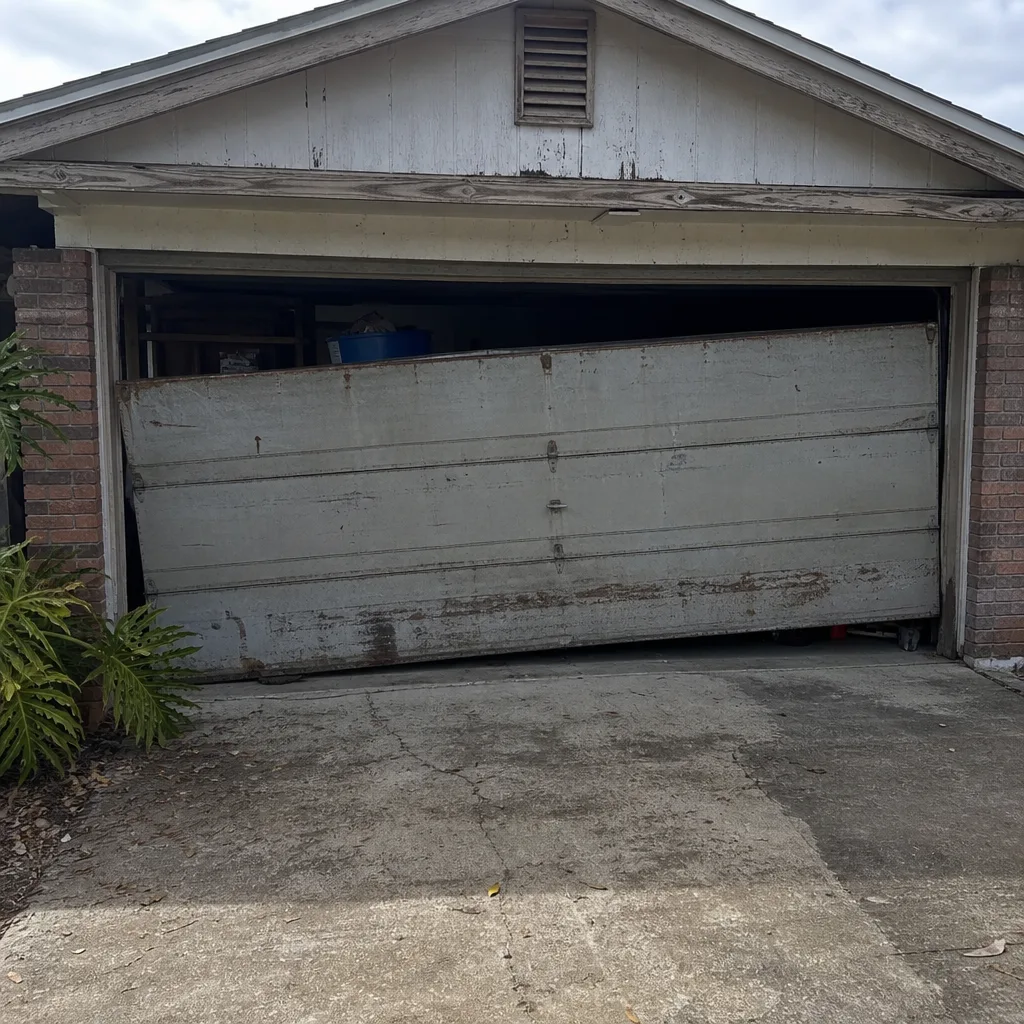 Before
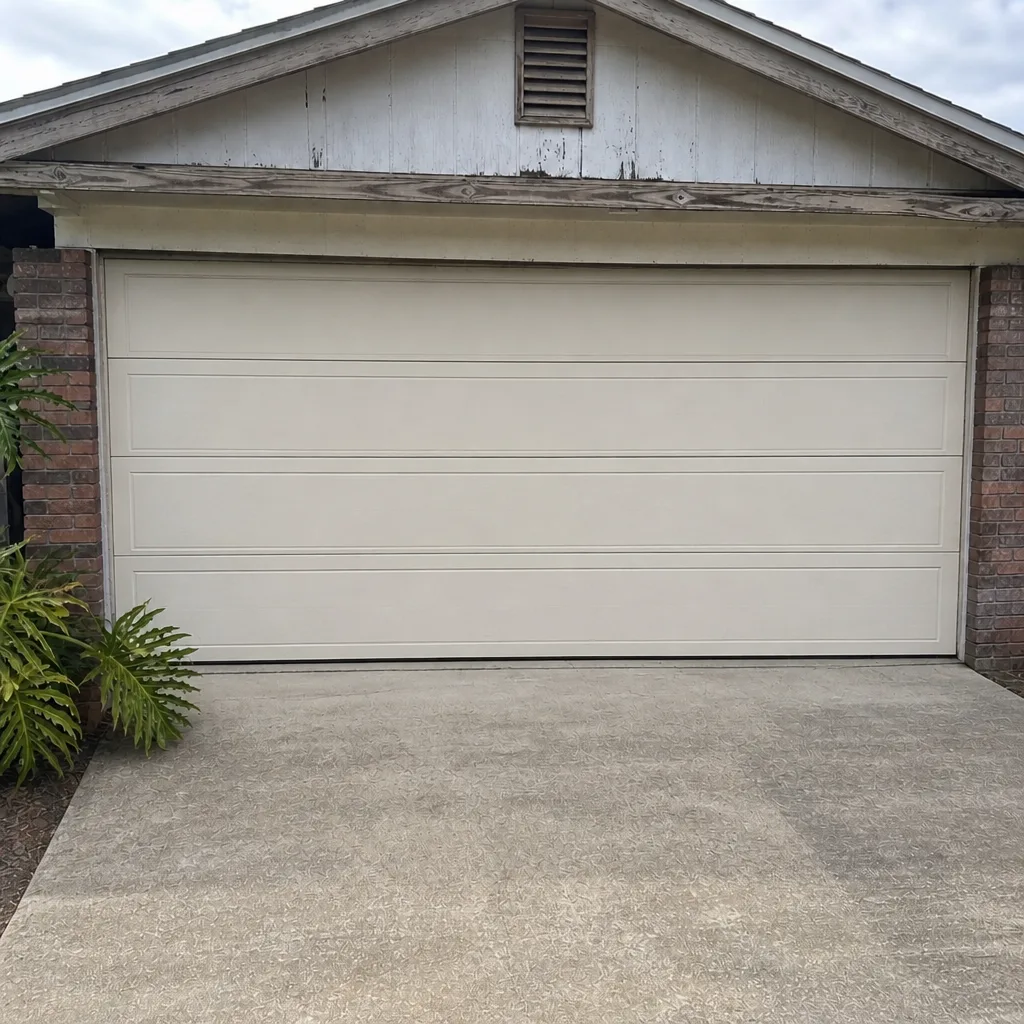 After
When to Call a Professional
Call a professional when a spring breaks, a cable snaps, a door comes off its tracks, or a door is hanging mid-travel and you don’t know why. Call when the manual release won’t work and you can’t get the door down, or when a door won’t close and you’re not sure whether it’s the sensors or something worse. Call when you’re leaving for an evacuation and can’t secure the door. And call before storm season if your door hasn’t been serviced recently, even if nothing feels wrong yet. Clearwater Garage Door Repair Co offers free estimates in Clearwater – call (833) 468-3520, and tell us what’s happening. We’ll work with the door and opener brands you have, diagnose the problem honestly, and quote a price before any work begins.
Frequently Asked Questions
It depends on what failed – a sensor realignment or a battery replacement is a small job, while a spring replacement is a bigger repair because the springs are the highest-risk part of the system. There’s no single number because the diagnosis drives the price. We quote and agree the price before any work starts, so you’ll know the cost before the technician picks up a tool. Call (833) 468-3520 for an exact quote – estimates are free.
Emergency garage door service is a core offering, so a door that’s stuck open, won’t close, or has trapped a car is exactly the kind of call we take. Call (833) 468-3520, describe where the door is stuck and what it’s doing, and we’ll tell you the soonest we can get to you. If anyone or anything is under the door, say so first – that changes how quickly we respond.
Find the cord hanging from the trolley on the overhead rail, usually with a red handle, and pull it firmly. The door will then move by hand. If the cord is missing or stuck, look for the release lever on the trolley itself. When the power returns, push the door toward the opener until it re-engages, then run the opener once to confirm. If it still won’t release, call us.
The written quote you receive on arrival is the price, and any change in scope gets discussed and agreed before work continues. A technician who arrives expecting one problem and finds another (a spring failure plus a bent track, for example) will tell you rather than proceed silently. Nothing gets added to the bill without your go-ahead first. Call (833) 468-3520 for a free estimate.
Most likely, yes. We service LiftMaster, Chamberlain, Genie, Clopay, Amarr, Wayne Dalton, Craftsman, and Raynor equipment, and the technicians who arrive are already familiar with how those systems are built. That matters most during a time-sensitive call, when arriving with the right part saves a return trip. If you’re not sure what brand you have, that’s fine – we’ll identify it on site.
Lower the door fully by hand and engage an exterior lock or slide bolt if you have one. If your door has no lock hardware, a door that’s been manually closed and seated against its seal is still far safer than one left raised. Check your wind-lock hardware before storm season so you know it’s there when you need it. If you can’t get the door down, call (833) 468-3520 and tell us where it’s stuck.
The Bottom Line
Garage door emergencies in Clearwater are mostly preparation problems in disguise. The homeowner who knows where the manual release is, has practiced pulling it, and can lower and secure the door by hand is already ahead of most of the neighborhood when the power goes out. Add a seasonal check of the seal, tracks, springs, and safety reverse, and you’ve covered the failures that turn a broken door into a real problem. When something does break, especially anything involving springs or cables, stop touching the door and call a specialist. We’re brand-agnostic and work on the door and opener you already have, and we quote before we work. If you’re in Clearwater and want a door you can trust, call Clearwater Garage Door Repair Co at (833) 468-3520 for a free estimate. For the full range of what we handle, from emergency calls to planned upgrades, start with Clearwater Garage Door Repair Co, and if your door just needs a straightforward fix, garage door repair is where most Clearwater homeowners begin. A dead opener is a separate job, and garage door opener repair covers it.
Written by the team at Clearwater Garage Door Repair Co.