Last updated November 21, 2026
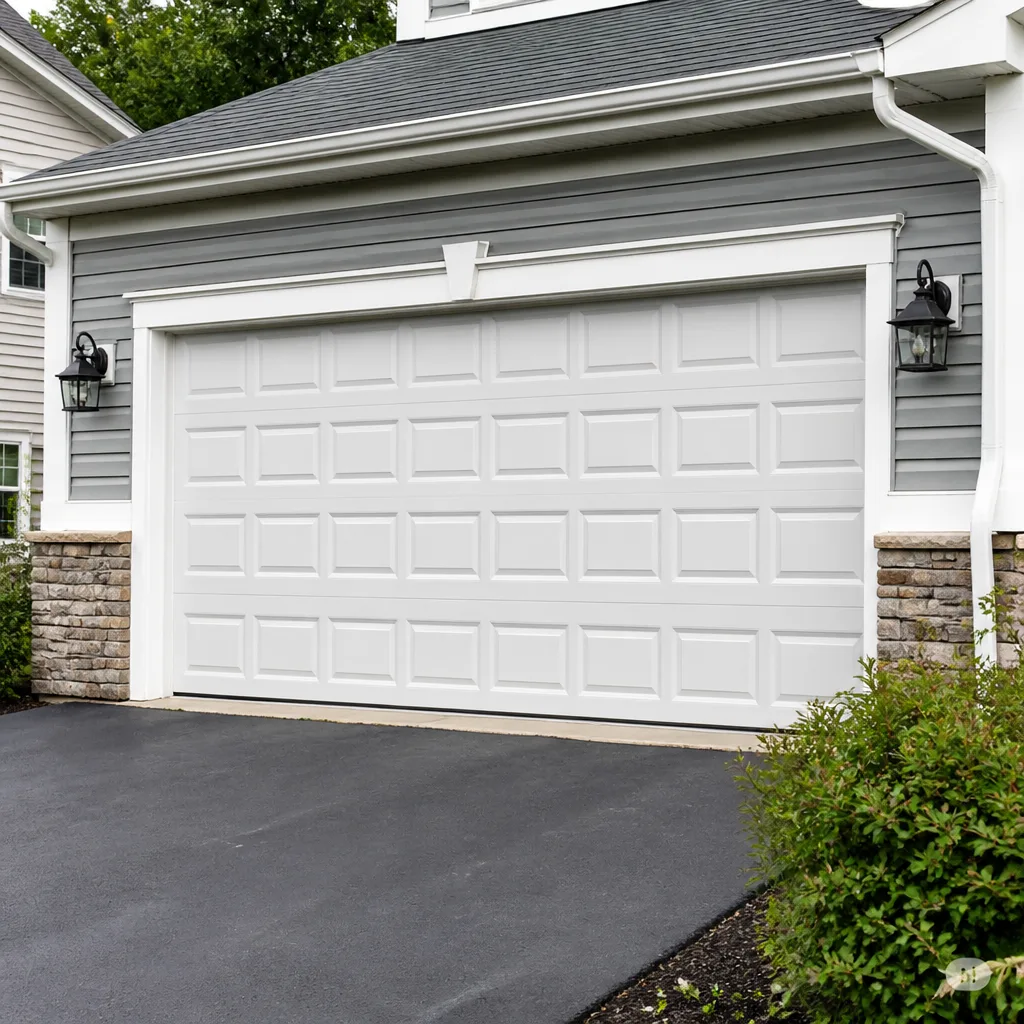 Raised-panel steel
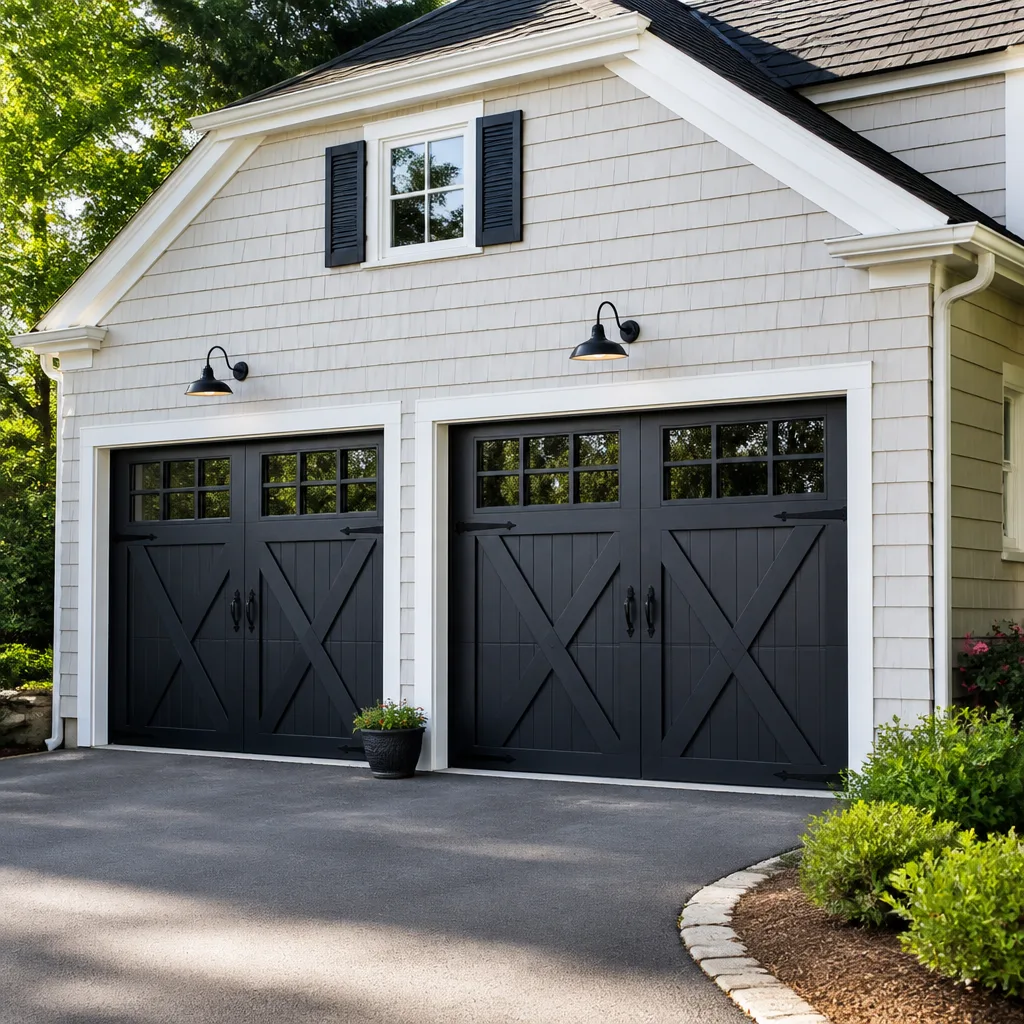 Carriage house
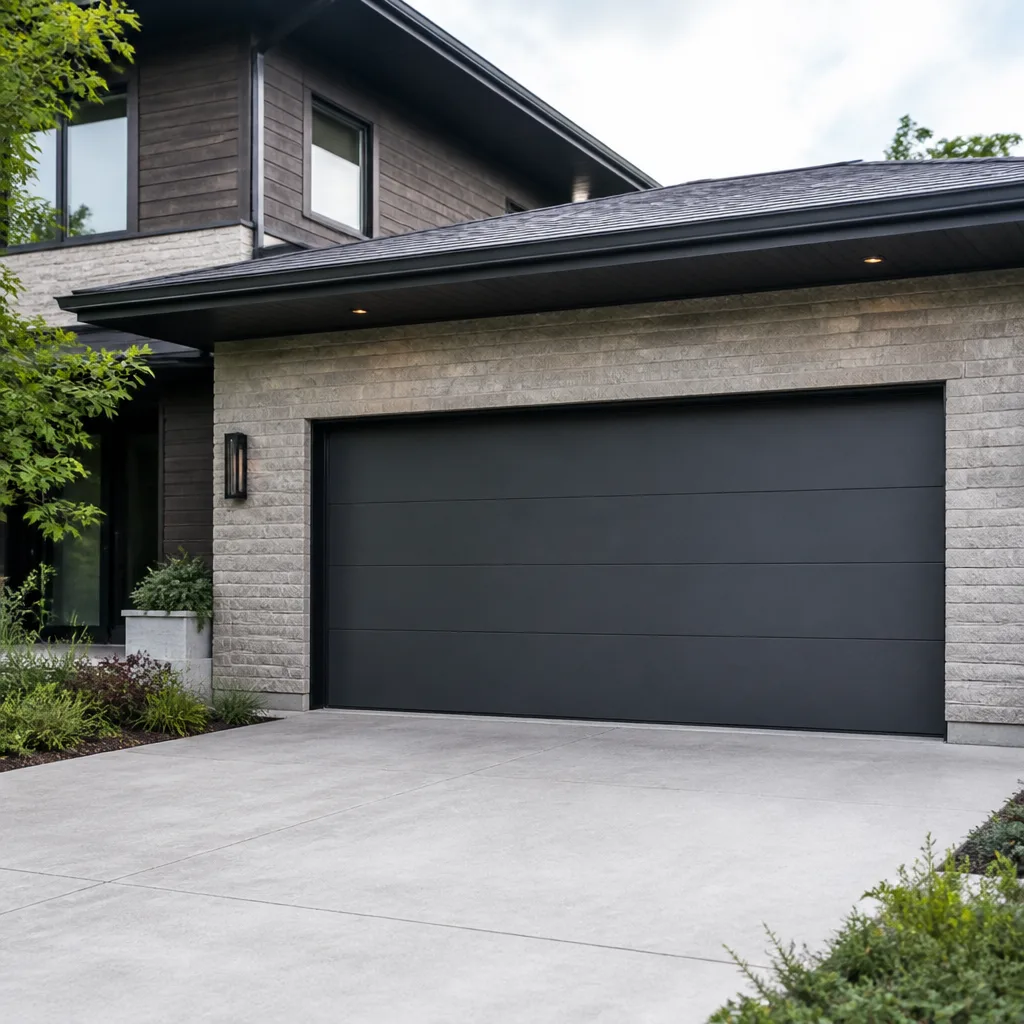 Modern flush
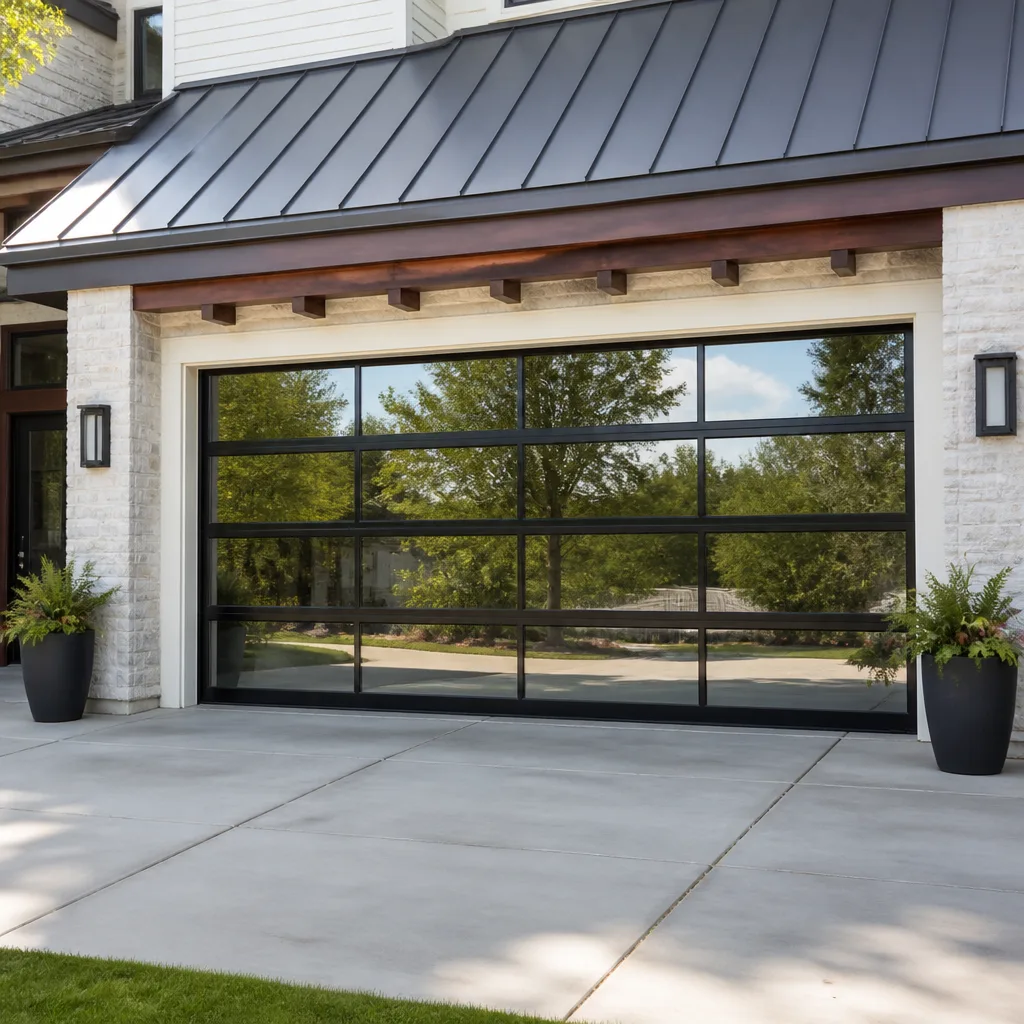 Full-view glass
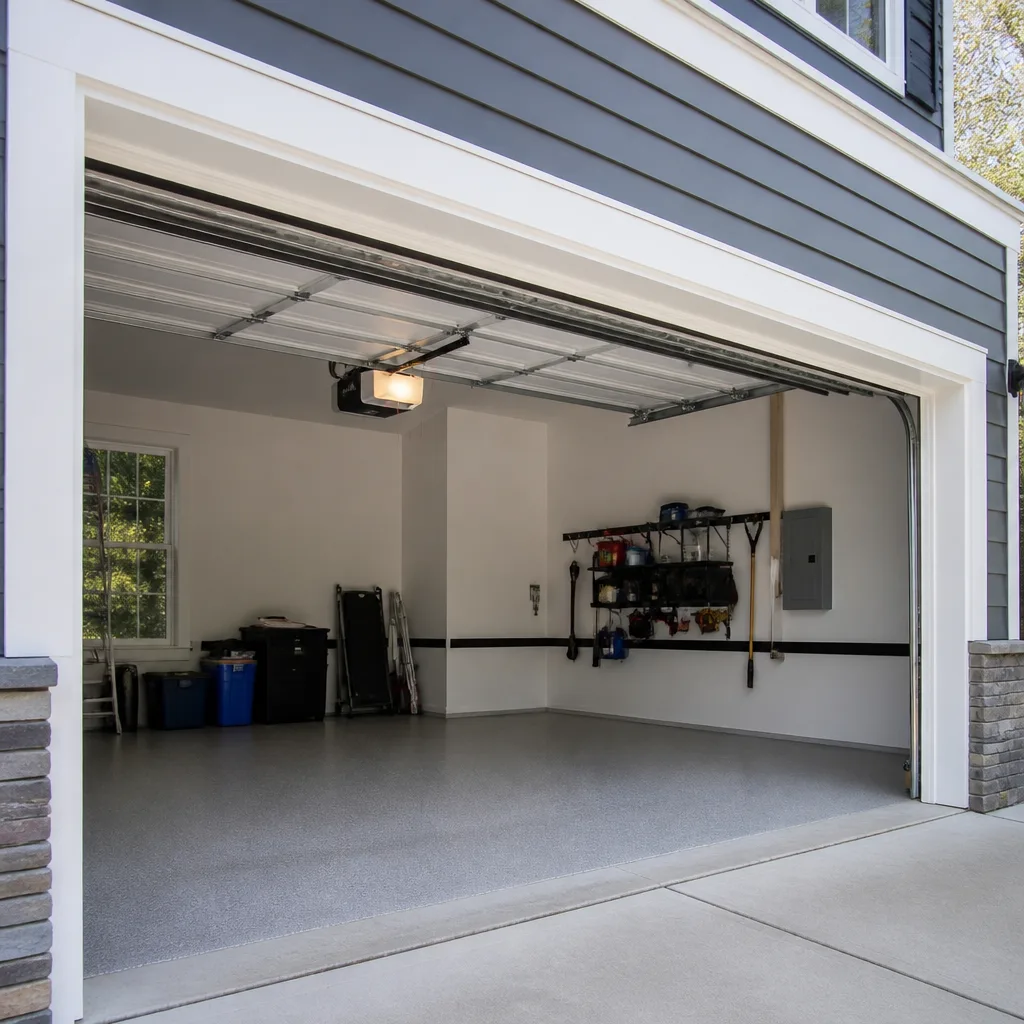 LiftMaster openers
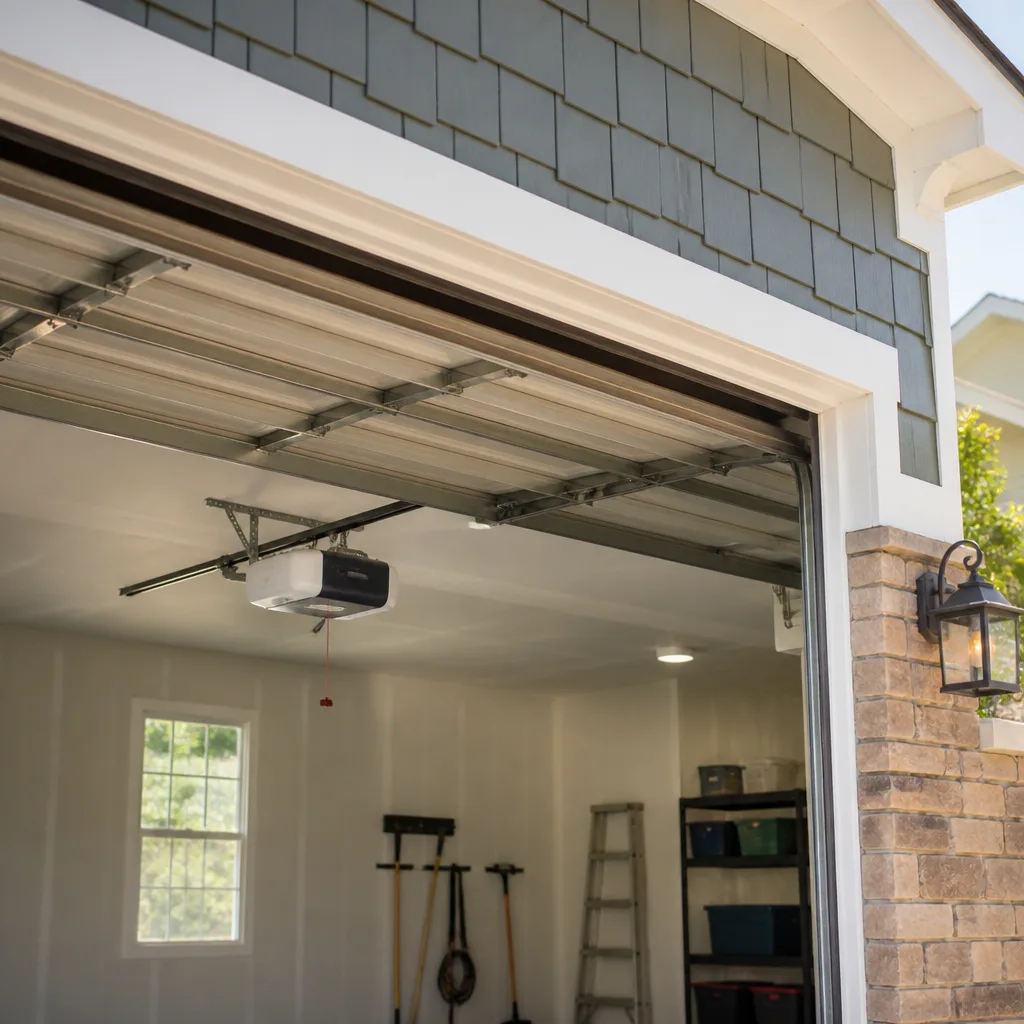 Chamberlain openers
Full 25-point door and opener safety check with every visit - springs, cables, rollers, tracks, and your LiftMaster or Chamberlain opener included
You get a price before we start. It does not change when the pro arrives.
Get your free estimateChoosing the Right Garage Door Brand: A Buyer’s Guide for Clearwater
The most-advertised garage door brands aren’t always the ones with the best corrosion-resistant coatings or the most available parts after five years. In a coastal market like Clearwater, “popular brand” and “right brand for this climate” are two different answers. The logo on the panel tells you almost nothing about how that door will hold up through humid summers, wind-driven rain, and the neighborhood-level reality of what happens when a hinge or roller needs replacing in year eight. What actually matters is construction, finish system, part availability, and warranty language that either covers corrosion or quietly excludes it.
This guide gives you a brand-agnostic way to evaluate any door you’re considering in Clearwater. You’ll learn what the finish specs mean, which warranty clauses to read twice, how opener compatibility plays into long-term reliability, and five questions that will tell you more than any manufacturer’s brochure. The goal is simple: a door that still opens smoothly and quietly a decade from now, not one that looked best on the showroom floor.
Quick Answer
The best garage door brand for Clearwater is the one whose construction method and finish system are rated for a humid, wind-exposed climate and whose parts are still available locally in seven to ten years. Rather than picking a name, compare galvanized steel gauge and coating, aluminum or composite panels, warranty corrosion exclusions, and whether a local technician can source replacement sections. A mid-tier door with proper corrosion protection and broad part availability beats a premium-branded door that fails or becomes unserviceable in Clearwater’s climate.
Styles & brands we work with
- Raised-panel steel
- Carriage house
- Modern flush
- Full-view glass
- LiftMaster openers
- Chamberlain openers
Table of Contents
- Why Brand Loyalty Is the Wrong Framework in Clearwater
- How to Evaluate Any Brand’s Coastal Climate Suitability
- Which Brand Warranties Actually Cover Salt-Air Corrosion
- Parts Availability Reality Check: What Happens in Year 7 or 10
- Opener Brand Compatibility and Why It Matters
- The Five-Question Brand-Agnostic Evaluation Framework
- Reading the Clearwater Garage Door Market
- Common Mistakes to Avoid
Why Brand Loyalty Is the Wrong Framework in Clearwater
Brand loyalty in garage doors is mostly a marketing artifact. The same door profile, springs, hinges, and rollers are often made in a handful of factories and assembled under several labels, and the panel design you recognize from a commercial may come from a supplier that also builds for competitors. When you choose a door based on brand name alone, you’re paying for the logo and skipping the specifications that actually determine how it performs. In a Clearwater home, those specifications matter more than anywhere, because a garage door here sits in steady humidity, gets driven rain against the panel seams, and cycles multiple times a day in a house where the garage is often the primary entry point.
The brands homeowners ask us about most – Clopay, Amarr, Wayne Dalton, and Genie among them – all make good products. They also all make entry-level lines and premium lines under the same badge, which is why asking “which brand is best” without knowing which model within that brand is a dead end. Two doors from the same manufacturer can differ by steel gauge, insulation value, finish system, and warranty terms that change what happens when corrosion shows up in year six.
That’s the core of our approach at Clearwater Garage Door Repair Co: we work on your brand, whatever it is, and we diagnose the door on its own terms. Brand-neutral doesn’t mean indifferent. It means the recommendation comes from what the door needs, not which product line is easiest to push. In a coastal market, that distinction protects your investment more than any single label can.
What “Brand” Actually Buys You
- Consistent component quality at the top of a manufacturer’s line, not necessarily at the bottom.
- A local dealer network that may or may not stock replacement sections for the model you bought.
- Warranty infrastructure that varies wildly by model and by how the claim is documented.
- Opener integration with common systems like LiftMaster, Chamberlain, or Genie, which can simplify long-term service.
The best move is to evaluate the specific model and its finish system, then confirm a technician in Clearwater can service it. That’s a more honest filter than scanning a logo.
How to Evaluate Any Brand’s Coastal Climate Suitability
Clearwater’s climate is the first filter every door should pass through. Warm, humid air and wind-driven rain are the conditions that punish cheap finishes and thin metal. You don’t need a labeled “coastal” door to survive here, but you do need to understand what the finish system and base metal are doing, because that’s where most premature failures start.
Galvanized, Zinc-Coated, and Aluminum-Clad: What They Mean
- Galvanized steel has a zinc coating applied during manufacturing. It’s the baseline for most residential doors and performs well when the coating is intact and the gauge is adequate for the panel size.
- Zinc-coated (zinc-aluminum) steel often uses a heavier coating weight than standard galvanized and is generally more corrosion-resistant. Ask for the coating weight in ounces per square foot if the dealer can provide it.
- Aluminum-clad or full aluminum construction resists corrosion well, is lighter, and is common in higher-end doors. It dents more easily than steel but does not rust the way steel can at cut edges.
- Composite and fiberglass panels eliminate rust entirely and resist humidity well, but the trade-off is often panel rigidity and color stability in direct sun.
What to Look at Beyond the Finish
Cut edges, hinge points, and the bottom seal are where corrosion usually begins. A door with a well-sealed bottom section, sealed cut edges, and stainless or coated hinges will outperform a door with a premium topcoat but bare steel at the joints. Ask to see a sample panel and inspect those exact spots. In our experience servicing doors around Clearwater, the failures that matter most at the ten-year mark tend to be at seams and hardware, not the painted face of the panel.
When you’re comparing quotes from different dealers, ask each one which garage door installation spec they’re actually quoting and whether the finish warranty applies to the panel only or the whole door assembly. That single question separates a sales pitch from a real specification.
Which Brand Warranties Actually Cover Salt-Air Corrosion
Most garage door warranties are written to protect the manufacturer, not the homeowner. The headline term – “lifetime finish warranty” or “10-year panel warranty” – almost always comes with exclusions that end coverage exactly where coastal climates cause problems. Reading the fine print before you sign is the single highest-leverage thing you can do when choosing a brand in Clearwater.
What to Look For in a Corrosion Warranty
- Does the warranty cover corrosion or only cracking, peeling, and flaking? These are different failure modes, and many policies cover one while excluding the other.
- Is there an exclusion for coastal or salt-air environments? Some manufacturers exclude claims within a specified distance of the coast. Confirm the language and measure your home against it.
- Is coverage prorated? A “lifetime” warranty that pays a shrinking percentage each year can leave you covering most of the cost by year eight.
- Who honors the claim – the manufacturer or the dealer? Local dealer support usually decides how smoothly a claim goes, regardless of the printed terms.
- Does the warranty require professional installation or annual maintenance records? Missing documentation is a common reason claims get denied.
For brands that do publish strong corrosion coverage, ask your dealer to show you the exact warranty document, not a summary. Terms can vary by model line under the same brand, so a warranty that applies to one Amarr series may not apply to another.
Why This Matters in Clearwater
A door that needs a full panel replacement in year seven is worth far less than a door that costs slightly more upfront but stays covered. We’ve seen doors from strong brands fail on the coast because the finish warranty excluded corrosion, and doors from mid-tier brands perform well because the construction was right and the coverage was documented. The brand matters less than the paperwork.
Parts Availability Reality Check: What Happens in Year 7 or 10
Parts availability is the least romantic question and the most important one. Garage doors are long-lived, and any door you buy today will need springs, rollers, hinges, cables, and possibly a panel section well before the end of its service life. When those parts are unavailable in Clearwater, you’re not facing a repair – you’re facing a replacement, or an extended wait while a specialty part ships in from across the country.
How to Check Parts Availability Before You Buy
- Ask the dealer: how long do you stock panels and hardware for this model? A confident answer in years is a good sign.
- Ask a local technician: have you serviced this model line before, and can you source a replacement section quickly? This is one place where calling the repair side first pays off – our garage door repair technicians work across all eight major brands, so they know what’s actually available in the Clearwater area.
- Check the model’s history: a model that has been in production for years with a stable parts catalog is a safer bet than a brand-new design.
- Confirm opener parts too: if the opener is proprietary to the door brand, its parts availability matters just as much as the panel.
What Typically Fails First
Torsion springs, rollers, and hinges are the highest-wear components, and they are usually interchangeable across brands, which is good news. Panel sections, end stiles, and decorative hardware are where brand-specific sourcing becomes a real constraint. Doors made by major brands like Clopay or Wayne Dalton usually have deeper parts networks than smaller regional labels, but the difference is model-to-model, not brand-wide. A high-volume model in any major brand will usually be easier to service in Clearwater than a limited-production design that looked striking on the showroom floor.
Opener Brand Compatibility and Why It Matters
Opener-door compatibility is an underrated source of recurring service calls. A door and opener that were chosen together, correctly, run quietly and last longer. A door that’s too heavy for the opener, or a door with a poorly matched safety sensor setup, will drive repeated adjustments and eventually early failure of the opener’s gears or the door’s hardware. When you’re choosing a new door, treat the opener as part of the same decision, not a separate purchase you’ll sort out later.
Compatibility Factors to Confirm
- Door weight vs. opener capacity: insulated doors are heavier. Confirm the opener is rated for the door you’re buying, not the lightest door the brand makes.
- Lift type: standard sectional, low-headroom, and high-lift configurations all change which opener rail and travel work with the door.
- Safety sensor integration: most openers use similar photo-eye systems, but wiring paths and distances differ by model.
- Smart-home and remote standards: LiftMaster, Chamberlain, and Genie each have their own accessory ecosystem. Pick based on what your household actually uses.
- Service ecosystem: a widely used opener brand is easier for local technicians to service quickly, whether the problem is a logic board or a stripped gear.
When the opener and door are mismatched, symptoms show up as sluggish travel, reversing at the bottom, or repeated safety sensor rejections. Our garage door opener repair team sees this most often in smaller Clearwater homes where the original builder-grade opener wasn’t upgraded when a heavier door was installed later. Matching the two from the start heads off years of adjustments.
The Five-Question Brand-Agnostic Evaluation Framework
These five questions will tell you more about a door than any brochure. Bring them to every quote in Clearwater, and insist on real answers rather than marketing language.
- What’s the base metal, gauge, and coating weight? A specific answer here separates a genuine specification from a vague promise. If the dealer can’t tell you the gauge and coating, that’s your answer.
- How is the finish system bonded to the steel? Two-coat, three-coat, and full-immersion coatings perform differently in humidity. Ask which system this specific model uses.
- What does the corrosion warranty cover, and what does it exclude? Get the language for this model, not the brand’s flagship. Confirm whether coastal environments and corrosion are excluded.
- How long will parts for this exact model be stocked, and who stocks them? Ask both the dealer and an independent technician. In Clearwater, you want a parts path that doesn’t route through a single warehouse.
- Which opener is this door rated to work with, and who services that pairing locally? A door and opener that are specified together reduce ongoing adjustments.
How to Use the Answers
A door that answers all five clearly is usually a safer pick than one that dazzles on question two and goes quiet on three and four. Whatever brand you end up with, make sure the quote is written and agreed before installation starts, and ask for the warranty documents in writing. Our technicians have up to 12 years of experience and are trained across LiftMaster, Chamberlain, Genie, Clopay, Amarr, Wayne Dalton, Craftsman, and Raynor, so we’re comfortable reviewing any quote you’re considering and telling you where the spec holds up and where it doesn’t.
Reading the Clearwater Garage Door Market
Clearwater’s garage door market has its own quirks. Homes span a wide range of styles – from 1960s ranch houses in neighborhoods around downtown to newer builds farther out – and door sizes, opening heights, and headroom vary enough that a one-size recommendation doesn’t work. Some homes have low-headroom garages that need specific door and opener configurations, and others have oversized openings that push the door into a heavier weight class. Both affect which brands and models are practical.
Local Conditions That Affect Door Choice
- Humidity and wind-driven rain push every door toward better finish systems and sealed edges.
- Afternoon sun exposure on a west-facing garage door accelerates finish wear. Composite and aluminum panels hold color differently than steel in steady sun.
- Home age and opening dimensions determine retrofit options. Older homes in Clearwater may need a full measure before ordering to avoid frame modifications at install.
- Insurance and wind considerations sometimes influence whether homeowners want a heavier, more rigid door. Ask your insurer before you order if this matters to you.
What To Expect From Installers
A solid installer measures the opening before ordering, confirms headroom and lift type, and puts the door and opener specifications in writing. On installation and replacement work the schedule is measured and planned, not same-day, because panels are ordered to fit your opening. Our install side handles this end-to-end, so you never need to source a second company to finish the job.
Common Mistakes to Avoid
- Buying by brand name instead of by model. Two doors from the same manufacturer can be wildly different in construction. Compare the specific model and its finish system, not the logo on the brochure.
- Skipping the corrosion warranty fine print. In Clearwater’s humidity, a warranty that covers cracking but not corrosion is close to no warranty at all. Read the document before you sign.
- Assuming “coastal-grade” is a regulated term. It isn’t. Ask for the coating weight, base metal, and finish system instead of accepting a labeled claim.
- Choosing an exotic or limited-production model. A rare panel design may look striking today but leave you without a replacement section in year eight. Favor models with deep parts networks.
- Ignoring the opener that will run the door. A heavier insulated door on an undersized opener causes repeated service calls. Specify the opener and door together.
- Ordering without a proper measure. Homes around Clearwater vary widely in opening height, headroom, and frame condition. A door ordered without a professional measure often needs modification at install.
- Letting an unqualified installer handle the safety-critical parts. Torsion springs and cables are under extreme tension. Treat those components as strictly professional territory and require written confirmation of who is doing the work.
See the difference
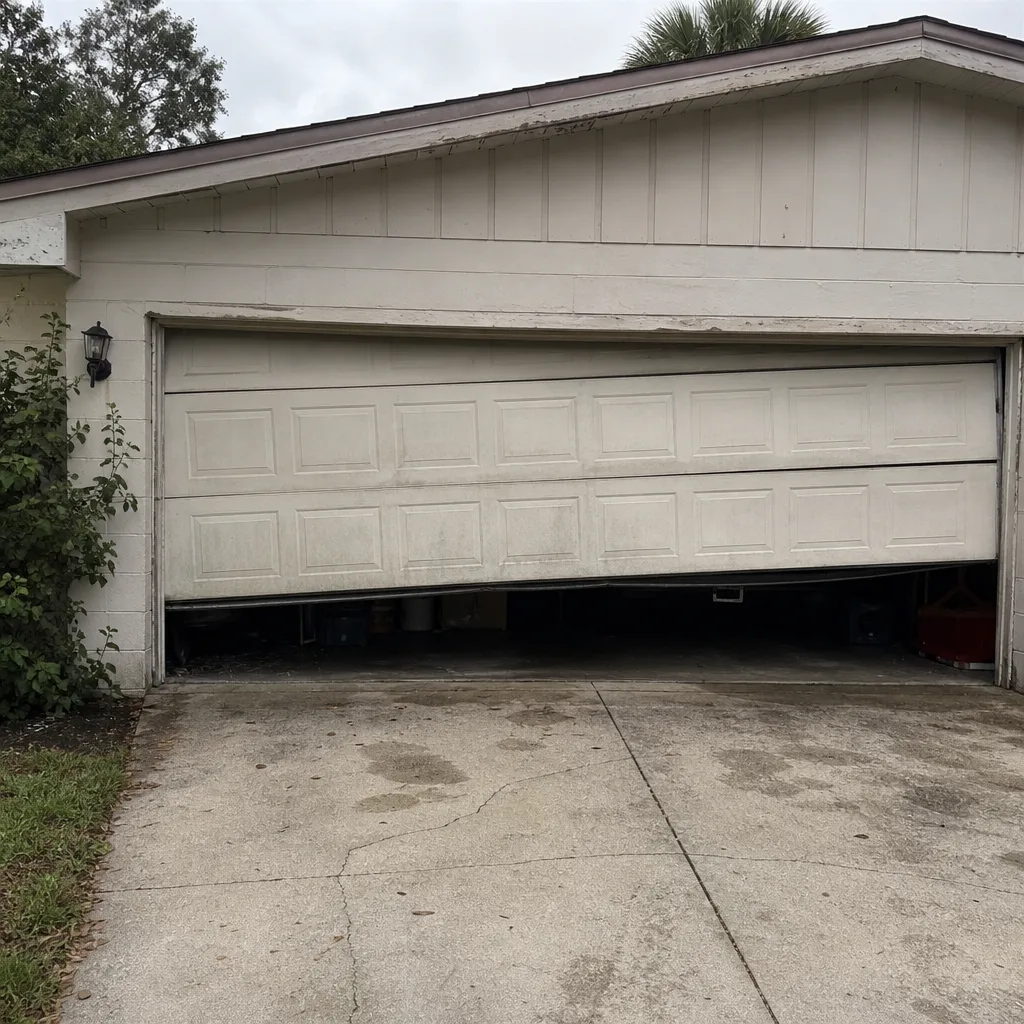 Before
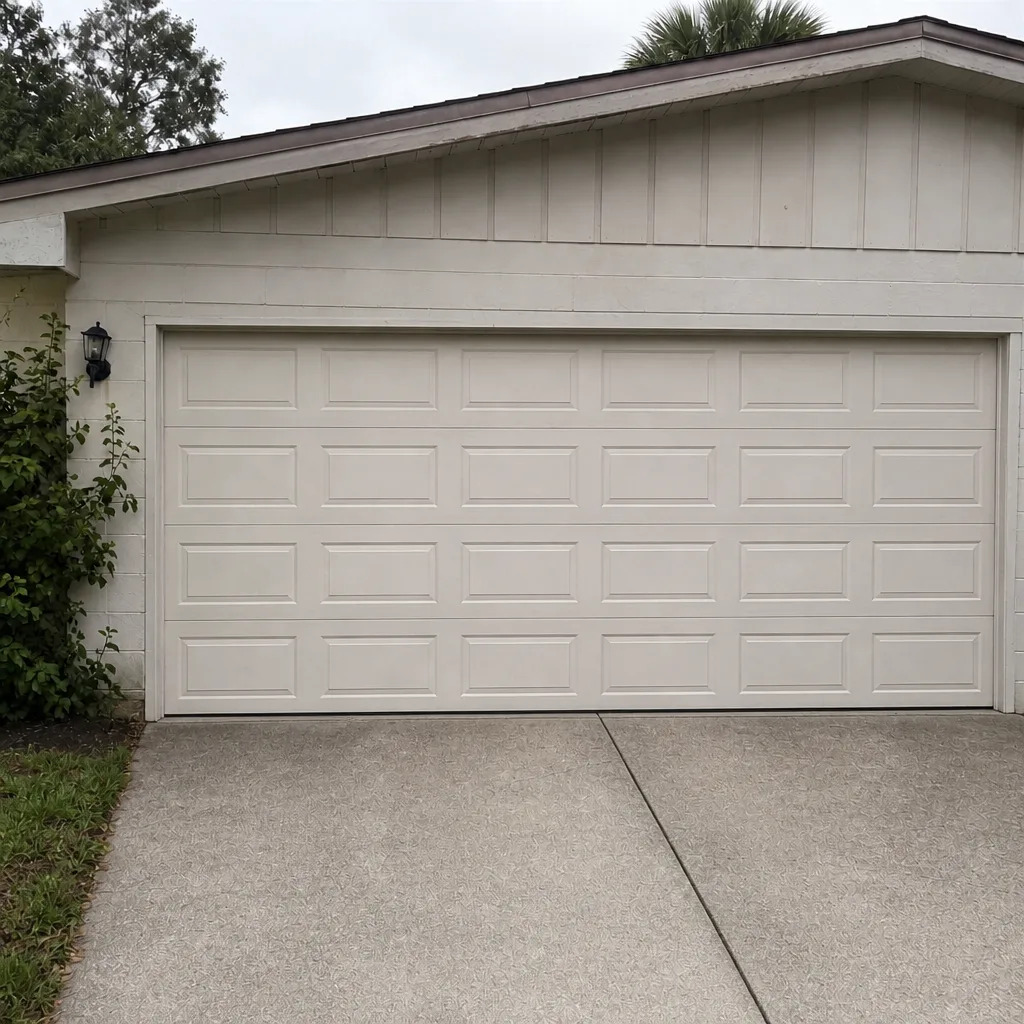 After
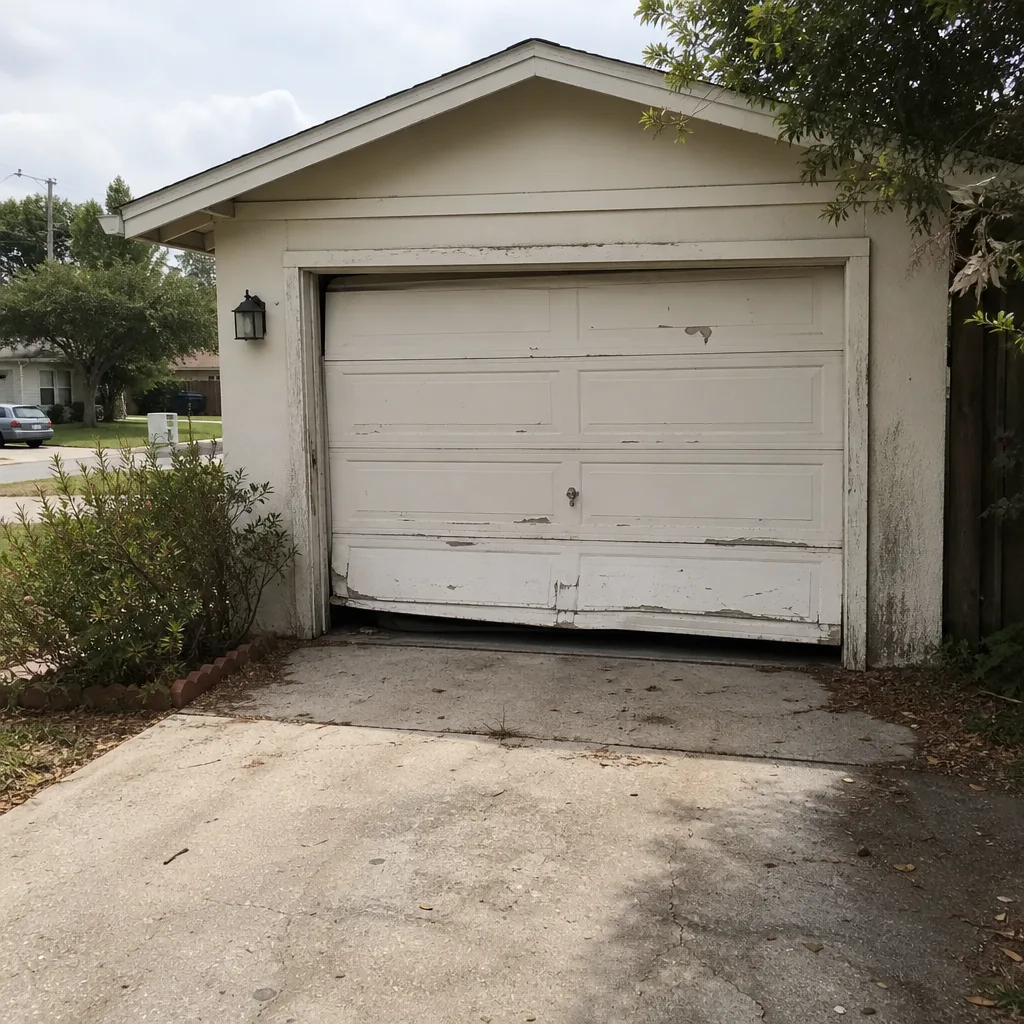 Before
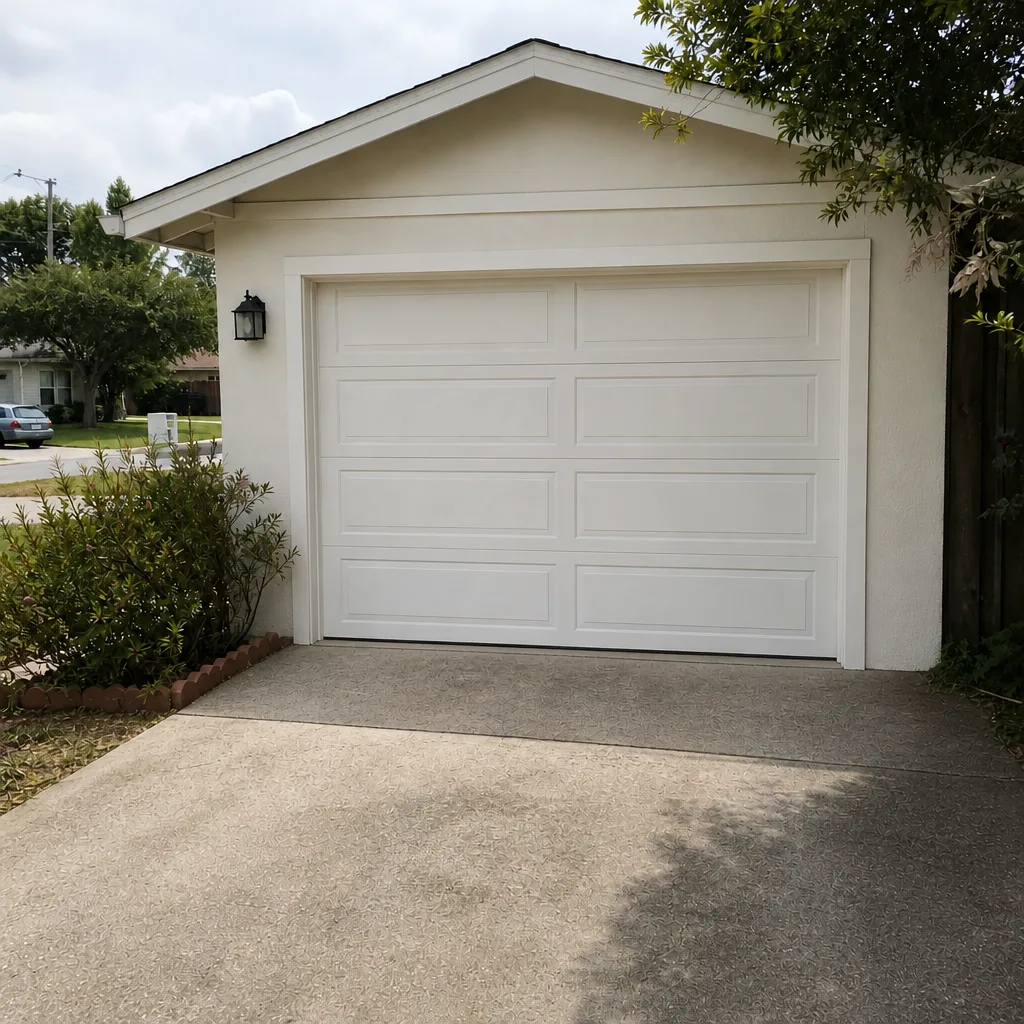 After
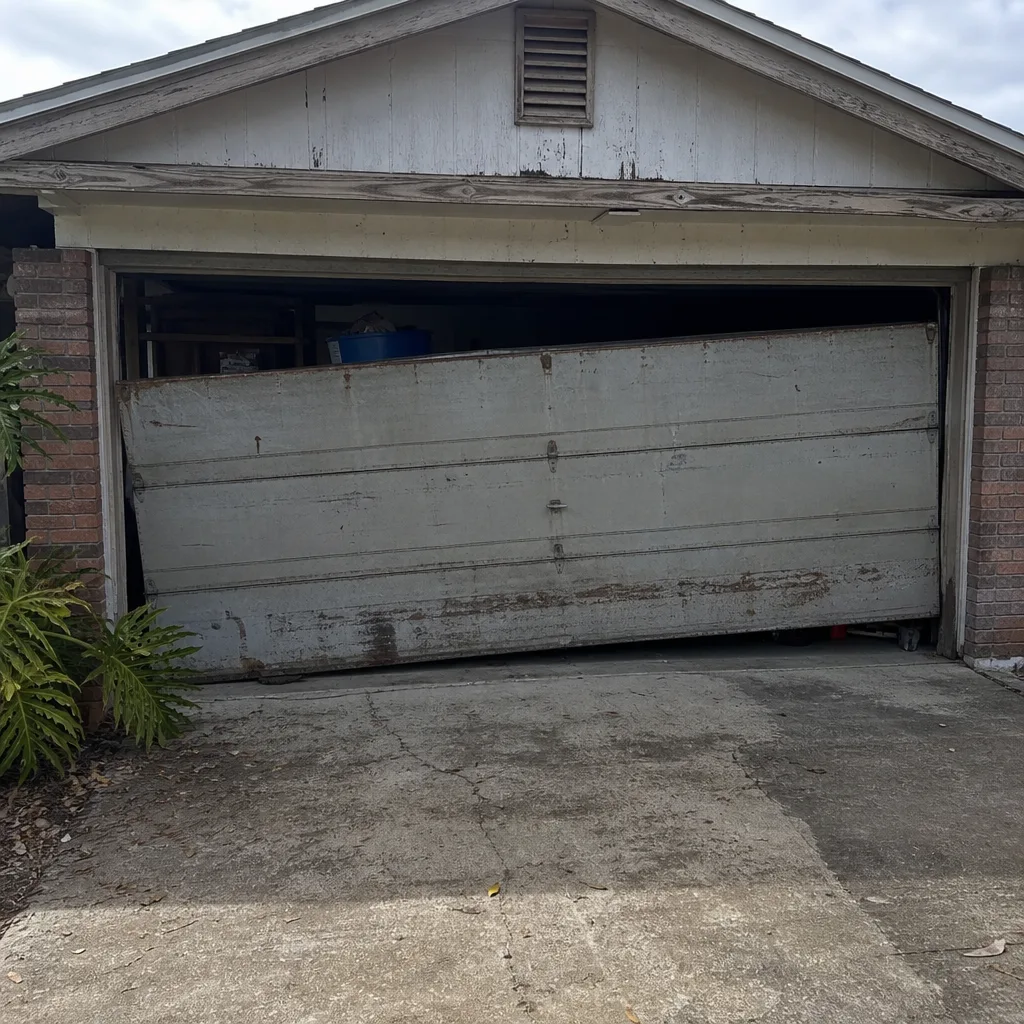 Before
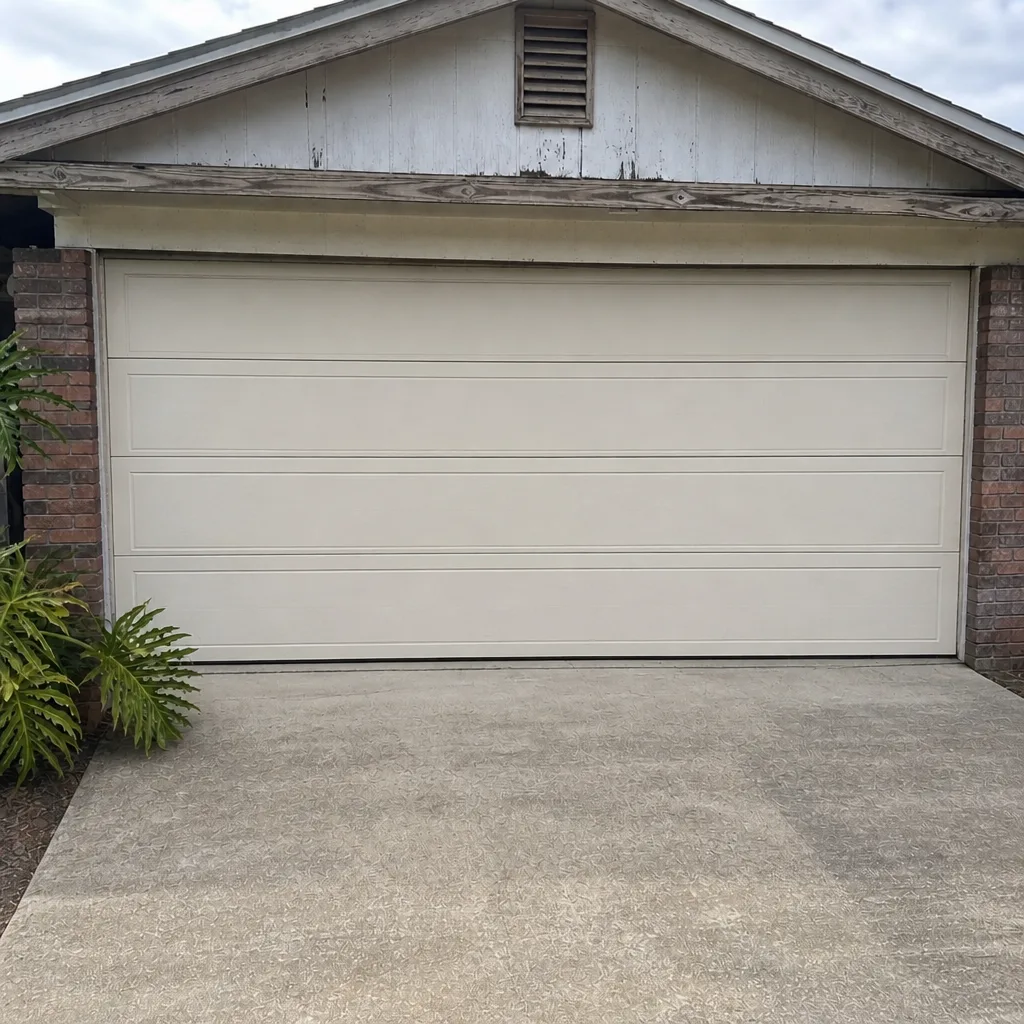 After
When to Call a Professional
Call a professional before you commit to a brand or a quote, or as soon as a door starts behaving differently. Any time you’re weighing a door and opening specification, a professional can confirm what actually fits your Clearwater home. Any time a spring snaps, a cable frays, or the door stops opening, treat it as a professional call. Springs and cables are the most dangerous parts of a garage door system, under high tension and capable of serious injury – do not attempt to adjust or replace them yourself, and do not operate the door if you suspect a spring or cable has failed or the door is hanging unevenly.
Clearwater Garage Door Repair Co offers free estimates in Clearwater – call (833) 468-3520. Emergency garage door service is a core part of what we do, so a door that fails outside normal hours doesn’t wait for an appointment window. We can review a quote you’re considering, diagnose a problem door, or plan a replacement with a documented measurement and specification.
Frequently Asked Questions
There is no single best brand for Clearwater; the best choice is the specific model with a corrosion-resistant finish system, adequate coating weight, and locally available parts. Clopay, Amarr, Wayne Dalton, and Genie are all recognized brands that cover a wide range of quality levels, so compare the model and warranty language before the logo. Call (833) 468-3520 for a free estimate and a second opinion on any quote you’re weighing.
You don’t need a “coastal” label, but you do need a construction and finish system that handles humidity and driven rain. Focus on base metal, coating weight, sealed edges, and whether the finish warranty actually covers corrosion. Ask the dealer for the specification in writing, not just the marketing term.
Coverage varies by brand and by model line, and many warranties cover cracking and peeling while excluding corrosion or coastal environments. Ask to see the exact warranty document for the model you’re buying, confirm whether corrosion is covered, and check whether the coverage is prorated. If you can’t get the document, treat it as not covered.
Parts availability depends on the model, not just the brand. High-volume models in major brands are usually the safest bet for long-term parts access in Clearwater. Before you buy, ask both the dealer and an independent technician how long they can source replacement panels and hardware for that model.
No, but the opener must be rated for the door’s weight and configuration, and both should be specified together. In Clearwater, matching the door and opener from a common, serviceable brand family reduces adjustment calls later on. LiftMaster, Chamberlain, and Genie openers are widely supported locally.
We’re trained across eight major brands – LiftMaster, Chamberlain, Genie, Clopay, Amarr, Wayne Dalton, Craftsman, and Raynor – and we take a brand-neutral diagnostic approach for anything else. Our technicians have up to 12 years of experience, and we handle everything from garage door repair to a full replacement without you needing a second company. Call (833) 468-3520 for a free estimate.
The Bottom Line
The right garage door brand in Clearwater is the one whose construction and finish system actually handle the local climate, whose warranty doesn’t exclude the failures that show up in humid, sun-exposed, salt-air-adjacent environments, and whose parts you can still source in year seven or ten. Compare specific models on base metal, coating weight, sealed edges, and warranty language before you weigh the logo. Then confirm a local technician can service the door and its opener as a matched pair. Do that, and you’ll have a door that opens smoothly and quietly for a decade – regardless of whose name is on the panel.
Have a quote in hand or a door that needs a second look? Call Clearwater Garage Door Repair Co at (833) 468-3520 for a free estimate in Clearwater.
Written by the team at Clearwater Garage Door Repair Co.