Last updated November 21, 2026
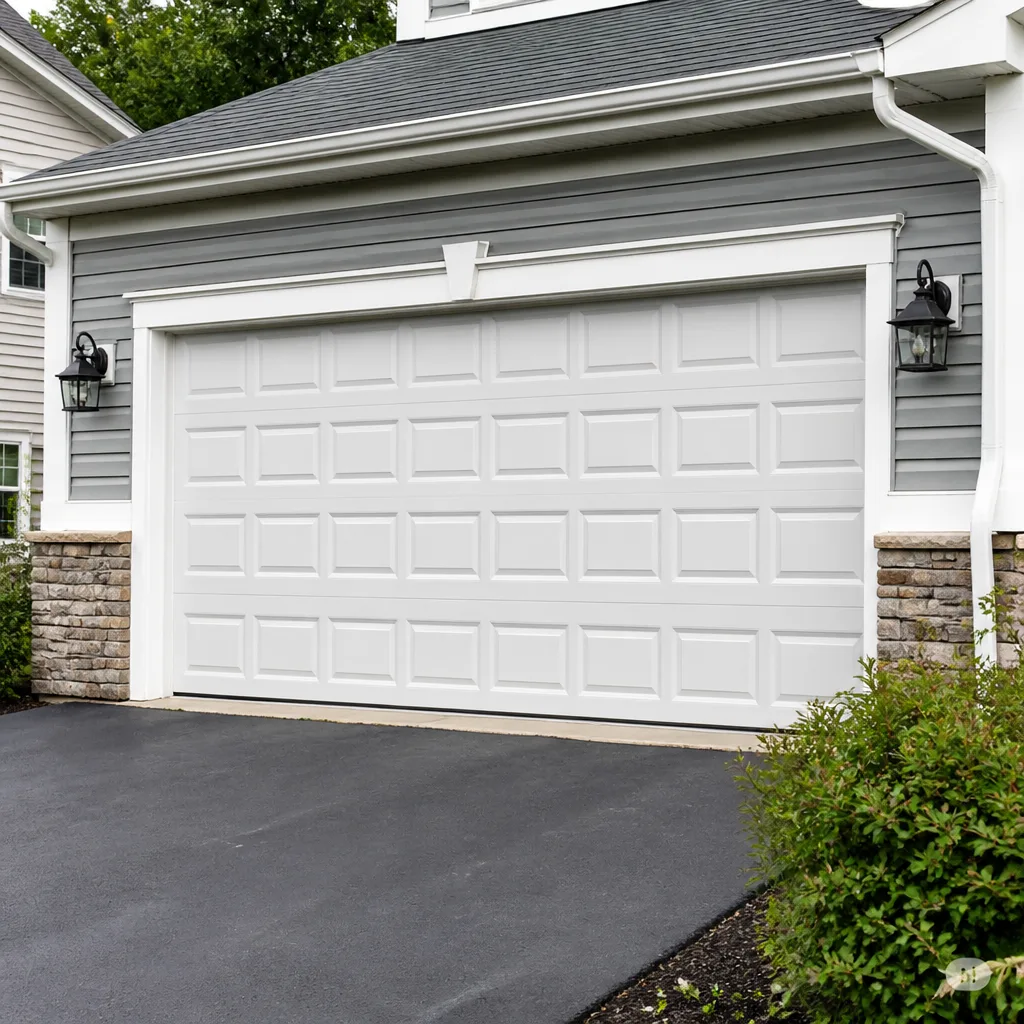 Raised-panel steel
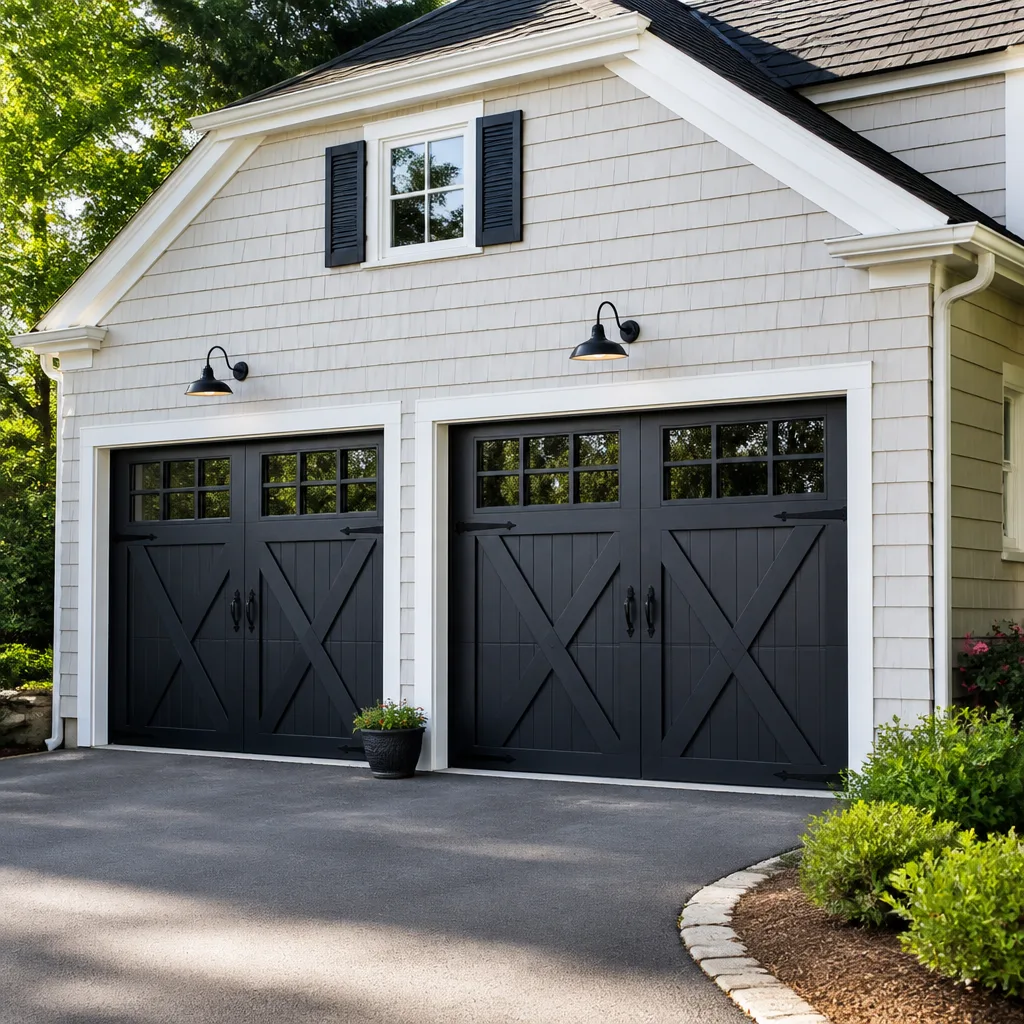 Carriage house
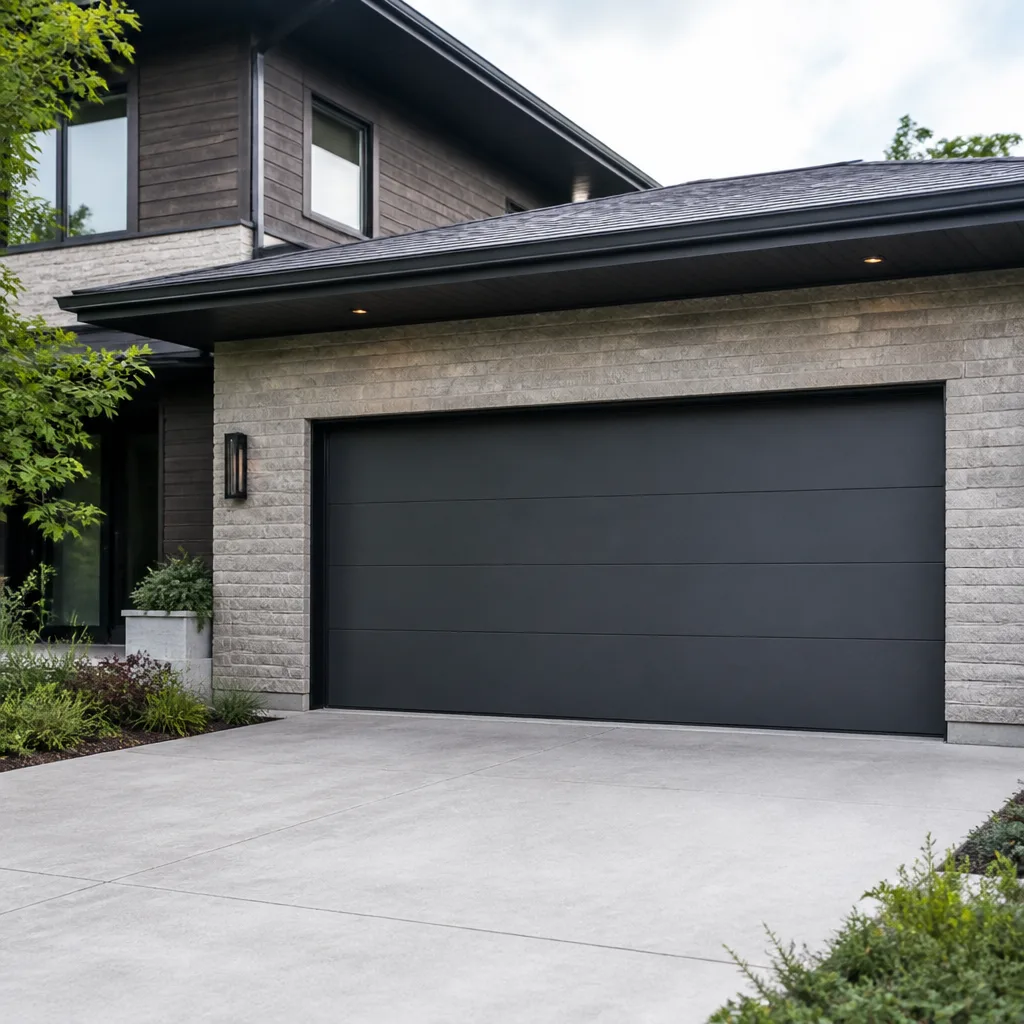 Modern flush
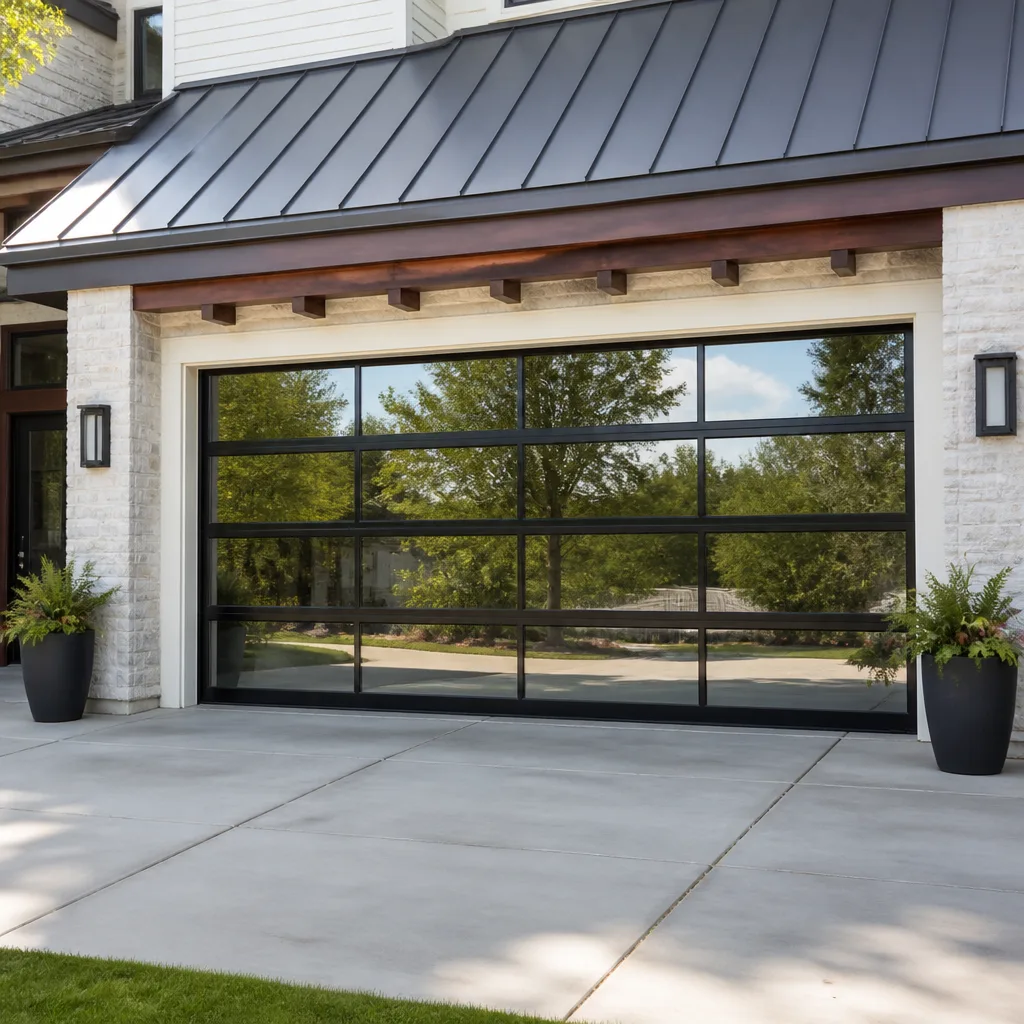 Full-view glass
 LiftMaster openers
 Chamberlain openers
Full 25-point door and opener safety check with every visit - springs, cables, rollers, tracks, and your LiftMaster or Chamberlain opener included
You get a price before we start. It does not change when the pro arrives.
Get your free estimateSeasonal Garage Door Care for Clearwater: Year-Round Homeowner’s Guide
Most homeowners treat garage door maintenance as a spring-cleaning chore, something to get to when the weather warms up. In Clearwater, that calendar is backwards. Our year splits into two very different halves: a punishing wet season that runs from June through September and a gentler dry stretch that fills the rest of the year. Your door feels that split in its springs, seals, tracks, and paint. Care that ignores this rhythm is care that’s working against the actual stress your door lives through. Below you’ll find a Clearwater-specific maintenance calendar, a wet-season prep protocol built around hurricane season, post-storm inspection steps, and the dry-season jobs that are genuinely easier when the air is drier. It’s everything we’d tell a neighbor who asked, “What should I actually be doing to my garage door here?”
Quick Answer
Seasonal garage door maintenance in Clearwater should follow the region’s wet and dry cycle rather than the traditional four seasons: prep seals, springs, and hardware before hurricane season starts on June 1, inspect carefully after any named storm or squall, and save painting, priming, and weather seal replacement for the drier months when humidity drops. The single most valuable maintenance window falls in the weeks before June, when small problems are still cheap to fix and still catchable by eye.
Styles & brands we work with
- Raised-panel steel
- Carriage house
- Modern flush
- Full-view glass
- LiftMaster openers
- Chamberlain openers
Table of Contents
- Why Clearwater Garage Doors Have Two Seasons, Not Four
- The Pre-Hurricane Season Window: Your Most Important Maintenance Month
- How Summer Humidity Affects Torsion Springs and Tension
- Weather Seals: The Weak Point in Clearwater’s Wet Season
- Post-Storm Garage Door Inspection: What to Check After a Named Storm
- Dry-Season Tasks That Are Easier in Lower Humidity
- A 12-Month Garage Door Checklist for Clearwater Homeowners
- What You Should Never Adjust Yourself
Why Clearwater Garage Doors Have Two Seasons, Not Four
Garage door maintenance advice written for the national audience assumes a cold winter and a hot summer, with spring and fall as transition periods for tune-ups. Clearwater doesn’t work that way. Our weather is best understood as a wet season and a dry season, and the transition between them is the natural time to schedule service. The door itself doesn’t care about the name of the month; it cares about moisture, temperature swings, and how often it gets wet.
During the wet season, typically June through September, a garage in Clearwater faces near-daily humidity, frequent afternoon thunderstorms, and the occasional tropical system. That affects three things on your door more than anything else:
- Steel panels and hardware. Persistent moisture speeds up surface corrosion on steel sections and on hinges, rollers, and track bolts. A door that stays dry for nine months and damp for three tends to rust in the same spots every year unless those spots are protected in the dry season.
- Weather seals. The bottom seal and perimeter seals are compressed against the floor and frame every time the door closes. In a wet climate, that seal spends a third of the year pressed against damp concrete. Rubber fatigues faster when it’s routinely wet, and gaps that form make the door less weather-tight.
- Wood and paint on older doors. Clearwater has a large stock of older homes, and many of those garages have wood or wood-composite doors. Paint protects wood only until it cracks. Once water gets behind the paint, the wood swells and the finish fails.
The dry season, roughly October through May, is when you get ahead of all of this. Humidity drops, paint cures properly, seals seat cleanly, and the door is dry enough to work on. In our experience, homeowners who treat the dry months as their maintenance months and the wet months as their watch-and-wait months spend far less on repairs over the life of their door.
If you’ve never had your door looked at, our garage door repair service starts with a full inspection so you know exactly what condition everything is in before the wet season arrives.
The Pre-Hurricane Season Window: Your Most Important Maintenance Month
Hurricane season in Clearwater runs June 1 through November 30. The weeks before it starts are the single most valuable maintenance window your garage door will get all year, and most homeowners treat them like any other month. That’s a mistake, because this is the one moment on the calendar when small problems are still easy and inexpensive to fix before the wet season turns them into bigger ones.
The logic isn’t complicated. A door that’s out of balance, has a weak spring, or has a failing opener motor is a door that’s already under strain. Add a season of daily humidity, a few severe squalls, and the reality of power outages, and that strain concentrates on the weakest part. A door that would have needed a spring replaced in August sometimes needs more than that by September. Getting ahead of it in May is the cheaper path.
Here’s the pre-hurricane-season protocol we’d walk through on a door in Clearwater:
- Test the balance. Disconnect the opener and lift the door halfway by hand. A balanced door stays put. One that drifts up or down is telling you the springs are working against you. Balance issues deserve a technician’s look, since the springs themselves are dangerous to touch.
- Look at the weather seal from the inside. On a dry afternoon, stand in the garage with the door closed and look for daylight along the bottom and around the edges. Any light coming through is a gap the wet season will exploit.
- Cycle the opener a few times and listen. Grinding, banging, or hesitation points to a hardware or opener problem. If your opener is a LiftMaster or Chamberlain unit with a battery backup, test that backup now rather than discovering it doesn’t work during an outage.
- Check the safety sensors. The photo-eye sensors near the floor should reverse the door reliably. Wipe them clean, clear any obstruction, and test.
- Inspect the tracks and hinges for rust. Light surface rust can be cleaned and protected in the dry season. Flaking rust on a hinge or roller means the part is finished and should be replaced before the stress of the wet months.
- Confirm the manual release works. If you ever need to open the door by hand during a power outage, the release cord and mechanism need to function. Test it while things are calm.
- Clear the area above and around the door. If you store anything above the door or along the ceiling near the tracks, move it. Wind-driven moisture and the door’s own movement shouldn’t share space with stored items.
For a homeowner in Clearwater, this is also the right time to think about the opener itself. If it’s older, noisy, or has been repaired more than once, replacing it before hurricane season is easier than nursing it through the wet months. Our garage door opener repair service handles both repair and replacement decisions, brand-agnostic, so you’re not pushed toward a model just because it’s what someone happens to stock.
How Summer Humidity Affects Torsion Springs and Tension
Torsion springs are the coiled steel springs mounted above the door on a torsion shaft. They do most of the actual lifting, and they’re the most dangerous component on the entire system. They also behave differently in Clearwater’s humidity than many homeowners expect.
Steel expands and contracts with temperature, and the door panels, the torsion shaft, the hardware, and the springs themselves all move a tiny bit as conditions change. In Clearwater, the swing between a dry, moderate January and a humid, hot July is enough to shift how a door feels in use. A door that was perfectly balanced after a January adjustment can feel different by July: heavier at the bottom, a little uneven, or more prone to straining the opener motor. That doesn’t necessarily mean the spring is failing. It often just means the door’s mechanical setup has drifted with the season.
Here’s where the tension adjustment question comes in. Torsion springs are adjusted by turning the winding cones on the shaft, which controls how many times the spring is wound. Even a trained technician approaches that job with a specific set of winding bars and a firm understanding of the stored energy. If the spring lets go during a DIY adjustment, the result can be a serious injury or worse. The winding process involves hundreds of pounds of stored force held by a single metal rod.
So our guidance here is straightforward: you can absolutely monitor for the symptoms of a seasonal tension change. You should let a technician make the actual adjustment.
- Feel for unevenness. With the door disconnected from the opener, lift it halfway and let go. It should stay roughly in place. A door that wants to drop or wants to rise is telling you the spring and door weight have drifted out of balance.
- Listen for the opener working harder. A motor that strains, hums, or runs longer than usual may be compensating for a door that’s become heavier to lift. If you have a Craftsman or Genie opener, this is particularly worth noticing, since those units often carry a lot of service life if they aren’t overloaded.
- Watch the door’s travel. A door that slams down or bounces at the top is out of balance or has an opener force setting that’s masking the real issue. Force settings should never be used as a substitute for a proper adjustment.
If you need a spring evaluated, our garage door spring repair service exists precisely because this is the part of the job most often botched and the part where technicians earn their keep. A spring that’s under the wrong tension puts strain on every other component, including hinges, rollers, and the opener itself. Getting the spring right makes everything else last longer.
In short: a January balance check and a July balance check are both worth doing, because the Clearwater climate can shift the door between them. In our experience, most doors only need a single adjustment per year, but checking twice is cheap and catching a drift early saves the opener the work of dragging a heavy door for months.
Weather Seals: The Weak Point in Clearwater’s Wet Season
Ask any garage door technician with years in Clearwater to name the part that fails most often, and weather seals come up quickly. They sit right at the boundary where a dry garage meets a wet world. Wind-driven rain, humidity, and heat all press on them. When they fail, your door is no longer weather-tight, and that affects the garage’s interior, the adjacent rooms if the garage shares a wall with the house, and anything stored inside.
A garage door has a few distinct seals you should know about:
- The bottom seal. Usually a rubber or vinyl strip in an aluminum retainer along the bottom of the door. It compresses against the floor when the door closes. This is the seal that takes the most wear and the one most likely to crack, shrink, or tear.
- The perimeter seals. Vertical strips on the sides and a horizontal strip along the top, mounted to the door frame rather than the door itself. They stop wind-blown rain from getting driven in around the edges.
- The threshold seal. A raised strip adhered to the floor that the door meets. Useful on floors that slope toward the door, which happens on older Clearwater homes where the driveway and garage floor have settled.
Replacing seals is one of the genuine DIY jobs in garage door care. You can swap a bottom seal by removing the retainer’s end caps, pulling out the old strip, and sliding in the new one. Perimeter seals are a similar project. The key is choosing the correct profile for your retainer, so buying from a supplier that can match the profile matters more than the brand of rubber. If you’re unsure, a technician can identify the right replacement in a couple of minutes.
The timing matters. Seal replacement is a dry-season task because the adhesive on threshold seals and the fit of perimeter seals both work better when the mounting surfaces aren’t damp. Clearwater’s dry-season humidity often cooperates. Do the work in the wet season and you risk a seal that never seats properly.
If the seals are past saving, it’s worth considering whether the door is too. Older doors often need a seal replacement plus a set of worn rollers, and at that point a homeowner starts weighing the value of a replacement. Our garage door installation service handles the full replacement decision, with a free measure and a written price rather than a phone quote. That free measure is exactly the right way to evaluate whether a new door is worth it for your situation.
Post-Storm Garage Door Inspection: What to Check After a Named Storm
After a named storm or a severe squall rolls through Clearwater, an inspection is the practical thing to do even if the door is still opening and closing normally. Storms can do subtle damage: a small bend in a track, a roller that’s jumped its groove, or a hinge that’s lost a screw under wind pressure. None of these are visible unless you look, and each of them makes the door harder to operate, which strains the opener and the springs.
Start with what you can safely observe from the ground, and stop as soon as anything looks off. These are the checks we recommend, in order:
- Look at the door panels from a distance. Stand back and sight down the line of the door. A panel that’s flattened, bowed, or dented needs attention. Wind-driven debris is common after a storm, and a dented steel panel can affect how the door seals and how it moves.
- Check the tracks for alignment. The vertical tracks should be straight and parallel. The horizontal tracks should look level. A track that’s been knocked out of position will make the door bind, and a door that binds is a door that shortens the life of its springs and opener.
- Look for anything on the door’s path. Branches, debris, or a fallen item leaning against the door can prevent it from closing or damage the bottom seal when the door comes down.
- Test the door and opener only if everything above looks normal. Cycle the door once, listen for unusual sounds, and watch the door travel. If it binds, hesitates, or comes down unevenly, stop and call a technician.
- Inspect the seal and perimeter. A storm can push water in around the edges and stretch a seal. Check the bottom seal for tears and the perimeter seals for gaps.
- Check the opener’s force settings only visually. If the opener has a battery backup, confirm the battery still holds a charge. After a major storm, this is the difference between a door that works and a door that doesn’t.
The key word is safe. If a door looks significantly out of alignment, has come partially off its track, or won’t move at all, don’t force it. Call a technician. A door that has been pushed out of track can come down suddenly, and the components involved are heavy. This is also the moment when our emergency service earns its place in the lineup: a door stuck open after a storm is an open door on your home. A stuck door and a trapped car in the garage is a situation nobody should sit on for days.
Emergency service should be treated as a core capability, not a rare add-on. If the wet season does something unexpected in Clearwater, you want the number already in your phone. Call (833) 468-3520.
Dry-Season Tasks That Are Easier in Lower Humidity
The dry season, roughly October through May, is the time for the jobs that require surfaces to be dry and coatings to cure. Clearwater’s lower humidity makes these tasks more likely to succeed on the first try, and several of them are genuinely homeowner-friendly.
Painting and priming steel panels
Steel garage doors tolerate paint well when the surface is prepared correctly. The task is straightforward but timing-sensitive. Paint applied to a damp surface or in high humidity can fail to adhere, which means you’re doing the job twice. The dry months are the right window. Scrape any loose or flaking paint, clean the surface, spot-prime any bare metal, and then apply the topcoat according to the product’s instructions. Paint the door in sections and follow the coating’s recommended recoat window, since the wrong interval can leave the finish uneven.
If your door is a Clopay, Amarr, or Raynor steel model with a factory finish, check whether the finish is still under its original factory warranty phase before you repaint. Some factory finishes carry specific repainting guidance, and getting it wrong can affect the finish warranty. A quick call to the manufacturer or the installer will settle it.
Replacing weather seals
The seals we covered earlier are dry-season work for a simple reason: adhesive sets and rubber seats better when the mounting surface isn’t damp. The dry months are when you want to be swapping a bottom seal or a set of perimeter strips. If you know the seal profile, replacement is a same-afternoon job.
Spring and hardware inspections
The dry season is also when you want a full inspection done, because it’s the calm before the wet months. A technician can check spring balance, roller condition, hinge wear, and opener operation in one visit, and you have time to schedule any needed work before the wet season arrives. That said, even a routine visit is not a substitute for a homeowner watching the door’s behavior year-round. Both matter.
If you’d rather have one company handle diagnosis, repair, and a replacement decision if it comes to that, Clearwater Garage Door Repair Co covers the full range, from a single stuck roller to a full door replacement.
A 12-Month Garage Door Checklist for Clearwater Homeowners
Here’s the full-year checklist we’d hand a Clearwater homeowner. It’s organized around the wet-dry split rather than the traditional four seasons, because that’s the rhythm your door actually experiences.
Dry season (October through May)
- October-November: Do a full inspection once the wet season has ended. Check springs, rollers, hinges, tracks, and seals. Note anything that needs a technician.
- December-January: Clean and lubricate hinges, rollers, and track (use a garage door lubricant, not grease). Test the opener’s safety reverse. Balance-test the door with the opener disengaged.
- February-March: Inspect the bottom seal and perimeter seals. Plan replacement if you’ve found cracks or gaps. If painting or priming is on the list, this is a good window.
- April-May: Run the full pre-hurricane-season protocol. Test the opener’s battery backup if it has one. Confirm the manual release works. Schedule any technician work before June.
Wet season (June through September)
- June: Check seals after the first stretch of heavy rain. Watch for daylight through the perimeter. Listen for any new noise from the door or opener.
- July-August: Pay attention to how the door feels. If it seems heavier or uneven, that’s the seasonal tension drift we covered. Call for an evaluation rather than adjusting it yourself.
- September: After any storm peak, do the post-storm inspection. Then start planning the October full inspection.
If you’d rather not track this in your head, do the small version: inspect before June, inspect after November, and look at the door any time it’s been through a severe storm. That’s three touchpoints a year, and it covers the vast majority of what matters in Clearwater. If you suspect an opener is on its way out, the garage door opener repair service can evaluate it before the wet season forces the issue.
What You Should Never Adjust Yourself
The garage door has one or two jobs that are meaningfully dangerous. Torsion springs and the cables attached to them store enough energy to cause serious injury if they release unexpectedly during an adjustment. This isn’t a job for a homeowner with a set of wrenches and a video tutorial. It’s the job for a trained technician with the right tools, and it’s the reason spring repair is often priced separately from other repairs.
The good news is the safe work is broad: cleaning, lubricating, checking operation, replacing seals, and painting. Balance tests with the opener disengaged are safe as long as you’re careful with the door’s weight. If the door doesn’t behave normally, stop and call. A door that’s out of balance or has a failing spring can drop or fly up, and neither is worth the risk.
One more thing: when an opener misbehaves, the temptation is to adjust the force settings to compensate. Don’t. Force settings that override a binding door just hide the problem and overload the other components. If your opener is forcing the door through a bind, the door needs attention first.
Common Mistakes to Avoid
- Waiting until the door breaks to look at it. In Clearwater, the small problems are most catchable during the dry season, which is exactly when the door’s not top of mind. A pre-June inspection saves you from doing the same repair under pressure mid-wet season.
- Adjusting the safety reverse or force settings instead of fixing the underlying issue. Openers on LiftMaster, Chamberlain, and most modern brands have settings you can change, but using those settings to hide a binding door makes the door and opener fail faster.
- Doing a balance test with the opener still engaged. The opener masks the door’s true condition. Disengage it and test the door alone.
- Painting in the wet season. High humidity and damp surfaces cause coating failures, especially on Clearwater steel doors. Wait for the dry months.
- Ignoring the weather seal until you can see daylight. By the time you can see daylight, the seal has probably been failing for a while. Check it once a year, ideally in the dry season.
- Borrowing a friend’s spring winding bar or trying a YouTube adjustment. This is the one garage door job where the wrong move is genuinely dangerous. A trained technician handles it.
- Forgetting the manual release and battery backup. During a power outage, the manual release and the opener’s backup battery are what get you out of the garage. Test both during the dry season.
See the difference
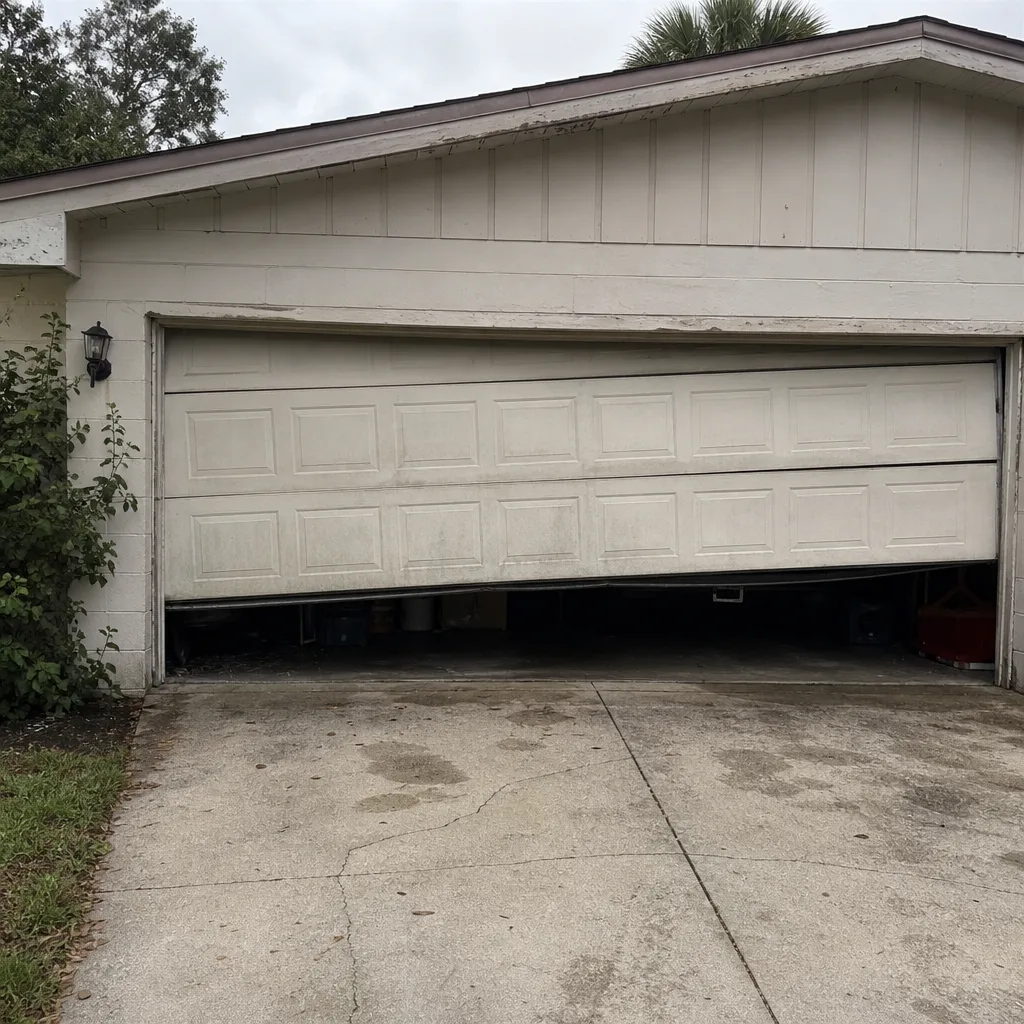 Before
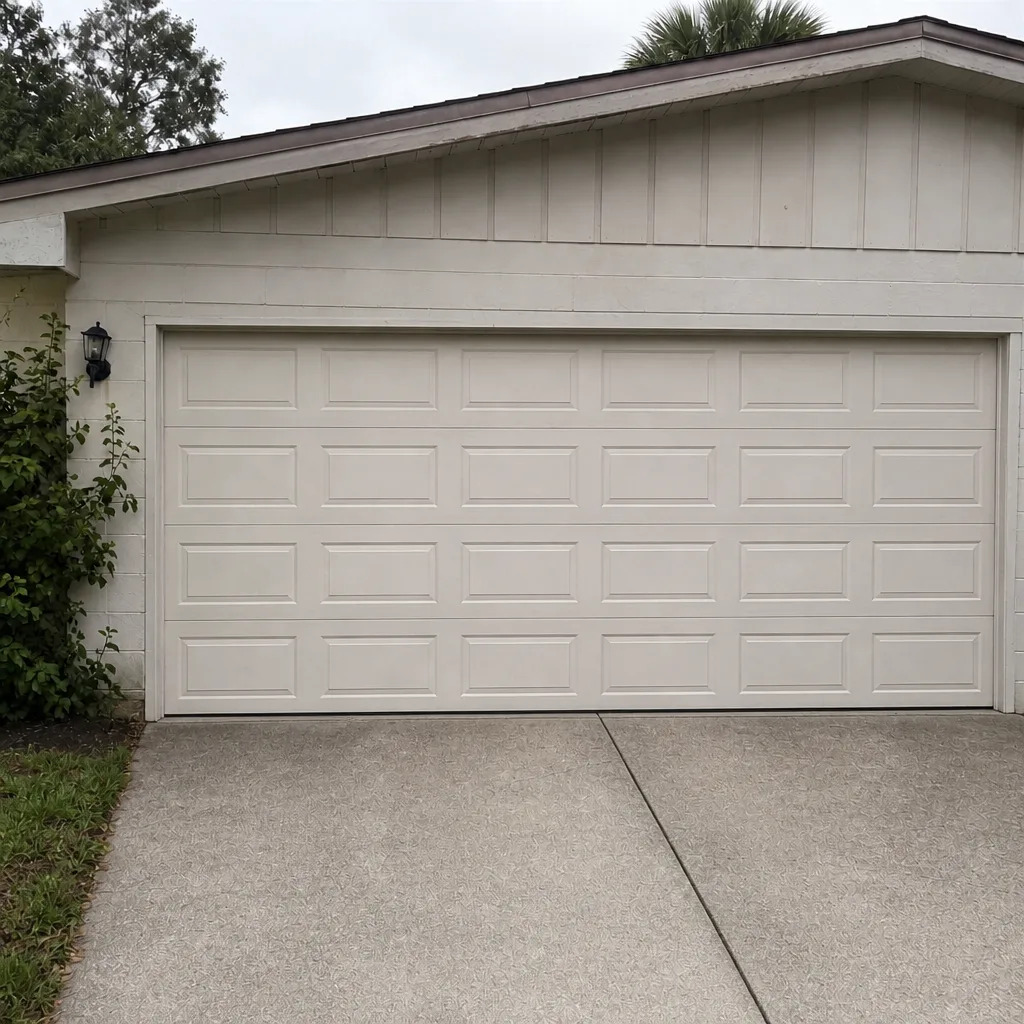 After
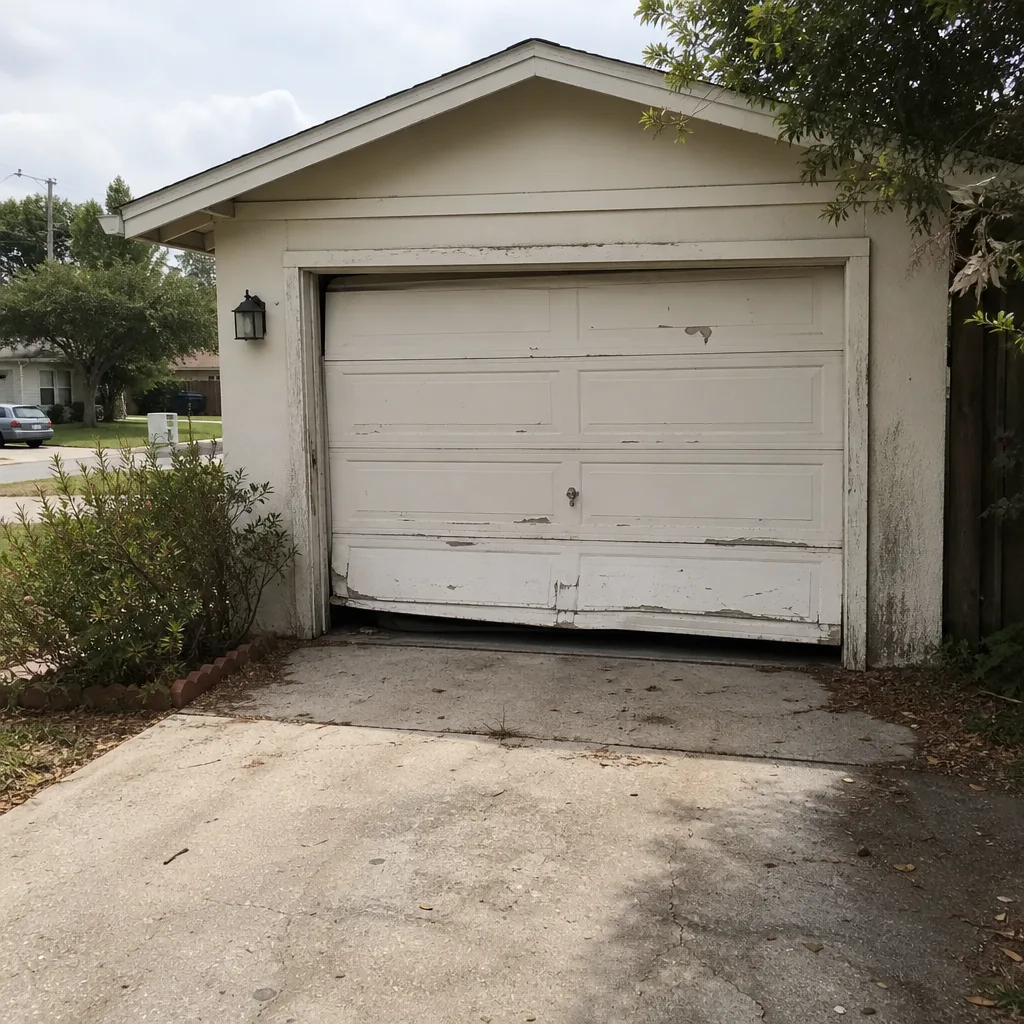 Before
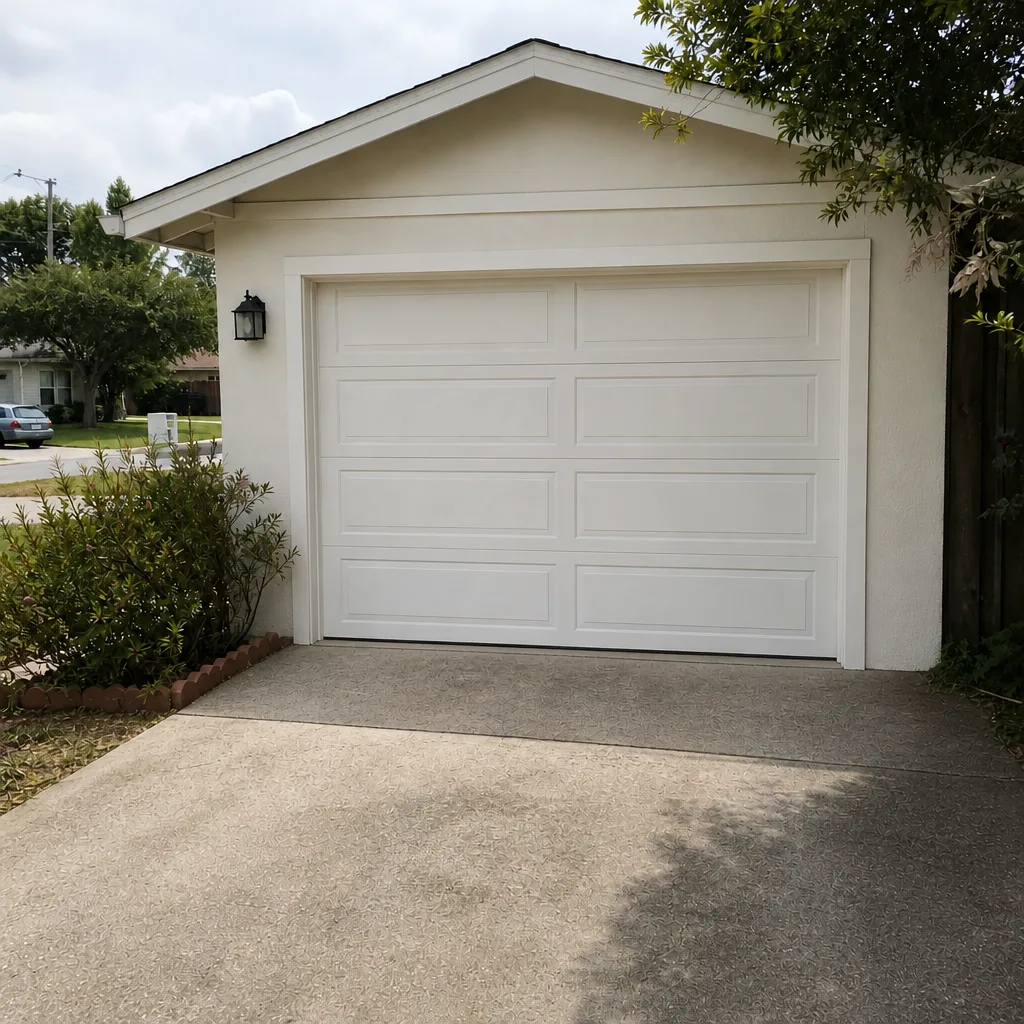 After
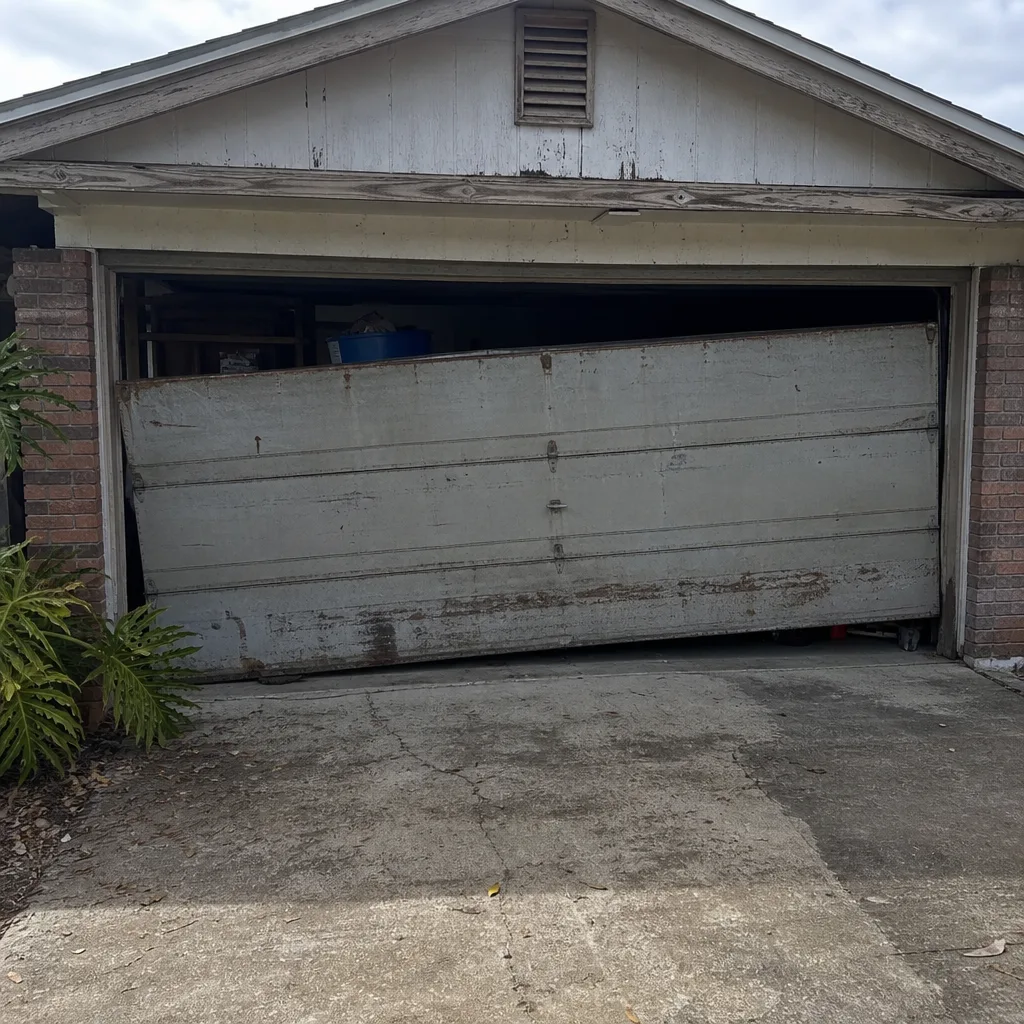 Before
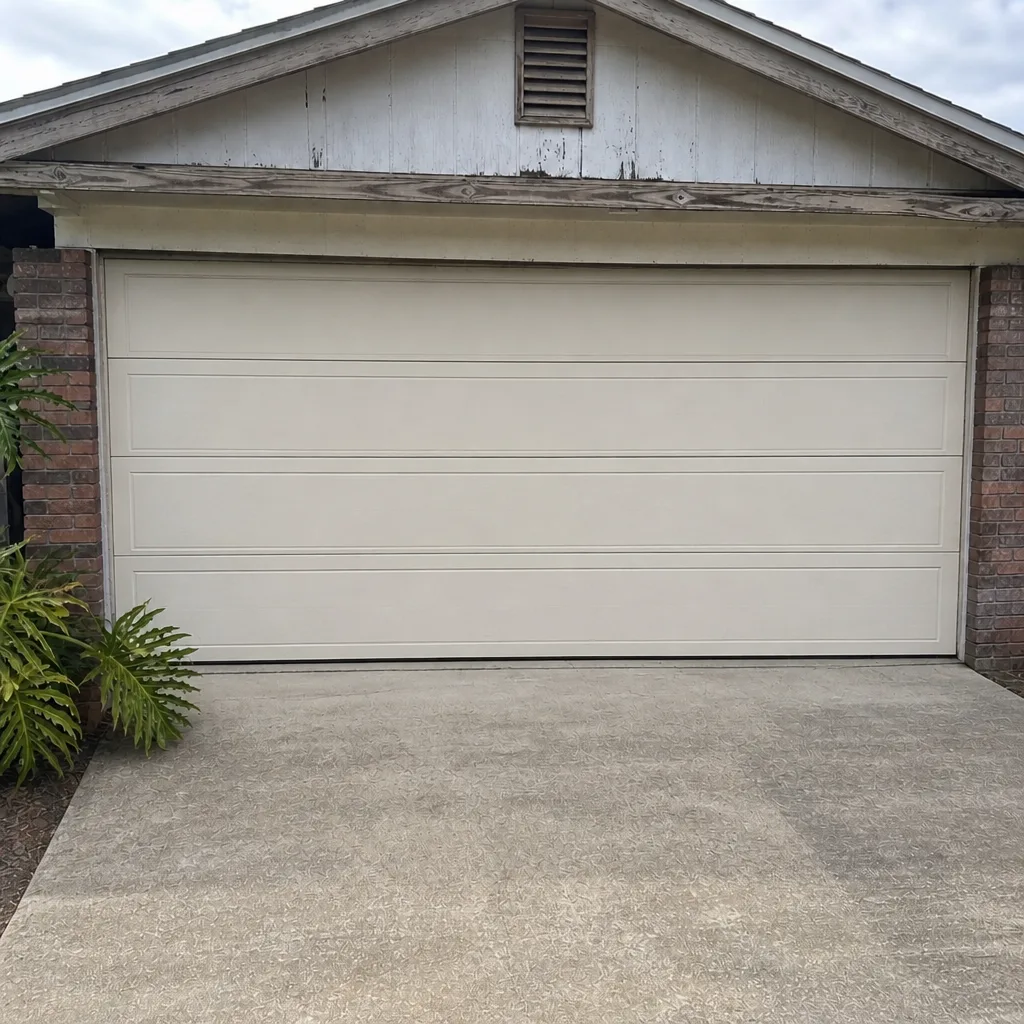 After
When to Call a Professional
Some problems announce themselves and some wait quietly. Call a technician when you notice any of these: a door that feels heavier or uneven, an opener that strains or hesitates, a door that’s been out of track after a storm, a spring that’s showing rust, gaps, or a visibly worn coil, a weather seal that’s cracked through, or anything that just doesn’t sound right. Springs and cables should always be handled by a trained technician, no exceptions. The rest of the list is your cue to get an inspection and a written price before the issue grows. If a door is stuck, off-track, or trapped your car, emergency service is available and the call costs nothing to make.
Clearwater Garage Door Repair Co offers free estimates in Clearwater. Call (833) 468-3520 and we’ll give you a straight answer on what your door needs. Our technicians have up to 12 years of experience, we work across the major brands, and if your door ends up needing replacement, we handle the garage door installation too, so you’re not sourcing a second company mid-project.
Frequently Asked Questions
The best month is any time in the dry season, but the most valuable single window is the weeks before June 1, when hurricane season starts. That’s when balance, seals, and opener condition should all be checked while problems are still cheap to fix. A second inspection in October or November, after the wet season, catches anything that developed over the summer.
Yes, indirectly. Humidity and temperature shifts cause the door’s steel components to expand and contract slightly, which can change how a balanced door feels from January to July. The springs themselves don’t lose tension from humidity alone, but the door may feel heavier or uneven as conditions change. If you notice that, have a technician check the balance rather than adjusting it yourself.
There’s no fixed interval, but inspect the bottom seal and perimeter seals once a year, ideally in the dry season. Replace them when you find cracks, tears, hardened rubber, or visible daylight when the door is closed. In a wet climate, seals that look fine in the dry season can look ragged by September, so a quick mid-wet-season check helps too.
Look at the panels for dents or bends, the tracks for alignment, and the door’s path for debris. If those look normal, cycle the door once and listen. Don’t force a door that’s off-track or that won’t move cleanly. If your door is stuck open or trapping your car, call for emergency service rather than waiting for a scheduled appointment.
No. Torsion springs hold significant stored energy, and an adjustment gone wrong can cause serious injury. Balance tests with the opener disengaged are safe for a homeowner to do, along with cleaning, lubricating, and replacing seals. The actual spring winding and adjustment should always be done by a trained technician.
There’s no universal answer, but the simple rule is that repeated repairs on an aging opener usually point toward replacement, especially if parts are hard to source. A repair that buys you years is a good choice; a repair that buys you months is usually a replacement in disguise. If the opener has a battery backup, make sure the replacement does too, since that matters in Clearwater’s wet season.
The Bottom Line
Clearwater’s garage doors live in two seasons, not four. The dry season, roughly October through May, is the time for inspection, painting, priming, and seal replacement. The wet season, roughly June through September, is the time to watch and protect. The single most important window is the weeks before June 1, when balance, seals, and opener condition can all be checked while problems are still small. If you do only one thing this year, run the pre-hurricane-season protocol we covered. If you do a second, schedule an inspection in the dry season so you have time to plan. Emergency service is available when a door fails, and the team works across the major brands, so you don’t need to find a specialist for your door’s hardware.
Your door, diagnosed on its own terms, with no second company needed. That’s the approach we take at Clearwater Garage Door Repair Co, from a stuck roller to a full replacement.
Call (833) 468-3520 for a free estimate in Clearwater.
Written by the team at Clearwater Garage Door Repair Co.