Last updated November 21, 2026
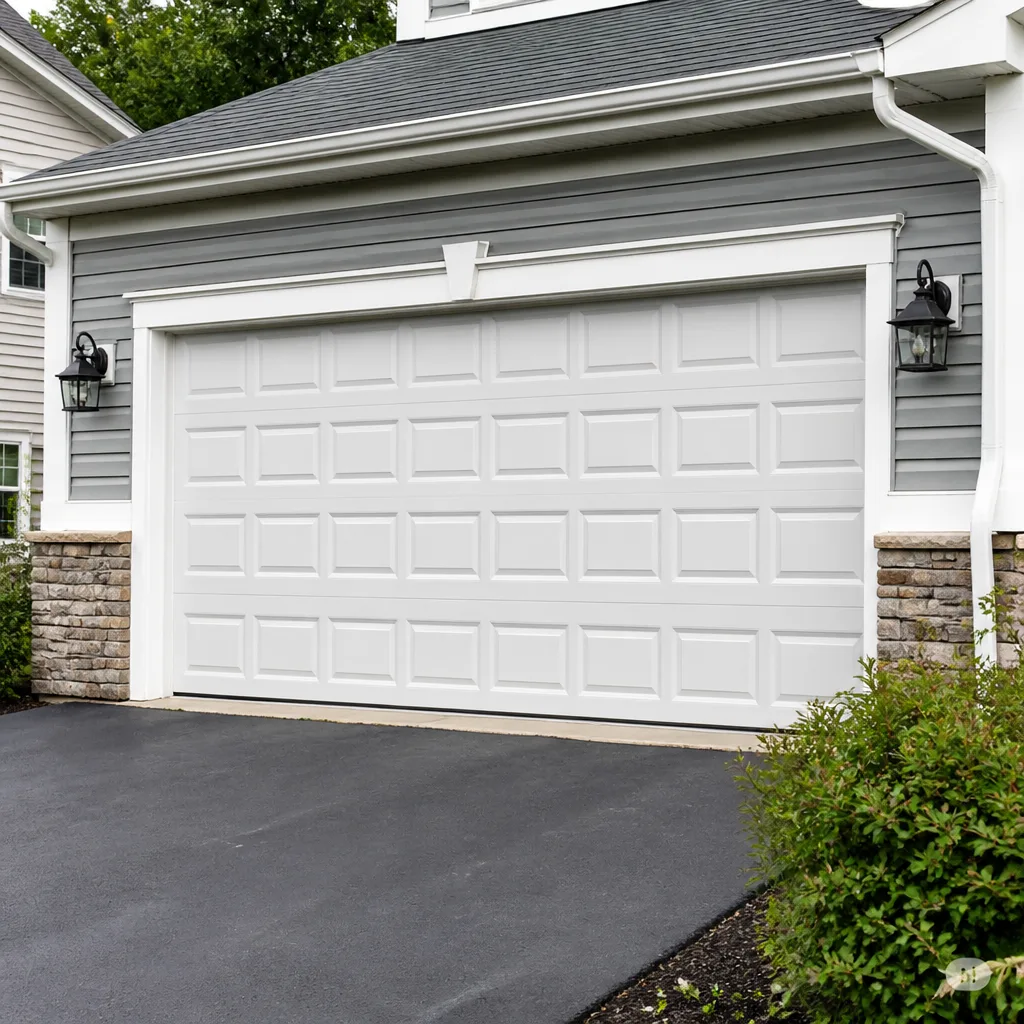 Raised-panel steel
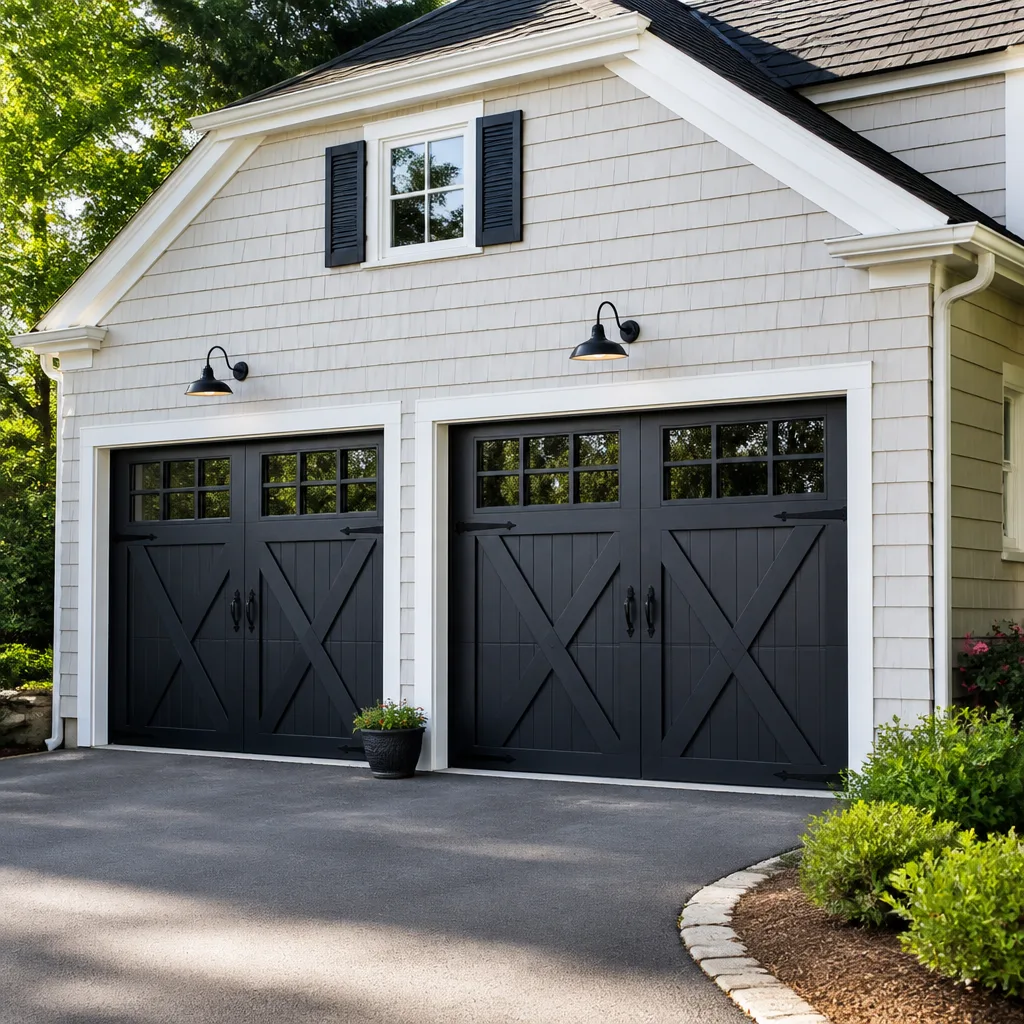 Carriage house
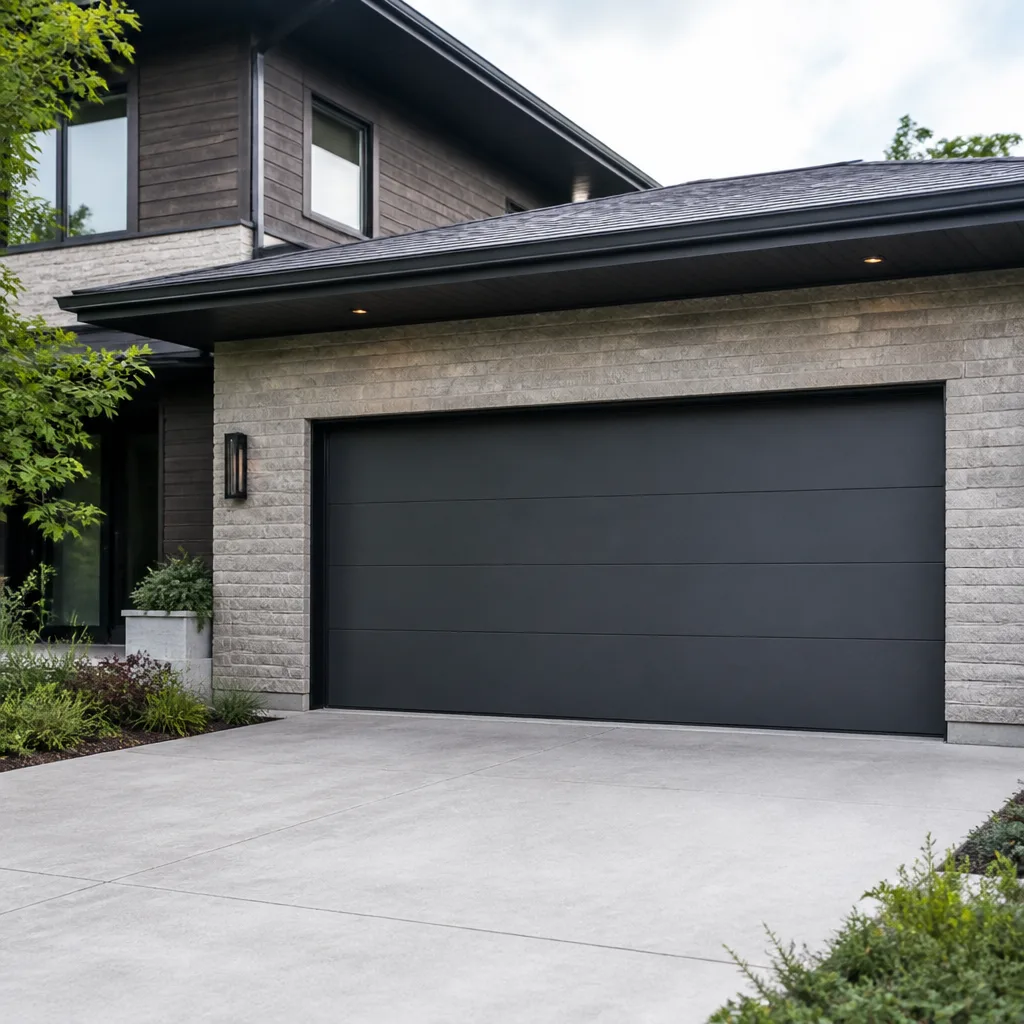 Modern flush
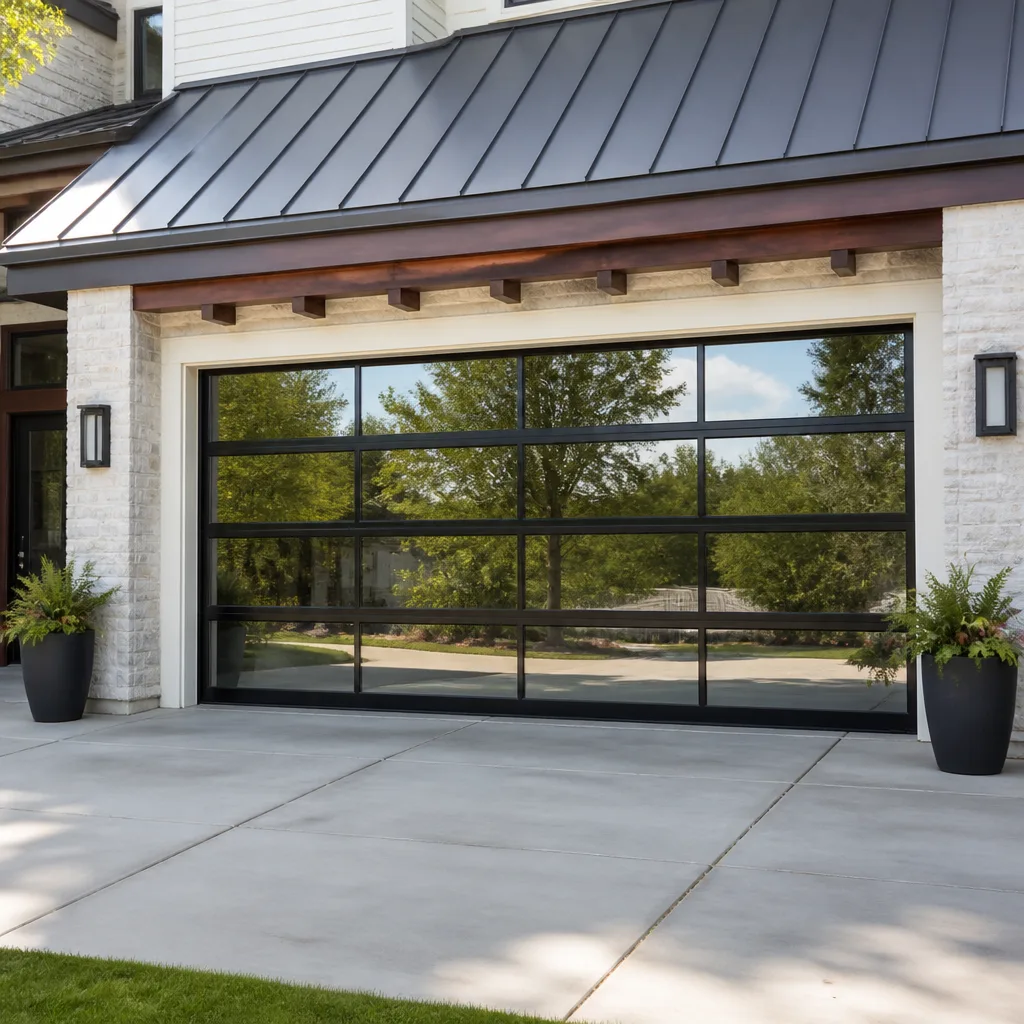 Full-view glass
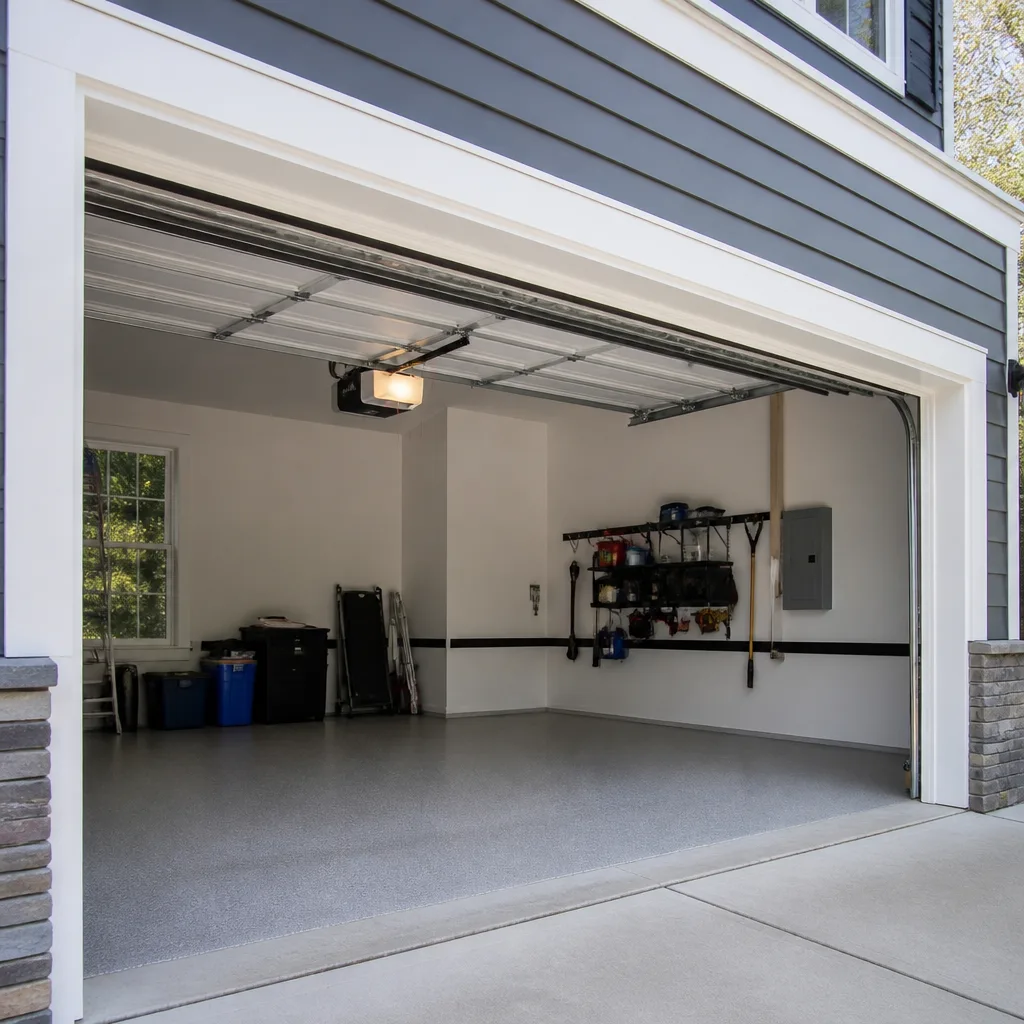 LiftMaster openers
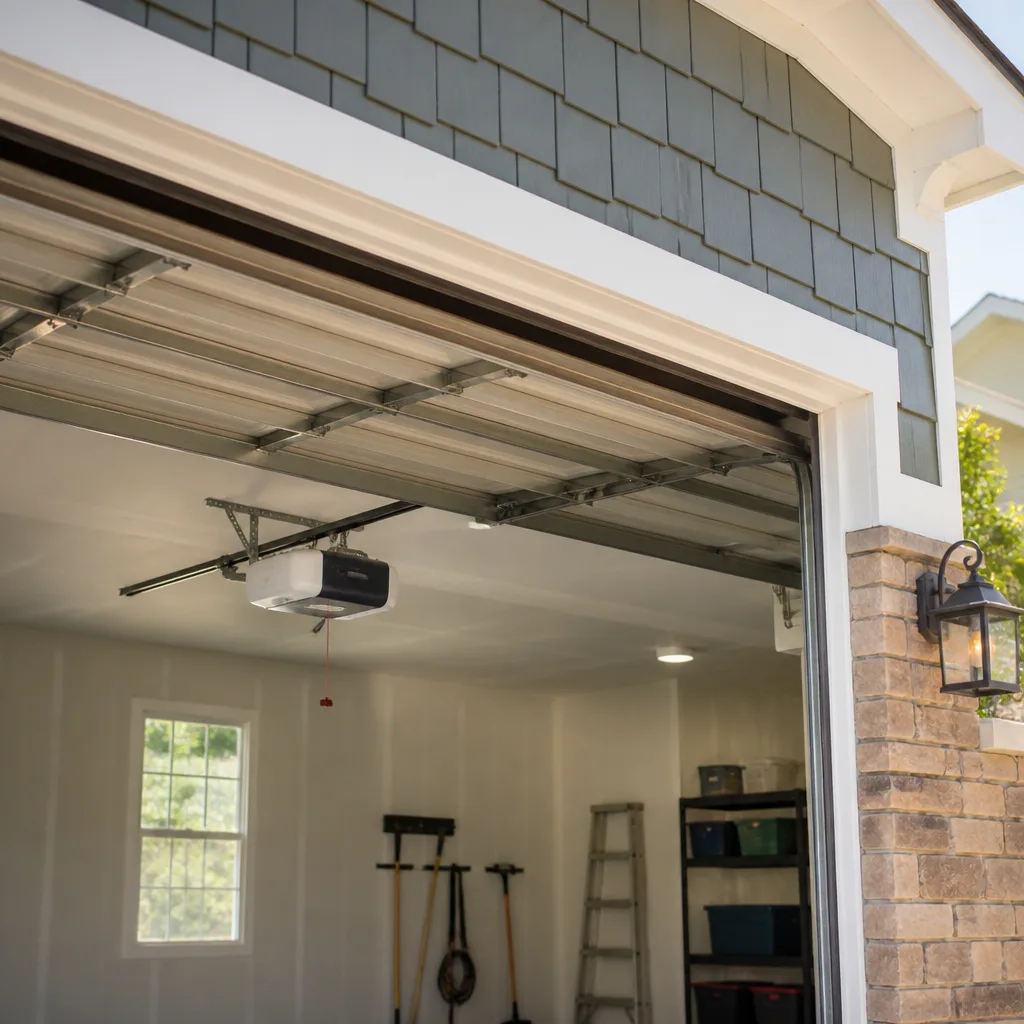 Chamberlain openers
Full 25-point door and opener safety check with every visit - springs, cables, rollers, tracks, and your LiftMaster or Chamberlain opener included
You get a price before we start. It does not change when the pro arrives.
Get your free estimateHow to Hire a Garage Door Contractor in Clearwater: A Step-by-Step Guide
Ask a garage door contractor in Clearwater if they can repair your brand, and most will say yes. Ask them to name the spring specifications for your model on the spot, and the room goes quiet fast. That gap between claiming experience and actually having it is where homeowners get burned, not on price. This guide walks you through the questions that expose a repair-first technician versus a salesperson in a uniform: how to verify a Florida license in about a minute, which line items a quote must break out, and what a warranty should say in writing. You’ll finish knowing exactly how to hire a garage door contractor in Clearwater without second-guessing the decision.
Quick Answer
To hire a garage door contractor in Clearwater, verify the contractor’s license through the Florida Department of Business and Professional Regulation, ask brand-specific questions about your door and opener, and insist on a written, itemized estimate before any work begins. A legitimately licensed specialist will welcome all three. A sales-first contractor will dodge at least one of them, and that’s your signal to keep calling.
Styles & brands we work with
- Raised-panel steel
- Carriage house
- Modern flush
- Full-view glass
- LiftMaster openers
- Chamberlain openers
Table of Contents
- What license does a garage door contractor need in Florida?
- What red flags show up on the first phone call?
- How do you test whether they know your door and opener?
- How should you compare garage door quotes in Clearwater?
- Why do springs deserve their own questions?
- What does a real warranty look like, parts versus labor?
- Repair or replace: who decides?
- What Clearwater conditions affect this decision?
What license does a garage door contractor need in Florida?
A garage door contractor working in Florida is generally required to hold a state license through the Florida Department of Business and Professional Regulation, or to work under a licensed contractor who does. Garage door installation and the structural work around an opening fall under the state’s contractor licensing framework, so the person quoting your job should be able to produce a license number without hesitation. Before you book anything, ask for it plainly.
Here’s how to verify it in about sixty seconds:
- Go to the DBPR website and open the license lookup tool for contractors.
- Enter the license number the contractor gives you, or search by business name.
- Confirm the license status is current and active, not expired or revoked.
- Check that the license type covers garage door work, not just a general classification that doesn’t match the job.
- Match the name on the license to the name on your written estimate.
That last step matters more than people realize. A contractor can hand you a valid license number that belongs to a company they’re not affliated with, or to a qualifier who isn’t doing the work. When the license name and the estimate name don’t line up, ask why before you go further.
One more thing worth knowing: county and city rules around permits differ, and Clearwater homeowners should confirm with the city’s building department whether a given job needs a permit. A licensed contractor will know this and won’t be annoyed that you asked. If they wave the question off, that’s information too.
When you’re comparing contractors, the license check is the first filter. Everything else in this guide builds on it.
What red flags show up on the first phone call?
The first phone call tells you almost everything. A repair-first technician asks questions back: what kind of door you have, what it’s doing, whether the opener is making noise, whether the door will move at all by hand. A sales-first contractor jumps straight to a pitch, often for a replacement you didn’t ask about. You can hear the difference in the first ninety seconds.
Here are the red flags that should make you slow down:
- They quote a price before hearing the symptoms. A real diagnosis needs to know what’s wrong. A promise of a fixed price over the phone, before anyone has looked, is either a placeholder they’ll raise later or a number chosen to win the call.
- They push replacement on a repair-friendly problem. A broken spring, a stuck door, a noisy opener, and a misaligned track are all common repair jobs. If one of those turns into a full replacement recommendation on the phone, ask what specifically makes the door beyond repair.
- They can’t name what brand of door or opener they’re most familiar with. A technician who works across brands should be able to tell you which ones they handle without pausing to think.
- They won’t give a ballpark on timing or a written estimate. An honest contractor wants their response in writing, not just your verbal yes.
- They dodge questions about licensing, the license number, or the warranty. Any hesitation here is the answer to the question.
None of these are subtle. In our experience, the contractors worth hiring are almost eager to answer them, because it separates them from the ones homeowners call first and regret second. A Clearwater homeowner relies on the door every day. It’s worth ninety seconds of conversation to know which kind of contractor you’re dealing with.
How do you test whether they know your door and opener?
Brand experience is the easiest claim in this trade to make and the hardest to verify, so ask questions that force specifics. Don’t ask “do you work on my brand?” Ask the questions a technician who actually knows the hardware would answer without a script. You’re looking for the repair-first instinct: they diagnose on the door’s terms, not on which product line is easiest for them to sell.
Try these:
- “What’s the typical lifespan of the spring on this model?” Spring life depends on cycle count and the door’s weight. A real technician talks about cycles and load, not a calendar number.
- “Do you work on both chain and belt drive openers in my brand?” A contractor who services LiftMaster and Chamberlain regularly will have a clear answer on drive types and the parts they usually need.
- “If my Craftsman opener’s safety sensor is failing, do you test it before replacing the board?” The right answer is that sensors are tested first, because the sensor is the usual culprit.
- “Do you service Raynor doors, or is that a special order every time?” A brand-agnostic shop knows which brands they’re fluent in and which they aren’t. Honesty here is worth more than confidence.
- “What’s the model number on this door?” A competent tech can often read it, or open the door and tell you what they’re seeing, without a sales sheet.
We’re trained on LiftMaster, Chamberlain, Genie, Clopay, Amarr, Wayne Dalton, Craftsman, and Raynor, which means a good chunk of the doors in Clearwater are already familiar equipment when we arrive. That’s the reason we ask you the model and the symptoms before we get there. It isn’t a pitch. It’s so the first ten minutes are diagnosis rather than discovery.
The test is simple: if the contractor can name spring specs, drive types, and common failures for your model without reaching for a brochure, they probably know what they’re doing. If they can only speak in generalities, that’s a sales person, not a technician.
How should you compare garage door quotes in Clearwater?
Compare quotes line by line, not by the total. A low total that bundles labor, parts, and a mystery “setup fee” hides where the mark-up lives. A transparent quote breaks the job into parts, labor, disposal, and any permit costs, and states clearly that the written estimate sets the final price. If a contractor won’t break it down, you can’t compare it, so don’t.
Here’s what an itemized garage door estimate should show:
- Parts, named specifically. Springs, cables, rollers, hinges, opener board, sensors, and any hardware should each appear as its own line, with brand or model where it applies.
- Labor, as its own line and not absorbed into the parts markup.
- Disposal, if the old door or components are being removed.
- Permit costs, listed separately if the job requires one, with the name of the permitting authority.
- Warranty terms, printed on the quote and not promised verbally.
Typical price ranges in Clearwater vary widely by door type and job, so treat any total as a starting point, not a market price. Spring replacement for a single spring usually runs in the low to mid hundreds, a matched pair roughly twice that, and a full new door installation can move into four figures before opener work. Those ranges are estimates; the written estimate is what you actually owe, and the contractor should confirm it before any work starts.
When you have three quotes in front of you, stack them against the same line items. If one quote is dramatically lower across the board, ask what’s missing. If one is dramatically higher, ask what it includes that the others don’t. The answer to both questions tells you which contractor is being straight with you.
If the diagnosis points to a repair, garage door repair is the page to read next. If it points to a new door, start with garage door installation.
Why do springs deserve their own questions?
Springs are the highest-tension, highest-risk part of any garage door system. A torsion or extension spring can be under serious load, and a spring that fails while someone is working on it can cause real injury. This is the one part of the job where the right question isn’t “how much,” it’s “how do you handle this safely.” A specialist will have a clear answer. A generalist will often change the subject.
Ask any of these:
- “Can you tell the spring’s size and load just by looking?” A technician who works on springs regularly can identify the spring from the wire size and the door’s weight. They won’t guess.
- “Do you replace the pair or a single spring?” Springs wear at similar rates, so replacing both at once is usually the smarter call even when only one has failed. A tech who pushes a single-spring fix to lower the ticket isn’t saving you anything.
- “What’s the failure mode I should watch for?” The answer should include the sound of the break, the door not staying up, and the door sitting crooked, because those are the signs a homeowner actually notices.
- “Do you replace cables at the same time?” Cables are under similar tension. A contractor who’s thinking about the whole system will mention them without being asked.
We don’t walk homeowners through spring work ourselves, and no guide should. Springs are dangerous enough that the honest move is to say so and turn the job over to a trained technician. That’s part of why spring repair is a named specialty here rather than a line item under general repair.
If your door is stuck, the fastest path back to normal is a call, not a self-help guide. Our technicians have up to 12 years of experience and can be reached at (833) 468-3520.
What does a real warranty look like, parts versus labor?
A warranty is only as good as what’s written on the estimate. “We stand behind our work” is not a warranty; it’s a feeling. The written quote should spell out how long the parts are covered, how long the labor is covered, and what voids the coverage. If those three things aren’t on paper, you don’t have a warranty, you have a verbal promise from someone who may not be the person who answers the phone in six months.
Here’s what to look for:
- Parts coverage, in a stated period and tied to the specific part. A spring replaced with a new spring should have a clear window. An opener board should have its own. The warranty should name the parts it covers, not just say “parts.”
- Labor coverage, separate from parts. Labor is often the shorter window, and that’s normal, but it should be stated, not implied.
- Exclusions, spelled out. Wear items like rollers, weather seals, and hinges typically have shortened coverage, and damage from misuse or a collision usually isn’t covered. Transparency here is a good sign, not a bad one.
- Who honors it. The warranty should say the company will honor it, not a manufacturer, unless it’s expressly a manufacturer warranty passed through to you.
- Terms for the replacement itself. If a covered part fails, does the replacement carry the same window, or does coverage end when the first warranty ends?
Ask directly: “If the spring you install fails inside the warranty window, do you come back and replace it at no charge, labor included?” The answer should be a straight yes or no, followed by the conditions. If it comes with a long explanation about how the failure is probably your fault, that’s the warranty talking, and it’s not really coverage.
Warranty terms should appear on the written estimate and not just in conversation. If they’re missing, ask for them to be added before the job is booked. A contractor who doesn’t want to put warranty terms in writing is telling you something about how the job is likely to go when something goes wrong.
Repair or replace: who decides?
You do, but only if the contractor gives you the information to decide. A repair is usually the right call for a spring, a roller, a hinge, a bend in the track, or a failing sensor. A replacement starts to make sense when the door panels are structurally compromised, when the door is so old that parts are hard to source, or when repair costs are rising close to replacement. A capable contractor tells you which category you’re in and shows you why. A sales-first contractor slides toward replacement because the ticket is bigger.
The questions that keep the decision in your hands:
- Can this be repaired, and if so, what’s the typical lifespan of the repaired part?
- What’s the expected range for the repair versus the replacement, and what assumptions drive each number?
- Are there signs the door is near the end of its life, beyond the current problem?
- If we repair, is there anything that would make a second visit likely soon?
Those questions do two things. They force the contractor to describe the job in terms of components, and they keep the conversation away from the “replace it now while we’re here” pitch. If the answer to number two is well-argued, listen carefully. If the answer to number one is “not really,” the recommendation for a new door should have a clear reason behind it.
A brand-agnostic shop doesn’t have a product line to push, which is the whole reason it can answer these questions honestly. We don’t have a brand of door we want to sell you. We have a diagnosis, and if the door needs to go, we’ll say so. If it doesn’t, we’ll repair it and you’ll keep the door you have.
The trade-off language is worth getting used to: repair is cheaper today, replacement is more predictable long-term. You’ll be making that call together, but you should be the one driving it.
What Clearwater conditions affect this decision?
Clearwater’s climate is warm and humid most of the year, which has a couple of practical consequences for garage doors. The humidity is the main one. Metal components rust more slowly than they would in wetter, salt-laden environments, but the constant moisture level still affects hinges, rollers, and the springs, and it makes lubrication maintenance that much more important. A door that would run quietly in a dry climate can start to squeal in Clearwater’s humidity, and that’s a maintenance issue rather than a sign the door needs replacing.
Heat is the other factor. A garage facing afternoon sun gets hot inside, and the opener’s internal components and sensors work harder in that heat. A sensor that trips intermittently in August is often doing exactly what it’s designed to do when the temperature is high. That’s a case where a technician’s diagnosis matters more than a homeowner’s guess, because the fix is sometimes a sensor adjustment and sometimes a board replacement, and those carry very different prices.
Practically, here’s what that means for hiring:
- Ask how the contractor handles humidity and heat-related issues. A local specialist should have a clear answer, and a brand-agnostic one should be able to talk about common problems across different door types.
- Ask about lubrication and maintenance schedules that make sense in Clearwater’s climate specifically. A door serviced on a schedule lasts longer here than one that only gets attention when it stops working.
- Ask whether replacement recommendations account for how a door performs in this climate, not just for how it looks on the showroom floor.
None of this is dramatic. It’s the same trade with a local accent. The contractors worth hiring are the ones who can talk about the accent without turning it into a sales pitch.
Common Mistakes to Avoid
- Hiring on price alone. The lowest quote is often the one that adds items once the door is open, or replaces a part that didn’t need replacing. Compare line items, not totals.
- Skipping the license check. Sixty seconds on the DBPR site tells you whether you’re dealing with a licensed contractor or someone operating under someone else’s number. It’s the cheapest insurance you can buy.
- Accepting a verbal estimate. A price agreed over the phone is easy to walk back. If it isn’t on paper, with the line items broken out and the final price confirmed before work starts, don’t book the job.
- Letting a phone call turn into a replacement recommendation. A broken spring or a stuck door is a repair job, not a replacement job, until a technician has actually looked at the door and explained why a repair isn’t viable.
- Treating “we stand behind our work” as a warranty. Ask for parts and labor terms in writing, with the exclusions spelled out. A contractor who can’t put the warranty on the estimate can’t be held to it.
- Ignoring the brand question. A contractor who can’t talk specifically about your LiftMaster, Chamberlain, Craftsman, or Raynor equipment is going to learn on your door. That’s a bad way to get a fix, and a worse way to have someone tell you a replacement is the answer.
- Calling around during an emergency without a plan. When a spring breaks and the car is trapped, the pressure makes people accept the first contractor who answers. Have the license check and the brand conversation done before you need to call, so the emergency call is to someone you’ve already vetted.
See the difference
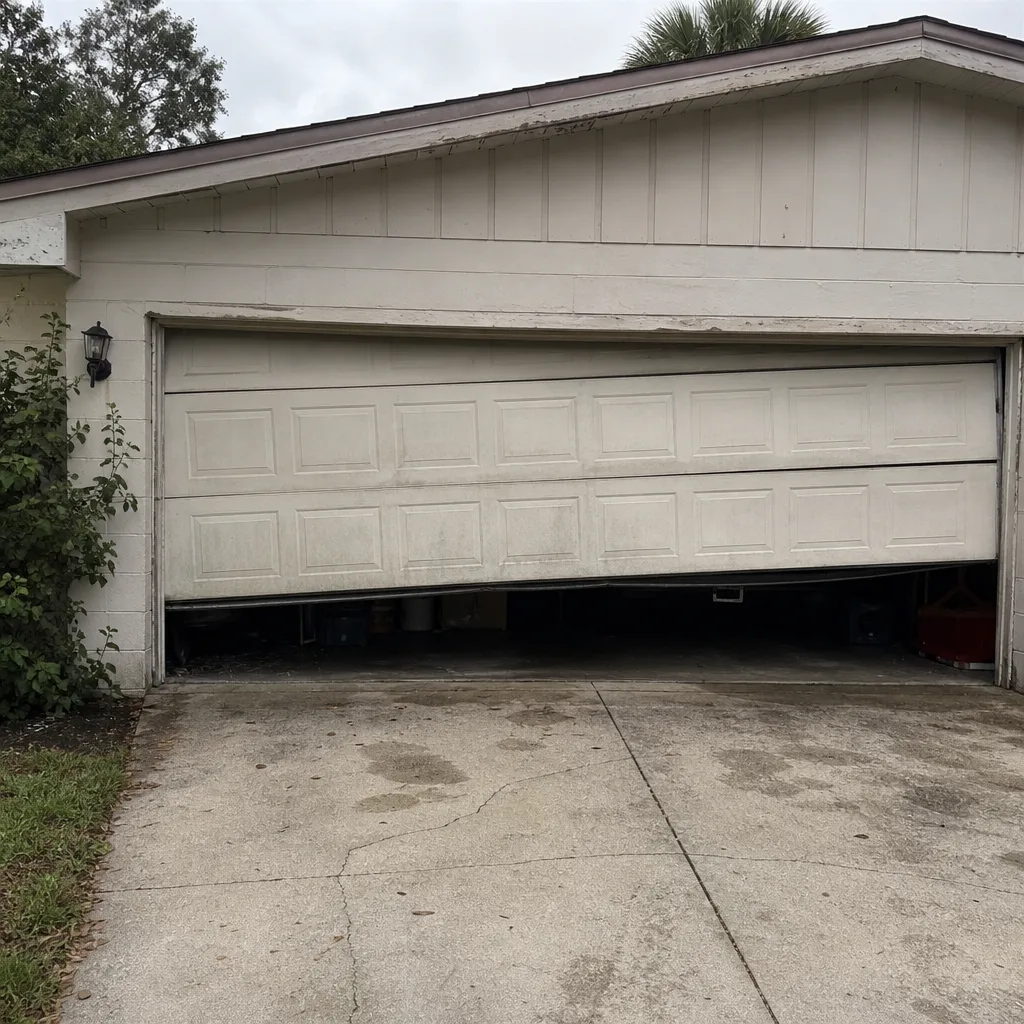 Before
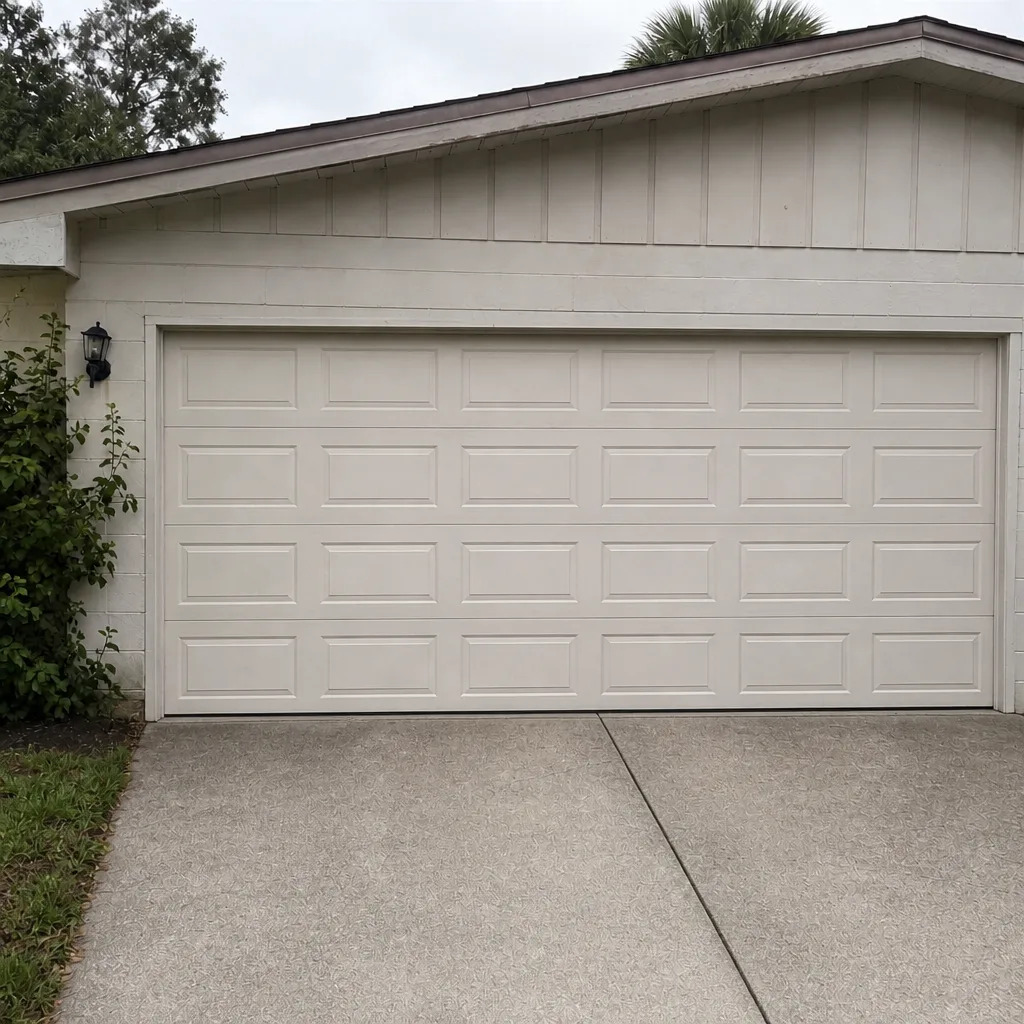 After
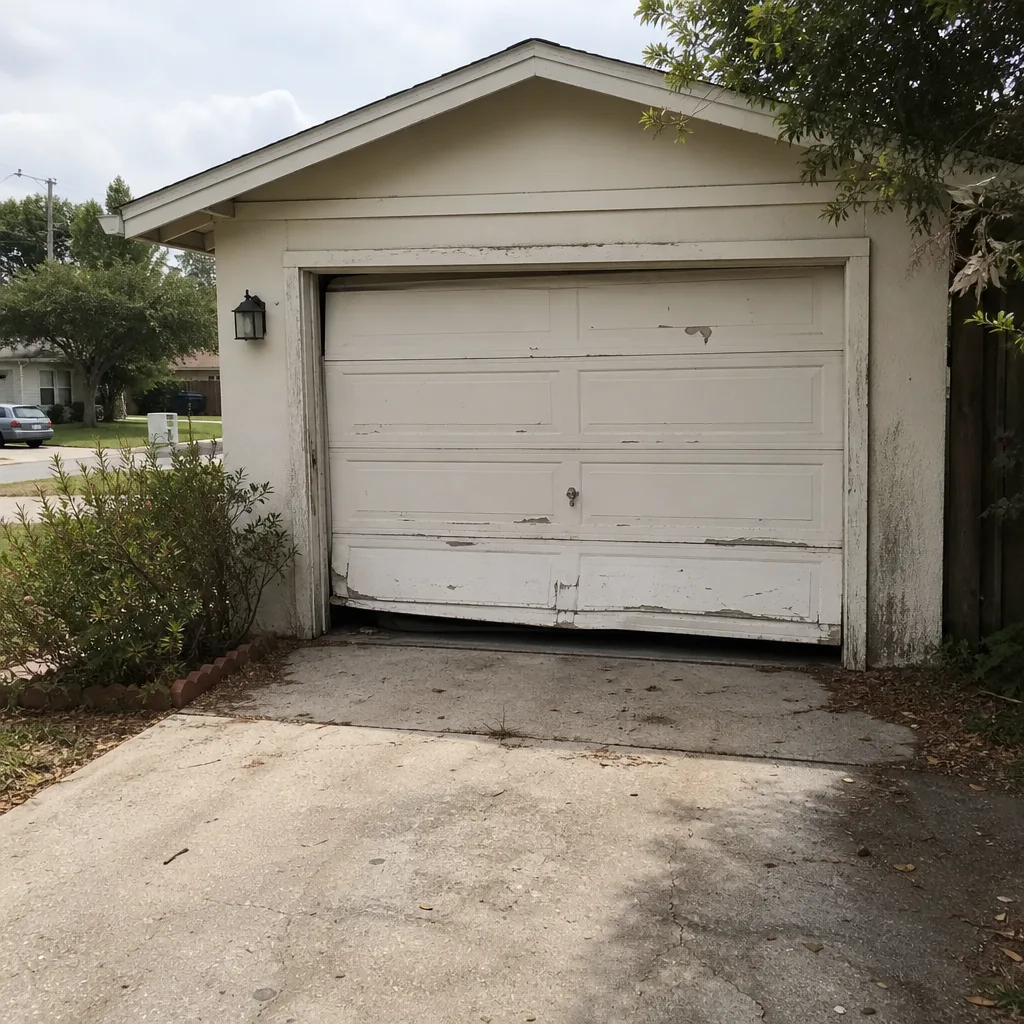 Before
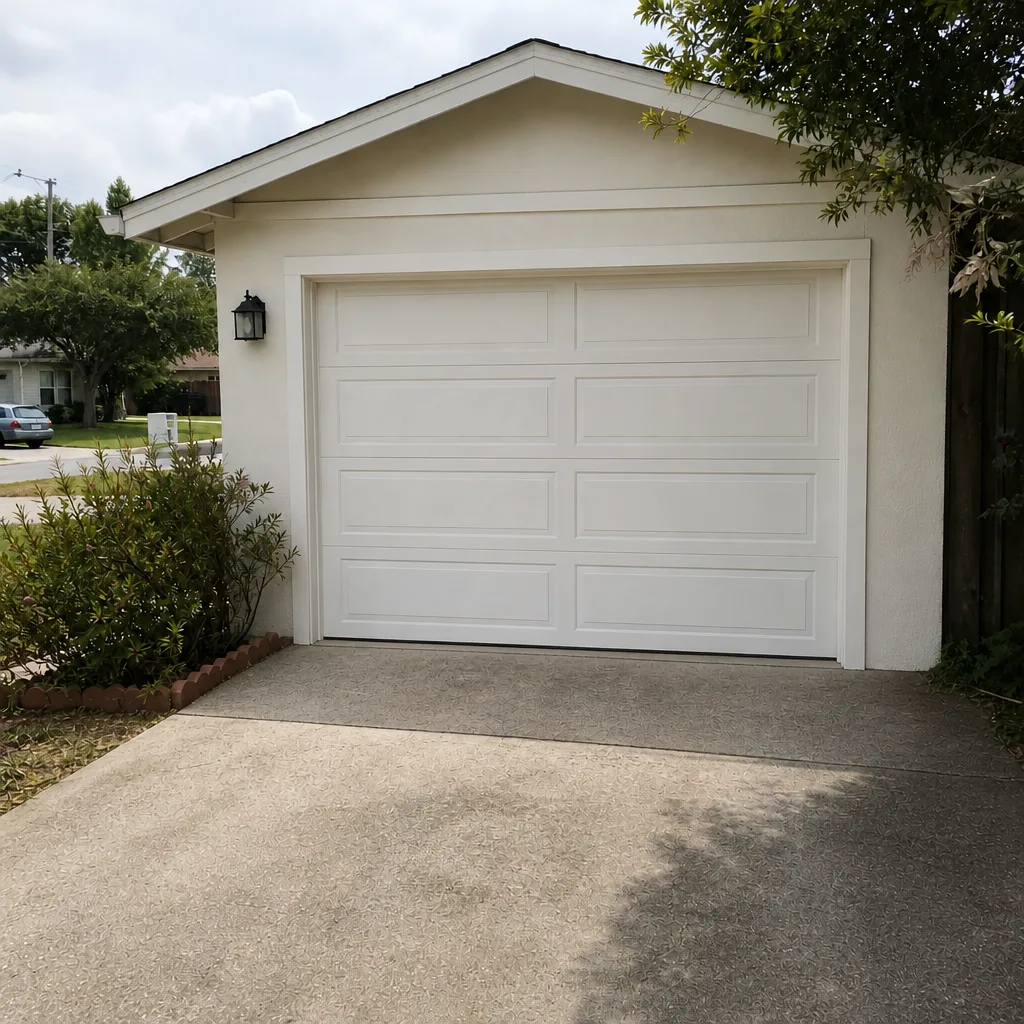 After
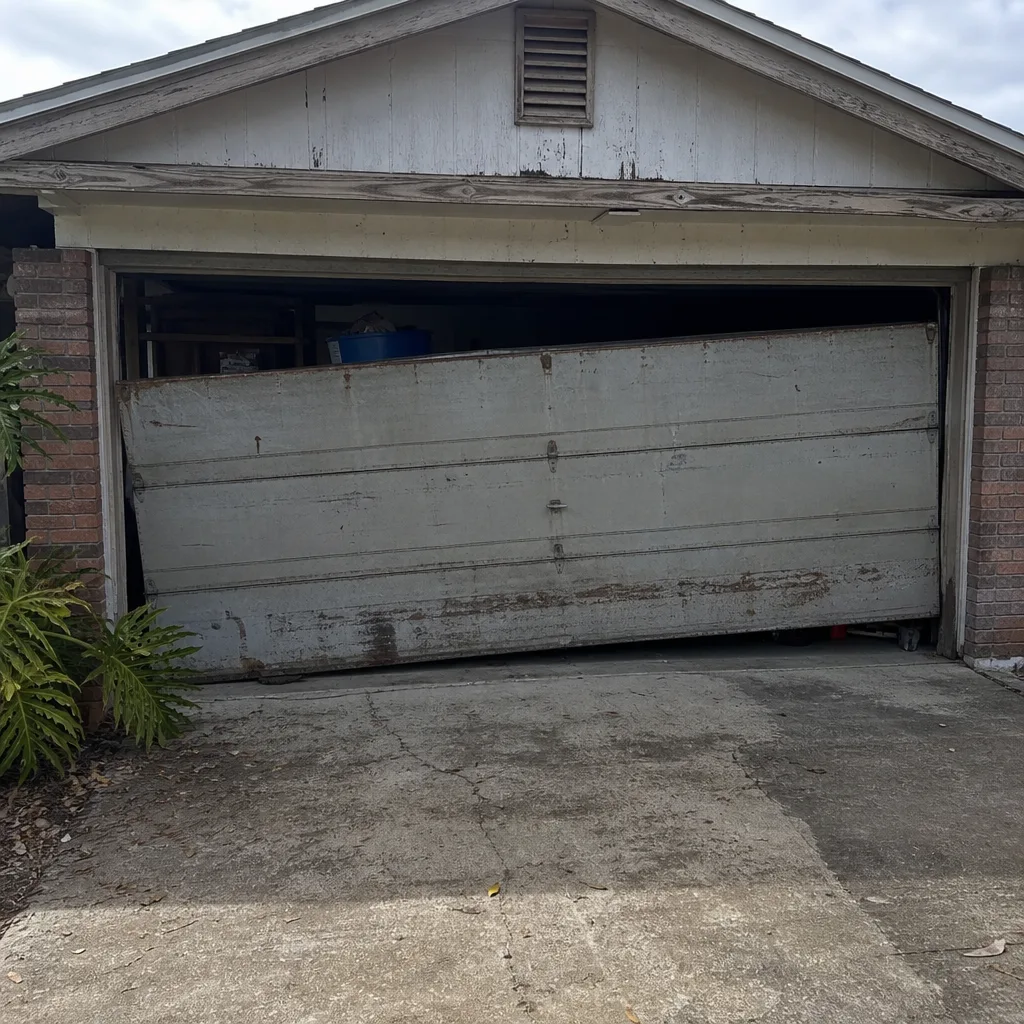 Before
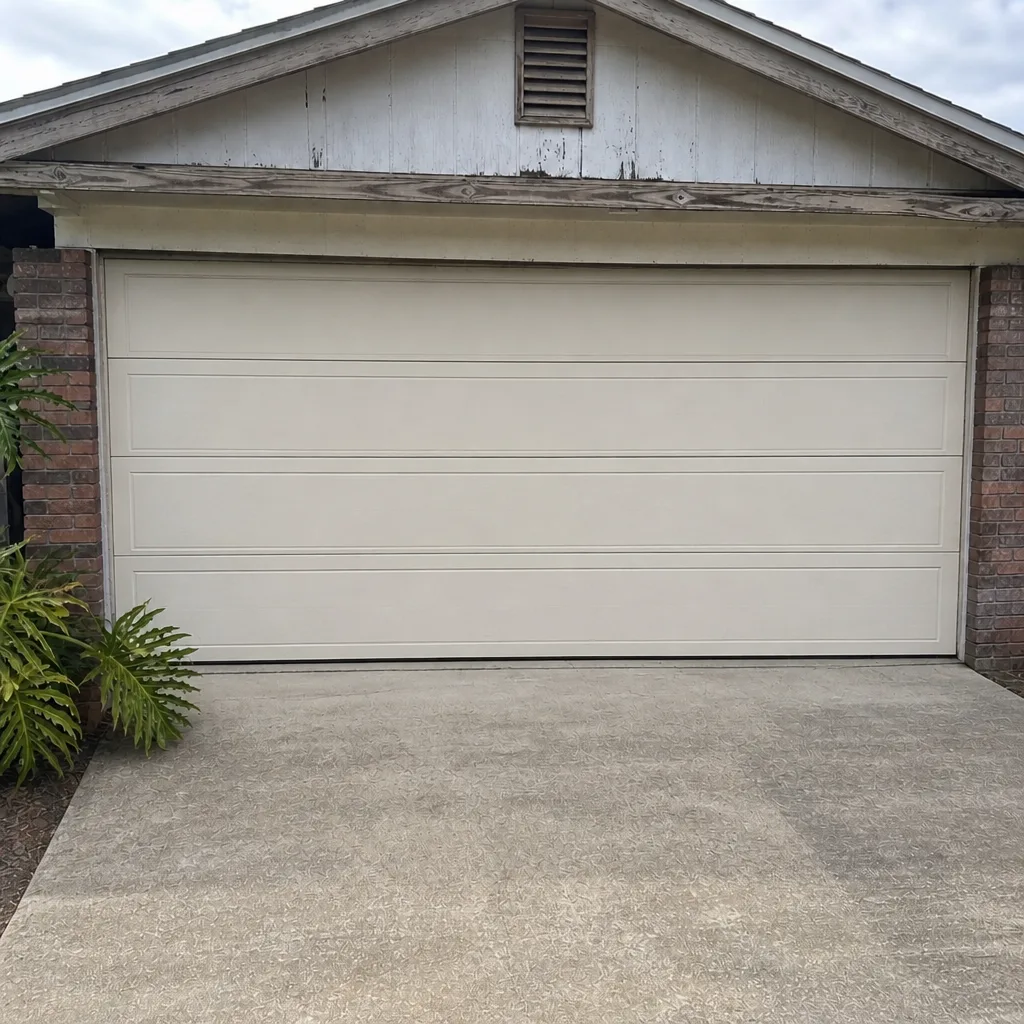 After
When to Call a Professional
Some garage door problems should be a phone call from the start, not a project. A broken spring, a door that won’t stay up, a cable that’s snapped, or a door that’s come off its track are all cases where working on the door yourself is genuinely dangerous. The same is true for anything involving the torsion system, since the tension is high enough that a mistake can injure you. Electrical work on the opener, or anything involving the panel wiring, should also go to a technician.
Less urgent but still worth a call: an opener that’s noisy, a door that reverses before it closes, a sensor that trips when the sun hits it, or a door that’s drifting back down after it opens. Those are diagnostic jobs where a first visit is cheaper than a second one after a wrong guess. Clearwater Garage Door Repair Co offers free estimates in Clearwater, and the price is quoted and agreed before any work starts. Call (833) 468-3520 to book one. If the door is stuck now, emergency service is a core part of what we do, not an upsell at the back of the menu.
Frequently Asked Questions
Typical repair ranges depend on the part and the door type, but a single spring replacement usually runs in the low-to-mid hundreds including labor, and a matched pair is roughly double that. Opener repairs and sensor work tend to be less than spring work. These are estimates; the written estimate sets the final price, and you’ll agree to it before any work begins. Call (833) 468-3520 for an exact quote, estimates are free.
Yes, in most cases. Emergency garage door service is a core offering here, and a door that won’t close or won’t open gets priority. Call (833) 468-3520 and describe the symptoms; the sooner we know what’s wrong, the faster the job goes when we arrive.
No, the price you’re quoted is the price you pay, assuming the job is what we discussed. If we find something different once we’re on site, we’ll explain it and get your approval before any additional work starts. There is no invoice surprise; the estimate is agreed in writing before we begin. Call (833) 468-3520 to book a free estimate.
The local pro we connect you with is licensed and insured as Florida requires, and you can verify the license through the DBPR website before booking. Ask for the license number and the warranty terms in writing, both should be easy to produce.
Probably. We’re trained on LiftMaster, Chamberlain, Genie, Clopay, Amarr, Wayne Dalton, Craftsman, and Raynor, and the technician arrives already familiar with the common failure points on those systems. If your brand is outside that list, call and ask; we’ll tell you honestly rather than guess.
Compare line items, not totals. Parts, labor, disposal, and any permit costs should each appear separately, and the warranty terms should be printed on the quote. If one quote is much lower or higher than the others, ask what’s missing or what’s extra. Call (833) 468-3520 for a written estimate you can compare directly.
The Bottom Line
Hiring a garage door contractor in Clearwater comes down to three checks: verify the license through the DBPR, test brand knowledge with questions that force specifics, and insist on a written, itemized quote with warranty terms attached. The cheapest quote is rarely the best one, and the contractor who answers your questions quickly and specifically is usually the one who’ll do the same when the job gets complicated. Whether you need urgent repair or a planned installation, one company can handle the diagnosis, the repair, and the replacement if it comes to that, with no second company to source. We connect you with an independent local professional for both, so you’re not managing two contractors on one job. Clearwater Garage Door Repair Co works on your brand. Call (833) 468-3520 for a free estimate, and start with the three questions.
If you want the full service picture, start at Clearwater Garage Door Repair Co, or jump straight to garage door opener repair if the door itself is fine and the opener isn’t.
Written by the team at Clearwater Garage Door Repair Co.